Music Curation in 2026: The Complete Guide for DJs, Curators and Industry Pros
Music curation is the practice of selecting, organizing, and presenting music with a specific purpose and audience in mind. This guide covers what music curation means in 2026, the three types of curation (editorial, algorithmic, hybrid), how to start curating professionally, and role-specific strategies for DJs, A&R teams, content creators, and sync supervisors.
Music curation is the practice of selecting, organizing, and presenting music with a specific purpose and audience in mind. Whether you build playlists, program DJ sets, or scout tracks for sync deals, curation turns raw catalog into something listeners trust. This guide breaks down how curation works in 2026, what separates editorial taste from algorithmic sorting, and how professionals across the industry can sharpen their process with data.
What Is Music Curation?
Music curation means choosing specific tracks, sequencing them with intent, and delivering them to an audience that values the selection. A curator is not a search engine. A search engine returns everything that matches a query. A curator filters thousands of options down to the 20 that matter right now.
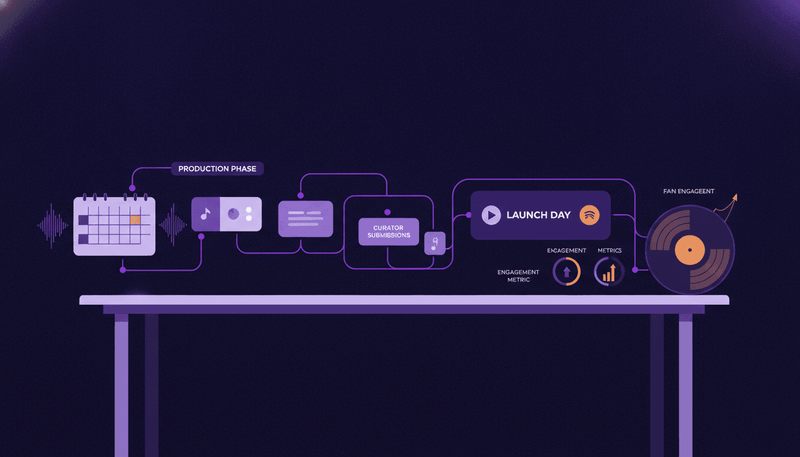
The music curation process spans three core steps: discovery (finding new music worth considering), evaluation (deciding what fits your context and audience), and presentation (sequencing and packaging the selection so it lands). Every DJ, playlist editor, A&R scout, and sync supervisor runs some version of this loop, whether they call it curation or not.
In 2026, curation carries more weight than ever because listeners face more choices than they can process. Spotify alone adds roughly 100,000 tracks per day. Without curators acting as filters, audiences default to whatever the algorithm serves, and algorithms optimize for engagement, not taste.
Why Music Curation Matters More Than Ever in 2026
Streaming Overload and the Need for Human Taste
Over 100 million tracks sit on major streaming platforms today. That number grows by tens of thousands every 24 hours. Listeners spend an average of 30 hours per month streaming, but most never scroll past the first 10 recommendations on their home screen.
This is the paradox: more music exists than at any point in history, yet listener attention keeps narrowing. Algorithmic recommendations fill the gap for casual listening, but they struggle with context. An algorithm can tell you what sounds like what you played yesterday. It cannot tell you which unreleased track from a Lagos-based producer will define Afrobeats in Q4.
Human curators bridge that gap. They bring taste, timing, and cultural context that pattern-matching models miss. That is why the role of music curators keeps growing even as automation improves.
How Brands and Labels Use Curated Music
Labels use curated playlists to test audience reaction before committing marketing spend. A track that gains 50,000 saves on a well-curated playlist within two weeks signals genuine demand, not just passive plays. That data point can accelerate or kill a release strategy.
Brands use curation differently. A fashion label planning a runway show needs 45 minutes of music that matches a specific mood, tempo range, and cultural reference point. A coffee chain programming 10,000 stores needs hundreds of hours of curated background music that stays fresh without jarring customers. In both cases, the value is in what gets excluded, not just what gets picked.
For music marketing professionals, curated playlist placements now drive more first-week streams than traditional radio for most independent releases. A well-placed track on three to five curated playlists with engaged followings can generate 200,000 to 500,000 streams in its first month, often at a fraction of the cost of a traditional radio campaign.
The curation economy also creates new revenue channels. Independent curators monetize through sponsored placements, consulting retainers with labels, and brand partnerships. Labels that build relationships with trusted curators gain a distribution channel that reaches niche audiences more effectively than broad algorithmic placement.
Types of Music Curation
Editorial Playlist Curation
Editorial curation relies on human judgment. A curator listens to submissions, evaluates fit against a playlist's identity, and makes a yes-or-no call. Streaming platforms employ editorial teams who program flagship playlists like RapCaviar, New Music Friday, and POLLEN. Independent curators run niche playlists on Spotify, Apple Music, and YouTube Music with followings from 5,000 to 500,000+.
Editorial curators shape taste. When a trusted curator adds an unknown artist, that placement can generate 100,000+ streams and put the track on algorithmic radar. The curator's reputation acts as a quality signal for both listeners and platform algorithms.
The editorial model also creates accountability. A curator who consistently adds tracks that listeners skip loses followers and credibility. That feedback loop keeps editorial curators honest in a way that algorithmic systems, which face no reputational cost for a bad recommendation, do not.
Algorithmic Curation
Algorithmic curation uses machine learning to match tracks to listeners based on listening history, audio features, and collaborative filtering (what similar users played). Discover Weekly, Release Radar, and autoplay queues are all algorithmic curation.
Algorithms scale to billions of users. No human team can personalize recommendations for 600 million accounts. But algorithms have blind spots: they favor tracks with existing momentum, struggle with genre-crossing artists, and cannot anticipate cultural shifts before they show up in the data.
Hybrid Curation (Human + Data)
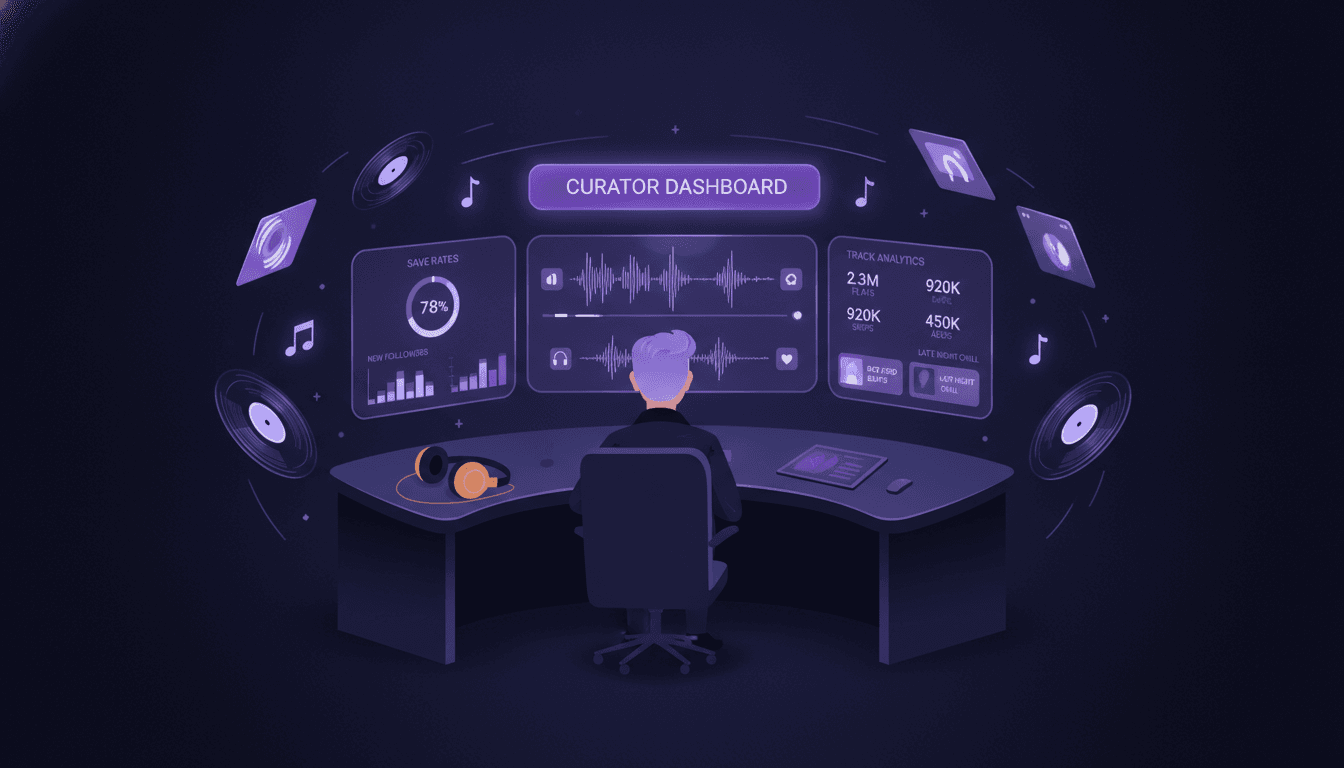
The most effective curation in 2026 combines both approaches. A curator uses data to identify patterns (which tracks are gaining saves faster than streams, which artists are growing in specific markets) and then applies editorial judgment to decide what belongs in the playlist.
| Approach | Strengths | Limitations | Best For |
|---|---|---|---|
| Editorial | Taste, context, cultural reads | Limited scale, curator bias | Flagship playlists, brand partnerships, sync |
| Algorithmic | Massive scale, personalization | Lacks context, favors momentum | Personalized recommendations, autoplay |
| Hybrid | Data-informed taste at scale | Requires both skills and tools | Professional curation, A&R scouting, trend detection |
Hybrid curation is where Music24 fits. The platform reads millions of public playlists and charts every day and shows which tracks are gaining playlists fastest in a genre. More on that below.
How to Start Curating Music Professionally
Build Your Listening Framework
Professional curators do not listen randomly. They build a framework: a consistent process for finding, evaluating, and filing new music. Here is a practical starting point:
Set a discovery schedule. Block 3 to 5 hours per week for listening to new releases, submissions, and recommended tracks. Consistency matters more than volume.
Define your lane. The best curators own a niche. Broad taste is useful, but your playlist identity needs focus. Are you the curator who finds Brazilian bass music before anyone else? The one who programs lo-fi study playlists that actually help people concentrate? Pick a lane and go deep.
Create a filing system. Use a private playlist or spreadsheet to track everything you consider. Tag tracks by mood, tempo, energy, and potential use case. When you need to pull a set together quickly, your archive becomes your advantage.
Understand Your Audience
Curation without audience awareness is just a personal mixtape. Professional curators study their listeners:
- What time of day do most plays happen? (Workout playlists peak mornings; chill playlists peak evenings.)
- Which tracks get saved versus skipped? Saves indicate genuine preference. Skips within the first 30 seconds signal a misfit.
- Where are your listeners located? A playlist popular in Stockholm needs different programming than one growing in Sao Paulo.
Use listener behavior data from private playlists to understand what your audience actually values, not just what they passively hear.
Use Analytics to Validate Your Picks
Gut instinct matters, but data separates good curators from great ones. Track these metrics for every playlist you manage:
- Save-to-stream ratio: A track with 10,000 streams and 2,000 saves (20% ratio) is connecting harder than one with 50,000 streams and 1,000 saves (2% ratio).
- Skip rate: If more than 40% of listeners skip a track within 30 seconds, it is hurting your playlist's performance.
- Follower growth per addition: Some tracks attract new followers when added. Track which ones drive discovery.
Music24 shows which tracks and artists are gaining playlists fastest in a genre and a country. Start your 7-day free trial and see what your audience is really listening to.
Music Curation for Different Roles
For DJs
DJs curate in real time. Every set is an act of curation: reading the room, selecting the next track, and managing energy across 60 to 120 minutes.
The best DJs in 2026 prep with data. They study which tracks are gaining momentum in their target markets, identify tracks with high save rates (a signal of emotional connection), and build crates organized by energy level and BPM range. The performance is live, but the preparation is analytical.
A practical crate-building workflow: start with 200 to 300 candidate tracks per month. Filter by BPM range for your typical set (125 to 130 for house, 140 to 150 for drum and bass). Tag each track with an energy rating from 1 to 5. Group them into opener, build, peak, and cooldown categories. By the time you step behind the decks, you should have 60 to 80 tracks ready for a two-hour set, with options for every energy scenario.
Use early trend detection to find tracks that are about to blow up. Playing a future hit three months early builds your reputation as a tastemaker.
For A&R and Labels
A&R teams are curators at the signing level. They sift through thousands of demos, streaming profiles, and live performances to find the 1 to 3 artists worth investing in each quarter.
Data-driven A&R scouting tracks metrics like month-over-month listener growth, playlist add velocity, and geographic concentration. An artist gaining 15% monthly listeners every month for six straight months in three or more markets is showing organic traction, not bot-driven spikes.
Smart A&R teams also watch curator behavior as a leading indicator. When three or more respected independent curators add the same unknown artist within a two-week window, that convergence signals something the algorithms have not caught yet. Cross-referencing curator adds with private playlist saves creates a validation layer that reduces signing risk.
The financial stakes make this precision essential. A typical label investment in a new artist runs $200,000 to $500,000 before the first single drops, covering recording, marketing, and tour support. Using curation data to validate demand before writing that check turns A&R from gut-feel gambling into evidence-based portfolio management.
Step-by-step emerging artist discovery walks through the full scouting workflow, from initial signal to validation.
For Influencers and Content Creators
Content creators curate music for their videos, streams, and social posts. The right track elevates content; the wrong one gets it muted or flagged for copyright.
Creators who build relationships with independent artists and curators gain access to tracks before they blow up. Using a trending song after it peaks looks derivative. Using it three weeks before it peaks looks prescient.
The most successful creator-curators build signature sound identities. Their followers associate them with a specific sonic palette, whether that is lo-fi beats, indie pop, or Afro-house. That consistency turns a creator's music selection into a discovery channel in its own right, attracting brand partnerships and sync opportunities alongside the core content revenue.
Understanding how music discovery works gives you an edge over creators who rely on whatever TikTok suggests.
For Sync and Licensing Teams
Sync supervisors curate music for film, TV, advertising, and games. Their curation process prioritizes mood, lyrics, clearance status, and budget alongside sonic fit.
A sync team reviewing 200 submissions for a car commercial needs to filter fast. They build shortlists based on tempo (90 to 110 BPM for driving scenes), mood (aspirational, not aggressive), and clearance (fully controlled master and publishing). Data from curator influence analysis helps sync teams identify which playlist curators consistently surface licensable music that matches brief requirements.
Where Music24 fits
Music24 reads millions of public playlists and charts every day. Its public data shows which playlists add songs like the ones you work with, which tracks and artists are gaining playlists fastest in a genre, and the countries where that genre grows. Follow the artists, tracks and playlists you care about and get an email when they move.
Start free with Music24: 7 days of the Pro plan, no card, then a Free plan for as long as you like.
FAQ
What does music curation mean? Music curation is the process of selecting, organizing, and presenting music with a clear purpose and audience in mind. It goes beyond creating a random playlist. A curator evaluates tracks for quality, fit, and context, then sequences them to create a cohesive listening experience.
How is music curation different from an algorithm? Algorithms personalize recommendations at scale using listening history and audio features. Human curators add cultural context, taste, and timing that algorithms cannot replicate. The most effective approach in 2026 is hybrid: using data to inform editorial decisions.
Can you make money as a music curator? Yes. Professional curators earn through playlist sponsorships, consulting fees from labels and distributors, brand partnerships, and platform payments. Top independent curators with 100,000+ followers can command $500 to $5,000+ per playlist placement, depending on the genre and audience engagement metrics.
What tools do professional music curators use? Music24 reads millions of public playlists and charts every day and shows which playlists add songs like yours, which tracks and artists are gaining playlists fastest in a genre, and the countries where that genre grows.
How do I become a better music curator? Build a consistent listening framework, define your niche, and use data to validate your picks. Study your audience's behavior (when they listen, what they save, where they are located). Track your playlist's save-to-stream ratio and skip rate. Improve by analyzing what works and cutting what does not. Read our guide on benefits of early artist discovery to sharpen your scouting instincts.
What is the music curation process? The music curation process follows three stages: discovery (finding new tracks through submissions, research, and data tools), evaluation (assessing each track for quality, audience fit, and timing), and presentation (sequencing tracks into a cohesive playlist or set and distributing it to your audience).
Why is music curation important for labels and A&R teams? Curated playlists serve as real-world test markets. A track that earns a high save rate on a well-curated playlist signals genuine demand. A&R teams use this data to validate signing decisions, prioritize release schedules, and allocate marketing budgets before committing significant spend.
Releasing music soon? Start free with Music24: 7 days of the Pro plan, no card, then a Free plan for as long as you like.
Get your music heard. Grow the fans who stay.
Add a song. Music24 makes the posts and the videos, plans your release and publishes it on every channel. Free for 7 days on the Pro plan, no card.