
Music executives relying solely on public streaming data miss breakout artists until it's too late. Curated playlists now drive over 70% of music streams across major markets, making curator influence the decisive factor in early artist discovery. This guide shows you how to harness private playlist data to track curator influence, gain weeks of competitive advantage, and improve scouting efficiency by up to 40%.
Table of Contents
- Introduction To Curator Influence
- Prerequisites: What You Need Before You Start
- Step-By-Step Guide To Tracking Curator Influence
- Common Mistakes And Troubleshooting
- Integrating Curator Insights Into A&R And Marketing Strategies
- Expected Timelines And Measurable Outcomes
- Alternative Approaches And Tradeoffs
- Summary And Next Steps
- Explore Advanced Music Analytics Solutions At Music24
- Frequently Asked Questions
Key Takeaways
| Point | Details |
|---|---|
| Productivity Gains | Curator influence tracking improves A&R scouting productivity by up to 40% through earlier trend detection. |
| Data Access | Anonymized private playlist data is essential for identifying emerging trends weeks before public metrics reflect them. |
| Quality Metrics | Analyzing engagement metrics like save and skip rates reveals the true impact quality of curator influence. |
| Common Pitfalls | Avoid overreliance on public metrics and ignoring niche curators who often signal valuable micro-trends. |
| Strategic Integration | Embedding curator data into marketing and artist development decisions enhances targeting precision and ROI. |
Introduction to Curator Influence
Curated playlists dominate modern music consumption. They shape listener discovery patterns and determine which artists break through. Unlike algorithmic recommendations alone, human curators bring cultural intuition and taste-making authority that algorithms cannot replicate.
The shift is dramatic. Human-curated playlists drive 3 to 5 times higher engagement than algorithmic-only playlists. Listeners trust curators to introduce them to music that matches their evolving tastes. This trust translates into saves, shares, and sustained listening time.
Public streaming metrics tell you what happened yesterday. Private playlist analysis reveals what's happening right now among tastemakers and early adopters. When a curator adds an emerging artist to their private collection, it signals genuine enthusiasm before that artist appears on public charts. These early signals give you weeks of lead time to sign talent, negotiate favorable terms, and plan campaigns while competitors are still watching outdated metrics.
Curators act as cultural gatekeepers. They filter millions of releases and elevate the few that resonate. Understanding which curators influence your target demographics and genres transforms guesswork into strategic decision-making. You can identify rising artists, predict genre trends, and allocate resources where they'll deliver maximum impact.
Over 70% of streams now come from curated playlists, making curator influence tracking essential for competitive advantage.
Prerequisites: What You Need Before You Start
Effective curator influence tracking requires access to data sources unavailable through public APIs. Standard streaming platforms share aggregate numbers but hide the private playlist activity where trends emerge first. Authorized access to anonymized private playlist data through specialized platforms is non-negotiable.
You need to understand curator ecosystems. Editorial curators working for streaming platforms wield institutional authority. Independent curators build loyal followings through consistent taste-making. Algorithmic hybrids combine human curation with machine learning to scale personalization. Each type influences listeners differently. Knowing who operates in your genres and markets shapes your tracking strategy.
Basic data analytics skills help you interpret metrics correctly. You'll analyze save rates, skip rates, playlist retention, and follower growth. Familiarity with music industry trends provides context for interpreting data patterns. Technical infrastructure for data integration, storage, and visualization supports analysis workflows.
Essential Resources
- Anonymized private playlist data access via specialized analytics platforms
- Knowledge of curator types: editorial, independent, algorithmic hybrid
- Data analytics skills for interpreting engagement metrics
- Technical infrastructure for data integration and visualization
- Current understanding of playlist curator ecosystems and market dynamics
| Resource | Purpose | Required Level |
|---|---|---|
| Private Playlist Data | Early trend detection | Full access |
| Curator Knowledge | Identifying influential tastemakers | Intermediate |
| Analytics Skills | Interpreting engagement metrics | Basic to intermediate |
| Technical Infrastructure | Data processing and visualization | Basic setup |
| Industry Context | Validating insights | Ongoing learning |
Step-by-Step Guide to Tracking Curator Influence
Step 1: Identify Key Curators
Catalog curators active in your target genres and markets. Segment them by type: editorial, independent, hybrid. Map their playlist networks and audience demographics. This foundation ensures you track the right influencers.
Step 2: Analyze Engagement Metrics
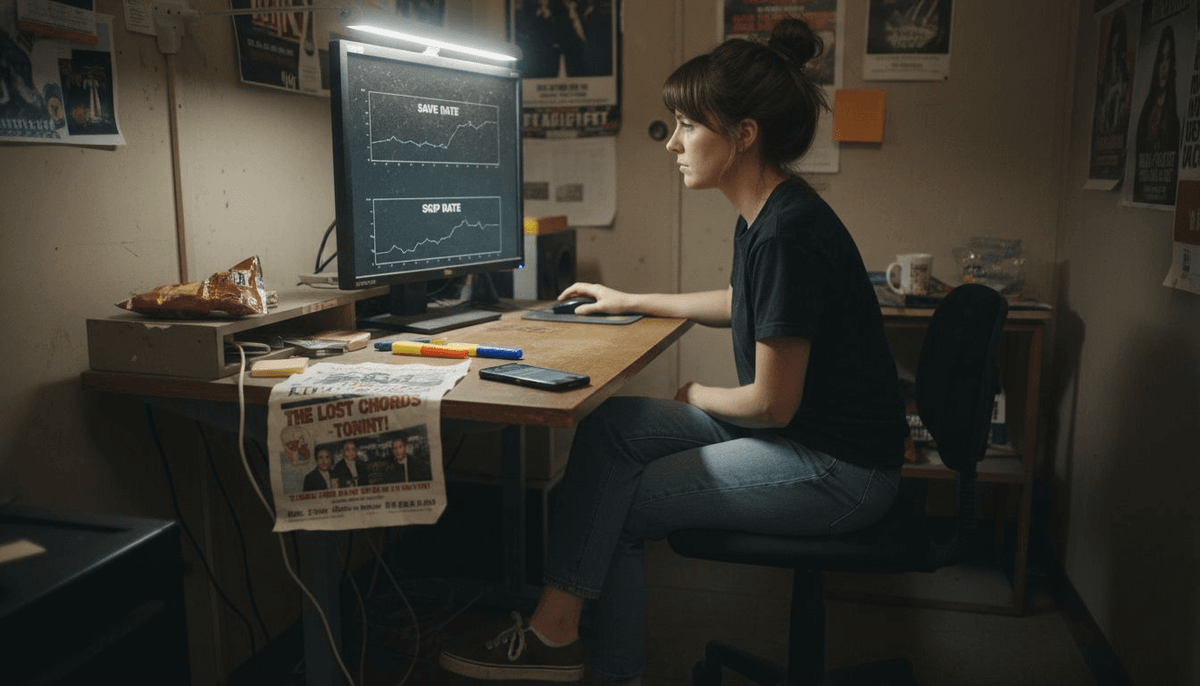
Focus on save rate, skip rate, and retention. Save rate indicates genuine listener enthusiasm. Skip rate reveals content mismatch or weak curator fit. Retention shows sustained engagement beyond initial curiosity. These metrics expose curator impact quality better than follower counts.
Step 3: Map Curator Networks
Analyze playlist overlap and shared audience demographics. Curators often collaborate or influence overlapping listener bases. Network mapping reveals how trends propagate across connected curators, helping you predict momentum.
Step 4: Leverage AI-Powered Prioritization
Using AI-powered tools to prioritize curators by relevance streamlines targeting. Machine learning models score curators based on historical impact, genre alignment, and audience match. This automation frees your team to focus on high-value analysis.
Step 5: Monitor Emerging Artist Placements
Track when curators add unsigned or rising artists. Cross-reference placement timing with subsequent momentum signals like follower growth and streaming spikes. Early placements by influential curators predict breakouts. Detecting breakout artists weeks early gives you negotiation leverage.
Step 6: Interpret and Act
Proper playlist data interpretation separates signal from noise. Validate patterns across multiple curators before acting. Use insights to guide signing decisions, marketing allocation, and artist development priorities.
| Step | Objective | Key Tools/Metrics |
|---|---|---|
| Identify Curators | Build target curator catalog | Curator type, genre focus, audience demographics |
| Analyze Engagement | Measure curator impact quality | Save rate, skip rate, retention |
| Map Networks | Understand trend propagation | Playlist overlap, shared audiences |
| Prioritize with AI | Automate relevance scoring | Machine learning models, historical impact data |
| Monitor Placements | Detect early momentum signals | Emerging artist adds, timing analysis |
| Interpret and Act | Guide strategic decisions | Cross-validation, pattern recognition |
Pro Tip: Regularly update curator mappings every 4 to 6 weeks to stay current with shifting influence patterns as curator popularity and audience preferences evolve continuously.
Common Mistakes and Troubleshooting
Relying solely on public streaming numbers without private playlist context is the most frequent mistake. Public metrics lag reality by weeks. You're reacting to yesterday's trends instead of anticipating tomorrow's.
Oversight of smaller niche curators with high engagement rates costs opportunities. A curator with 5,000 engaged followers often signals micro-trends more accurately than one with 500,000 passive followers. Don't dismiss scale at the expense of quality.
Misinterpreting high skip rates as positive engagement occurs in about 35% of cases. Skip rate is a negative metric. High skip rates indicate listener dissatisfaction or poor playlist fit, not curiosity or sampling behavior.
Failing to validate playlist authenticity leads to faulty conclusions. Bot-inflated metrics distort analysis. Check listener retention and follower verification to ensure playlists represent real human engagement.
Ignoring time lags between artist placement and momentum creates false negatives. Curator influence takes 2 to 4 weeks to manifest in streaming growth. Expecting immediate results dismisses placements that will deliver value soon.
Troubleshooting Checklist
- Cross-validate insights across multiple data sources to reduce error
- Interpret skip rate as negative engagement, not positive sampling
- Include niche curators with high engagement in your analysis
- Validate playlist authenticity by checking retention and follower verification
- Account for typical 2 to 4 week time lags between placement and momentum
Pro Tip: Maintain up-to-date calibration of metrics interpretations as platform algorithms and listener behaviors shift, requiring periodic recalibration of your benchmarks.
Integrating Curator Insights into A&R and Marketing Strategies
Prioritize artist signings based on curator influence metrics that indicate genuine audience engagement. When multiple influential curators add an artist independently, it signals organic momentum worth investing in. Use these signals to validate gut instincts and reduce signing risk.
Allocate marketing resources toward curators and playlists with historically proven engagement. Target curators whose audiences align with your artist's genre and demographic. This precision improves music marketing analytics outcomes by focusing spend where it converts.
Use playlist momentum signals to optimize campaign timing. Launch promotional efforts when curator placements begin accelerating, not before momentum builds or after it peaks. Timing campaigns to ride curator-driven momentum multiplies impact.
Leverage data-driven insights to validate or pivot artist development strategies in near real-time. If curator engagement favors certain tracks or styles, adjust release schedules and promotional emphasis accordingly. Agility based on curator feedback shortens development cycles.
Embed curator data analysis into existing artist discovery workflows for continuous advantage. Integrate curator tracking into weekly or biweekly A&R meetings. Make it a standard input for marketing planning and artist development reviews.
Integration Actions
- Base signing decisions on curator influence metrics showing genuine engagement
- Target marketing resources toward curators with proven engagement history
- Time campaigns to align with curator-driven momentum signals
- Adjust artist development strategies based on curator feedback patterns
- Make curator data a standard input in A&R and marketing workflows
Expected Timelines and Measurable Outcomes
Actionable insights typically emerge within 4 to 6 weeks after implementing curator influence tracking. Initial data collection and baseline establishment require 2 to 3 weeks. Pattern recognition and trend validation follow over the next 2 to 3 weeks.
Scouting productivity improves by up to 40% as early signals enable faster decision-making. You identify promising artists weeks before competitors notice them. This lead time translates into better negotiation terms and earlier market positioning.
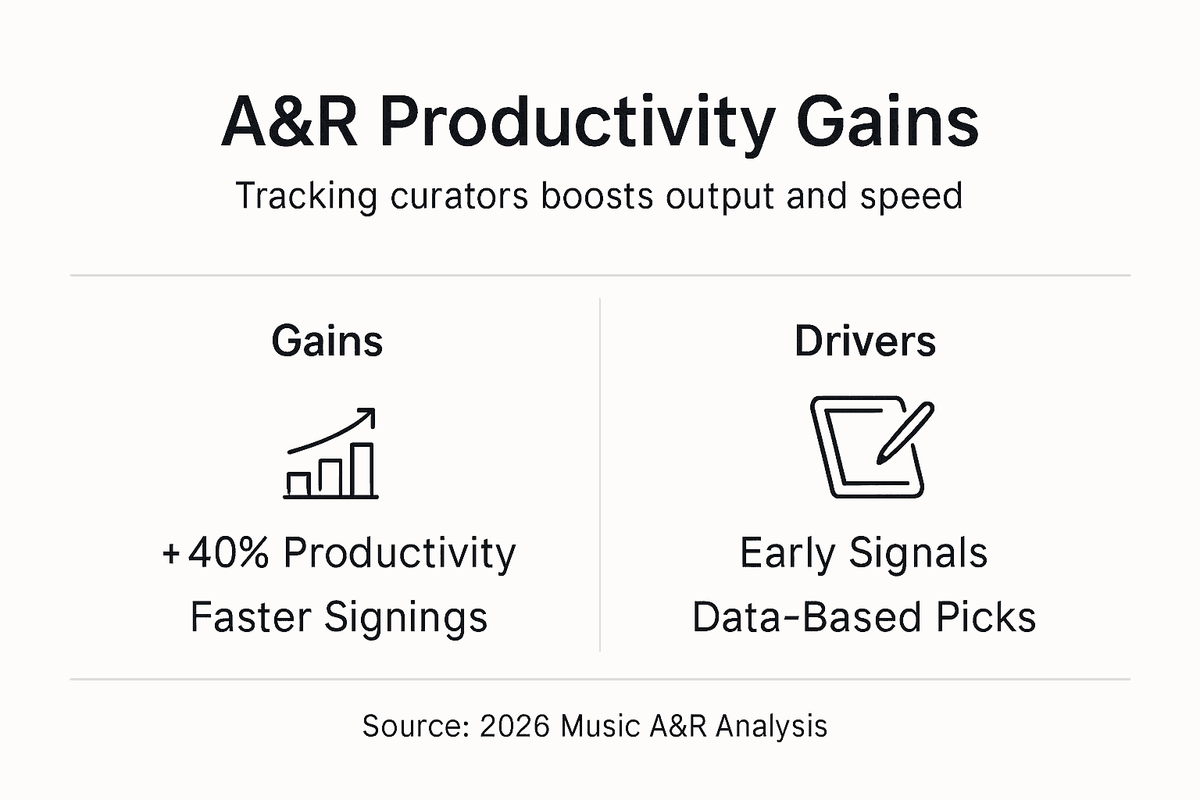
Targeted marketing fueled by curator data sees engagement rise by approximately 25%. Campaigns reach listeners already primed by trusted curators, increasing conversion rates and reducing wasted spend.
Monitoring skip and retention rates reduces marketing waste by highlighting mismatched placements early. You redirect resources away from underperforming curators toward those delivering real engagement. This optimization improves campaign efficiency and ROI.
Early artist discovery timelines depend on curator activity cycles. Genres with active curator communities deliver faster insights. Niche genres may require longer observation periods to establish reliable patterns.
| Outcome | Timeframe | Impact |
|---|---|---|
| Actionable Insights | 4 to 6 weeks | Validated trend patterns emerge |
| Scouting Productivity | Ongoing | Up to 40% improvement |
| Marketing Engagement | Campaign-specific | Approximately 25% increase |
| Campaign Efficiency | 2 to 4 weeks | Reduced wasted spend via skip/retention monitoring |
Curator influence tracking improves A&R scouting productivity by up to 40% through earlier trend detection and faster decision-making.
Alternative Approaches and Tradeoffs
Public streaming and social media metrics offer accessibility but lag in detecting trends. By the time an artist appears on public charts, signing costs have increased and competition intensifies. These metrics work for validation but fail at prediction.
Algorithmic-only tracking lacks the cultural depth human curators provide. Algorithms optimize for engagement but miss context, authenticity, and taste-making nuance. They identify patterns but don't explain why listeners care or how trends will evolve.
Direct curator relationship management delivers qualitative insights and partnership opportunities. Face-to-face relationships build trust and access. However, this approach requires significant time and resource investment, limiting scalability. You can cultivate relationships with dozens of curators, not thousands.
Private playlist data analysis provides predictive power with earlier, more nuanced metrics. It reveals hidden patterns and emerging trends weeks ahead of public visibility. The tradeoff is investment in specialized tools and data access. Music trend analysis tactics vary widely in cost, complexity, and lead time.
| Approach | Advantages | Limitations | Resource Requirements |
|---|---|---|---|
| Public Metrics | Widely accessible, free | Lags trends by weeks, lacks depth | Minimal |
| Algorithmic Tracking | Scalable, automated | Misses cultural context and nuance | Moderate |
| Direct Relationships | Qualitative insights, partnerships | Time-intensive, limited scale | High |
| Private Playlist Data | Predictive, early signals, nuanced | Requires specialized tools and access | Moderate to high |
Summary and Next Steps
Tracking curator influence is essential for competitive early artist and trend discovery. Curators drive over 70% of streams and shape listener behavior more powerfully than any other factor. Relying on public metrics alone leaves you perpetually behind.
Private playlist data reveals hidden patterns not observable through public streaming metrics. It exposes genuine enthusiasm among tastemakers weeks before artists break into mainstream awareness. This early visibility transforms A&R scouting from reactive to predictive.
Combining advanced data tools with human curator understanding yields optimal insights. Technology scales analysis, but human judgment interprets context and validates patterns. The most effective strategies blend both.
Start by securing foundational data access and building integrated workflows. Catalog curators in your target genres, establish baseline engagement metrics, and begin monitoring placement patterns. Embed these insights into regular A&R and marketing decision processes.
Implement these strategies now to gain strategic advantage in talent scouting and marketing. The music industry moves fast. Every week you delay costs opportunities to competitors already leveraging curator influence data.
Explore Advanced Music Analytics Solutions at Music24
Ready to transform your talent scouting with cutting-edge data? Music24's comprehensive analytics platform gives you access to anonymized private playlist data critical for tracking curator influence. Our tools reveal emerging trends weeks before they surface in public metrics, giving your team the competitive edge needed in today's fast-moving music landscape.
Explore types of music analytics to tailor insights to your A&R and marketing needs. Use Music24's early artist discovery analytics to accelerate scouting and optimize marketing spend with data-driven confidence. Our private playlist analysis guide helps you get started immediately.
Frequently Asked Questions
How can private playlist data reveal trends earlier than public metrics?
Private playlists capture listener choices and curator activity before public streaming numbers reflect them. When curators add emerging artists to personal collections, it signals genuine enthusiasm weeks before those artists appear on public charts. This early detection window gives you actionable lead time competitors miss.
What types of curators should I prioritize tracking?
Focus on editorial, independent, and algorithmic hybrid curators, with special attention to human-curated playlists that show high engagement rates. Independent curators with smaller but highly engaged audiences often signal micro-trends first. Editorial curators provide institutional validation that accelerates mainstream adoption.
How can I avoid common mistakes in interpreting curator influence data?
Validate playlist authenticity by checking listener retention and follower verification to avoid bot-inflated metrics. Don't rely solely on public metrics or overlook niche curators with high engagement. Interpret skip rate as a negative engagement metric, not positive sampling behavior. Regular cross-validation across multiple data sources improves accuracy and reduces false positives.
How long does it take to see results from curator influence tracking?
Actionable insights typically emerge within 4 to 6 weeks after starting curator influence tracking. Initial data collection and baseline establishment require 2 to 3 weeks. Pattern recognition and trend validation follow over the next 2 to 3 weeks. Measurable improvements in scouting productivity and marketing outcomes become evident within the first quarter of consistent implementation.
Recommended
- 7 Data-Driven Artist Discovery Tips for A&R Success - Blog - Music24.com
- Music Curator Influence: Unlocking Data-Driven Discovery - Blog - Music24.com
- 7 Steps Artist Discovery Checklist for A&R Success - Blog - Music24.com
- Music Industry Analytics Trends 2025: Shaping A&R Strategy - Blog - Music24.com

