
More than 70 percent of american music streams are now driven by curated playlists instead of traditional radio or charts. For A&R executives and talent scouts, understanding how music curators shape discovery is no longer optional. This article reveals how curators and playlist ecosystems influence global trends, highlighting why fresh american talent and emerging sounds are found first through these digital gatekeepers.
Table of Contents
- Defining Music Curator Influence Today
- Types of Curators and Playlist Ecosystems
- How Curators Shape Music Discovery Trends
- The Role of Private Playlist Data in Trend Prediction
- Leveraging Curator Insights for Early A&R Decisions
- Risks, Bias, and Best Practices in Data-Driven Curation
Key Takeaways
| Point | Details |
|---|---|
| Influence of Music Curators | Music curators are transforming audience discovery by creating curated musical narratives that connect artists with listeners and shape cultural trends. |
| Playlist Ecosystem Diversity | The playlist landscape consists of editorial curators, algorithmic selectors, and independent creators, each offering unique strengths for music discovery. |
| Importance of Private Playlist Data | Analyzing private playlist data provides insights into listener preferences, revealing trends and emerging artist momentum not captured by public metrics. |
| Addressing Algorithmic Bias | It's crucial to mitigate biases in music recommendation systems to ensure fair representation and support for new, diverse musical voices. |
Defining Music Curator Influence Today
In the contemporary music landscape, music curators have emerged as critical gatekeepers transforming how audiences discover and experience new sounds. Curatorial practices in music represent far more than simple playlist creation - they are sophisticated acts of artistic authorship and cultural interpretation.
Music curators today operate across multiple platforms, functioning as sophisticated storytellers who craft intricate musical narratives. These professionals - including radio programmers, streaming platform selectors, independent playlist creators, and genre-specific experts - leverage deep musical knowledge to create meaningful connections between artists and listeners. Their influence extends beyond mere song selection, encompassing complex cultural translation and aesthetic curation.
The core power of modern music curators lies in their ability to contextualize musical experiences. By strategically assembling tracks, they create immersive journeys that transcend individual songs, revealing underlying thematic connections and emerging cultural trends. Digital platforms have exponentially amplified their reach, allowing curators to build global audiences and shape musical preferences across geographic and genre boundaries.
Pro tip: Develop a signature curatorial approach by consistently exploring emerging artists and creating unique narrative arcs within your playlists that tell compelling musical stories.
Types of Curators and Playlist Ecosystems
The modern music discovery landscape encompasses a complex array of playlist ecosystems that serve as critical pathways for artist exposure and listener engagement. Playlist curation dynamics reveal a nuanced environment where multiple curator types collaborate and compete to shape musical experiences.
Three primary curator categories dominate the contemporary playlist landscape: editorial curators, algorithmic selectors, and independent playlist creators. Editorial curators, employed by major streaming platforms, represent professional music experts who craft genre-specific and mood-based collections with strategic intent. These industry professionals leverage deep musical knowledge to create narrative-driven playlists that introduce listeners to emerging and established artists across diverse soundscapes.
Algorithmic playlist generators represent the technological counterpoint to human curation, utilizing machine learning and listener behavior data to dynamically assemble personalized musical collections. While these systems offer incredible customization, they cannot fully replicate the nuanced artistic sensibility of human curators who understand contextual and emotional musical connections. Independent playlist creators further enrich this ecosystem, offering niche, genre-specific, and highly specialized musical journeys that often discover talent before mainstream platforms.
Pro tip: Build your playlist ecosystem strategy by understanding the unique strengths of each curator type and how they interconnect to create comprehensive musical discovery experiences.
Here's a concise comparison of primary music curator types and their core strengths:
| Curator Type | Main Focus | Unique Value | Typical Platform |
|---|---|---|---|
| Editorial Curators | Genre & mood curation | Expert storytelling, trend setting | Major streaming apps |
| Algorithmic Selectors | Personalized recommendations | Data-driven customization, scalability | Streaming platforms |
| Independent Creators | Niche & specialty playlists | Early talent discovery, niche communities | Social & DIY platforms |
How Curators Shape Music Discovery Trends
Digital music curation has transformed from a passive selection process into a powerful cultural force that actively shapes listener preferences and industry trends. Digital curators are central figures who blend technical insight with personal storytelling, creating musical experiences that transcend traditional genre boundaries and geographical limitations.

Curators function as sophisticated musical storytellers, strategically assembling tracks that create immersive narratives beyond individual song selections. Their expertise allows them to identify emerging artists, predict genre crossovers, and introduce listeners to musical connections they might never discover through algorithmic recommendations. By understanding subtle sonic relationships and cultural contexts, human curators provide a nuanced layer of musical interpretation that machine algorithms cannot replicate.
The influence of music curators extends far beyond playlist creation, fundamentally reshaping how audiences consume and understand music. They serve as critical gatekeepers who not only reflect current musical trends but actively generate new cultural movements by highlighting innovative sounds, bridging underground and mainstream musical ecosystems. Through carefully crafted selections, curators can elevate emerging artists, challenge listener expectations, and create meaningful connections across diverse musical landscapes.
Pro tip: Develop your curatorial voice by consistently exploring diverse musical genres and creating playlists that tell compelling stories beyond simple track compilations.
The Role of Private Playlist Data in Trend Prediction
Private playlist data represents a critical yet often overlooked goldmine of musical insight for industry professionals seeking to understand emerging listener preferences. Private playlist research offers unprecedented access to authentic musical consumption patterns that traditional public metrics cannot capture, revealing nuanced listener behaviors before they manifest in mainstream channels.
Unlike public streaming charts or social media metrics, private playlists provide a raw, unfiltered view of musical discovery and personal taste. Music industry professionals can leverage these collections to identify early trend signals, understand genre blending patterns, and detect emerging artist momentum across different listener segments. These intimate musical collections represent personal soundtracks that reflect genuine listener preferences, unencumbered by algorithmic recommendations or promotional influences.
The power of private playlist analysis lies in its ability to uncover micro-trends and regional musical preferences that remain invisible through conventional tracking methods. By examining thousands of anonymized private playlists, researchers can detect subtle shifts in listener taste, predict genre transformations, and understand how musical discovery actually happens at the grassroots level. This granular approach allows talent scouts, A&R executives, and music marketers to develop more targeted and authentic strategies for artist development and audience engagement.
Pro tip: Develop a systematic approach to analyzing private playlist data by focusing on consistent patterns, unexpected genre combinations, and emerging artist crossover potential.
Leveraging Curator Insights for Early A&R Decisions
A&R professionals increasingly recognize curator insights as critical predictive tools for identifying emerging musical talent before traditional metrics can detect meaningful momentum. Data-driven artist discovery has transformed from speculation to strategic intelligence, allowing talent scouts to make more precise and calculated decisions about potential artist investments.
Successful A&R strategies now rely on deep, nuanced understanding of curator networks and their ability to surface authentic musical innovations. These curator insights provide multidimensional perspectives that go beyond streaming numbers, revealing critical information about artist potential such as listener engagement patterns, cross-genre appeal, and underground momentum. By analyzing how respected curators interact with and promote emerging artists, A&R professionals can identify talent trajectories months or even years before mainstream recognition.
The most sophisticated A&R approaches integrate curator insights as predictive intelligence, creating a comprehensive ecosystem of talent evaluation. This means tracking not just playlist inclusions, but understanding the narrative and cultural context curators create around emerging artists. Curators act as cultural translators, offering nuanced perspectives on musical authenticity, regional trends, and potential breakout moments that traditional metrics cannot capture. Their selections represent complex musical storytelling that reveals deeper listener connections and emerging artistic movements.
Pro tip: Build a network of diverse curators across different genres and regions to develop a more comprehensive and dynamic approach to talent scouting.
Risks, Bias, and Best Practices in Data-Driven Curation
Data-driven music curation confronts significant ethical challenges that demand careful navigation and proactive mitigation strategies. Algorithmic fairness in music platforms has emerged as a critical concern, revealing systemic biases that can marginalize emerging artists and limit musical diversity.
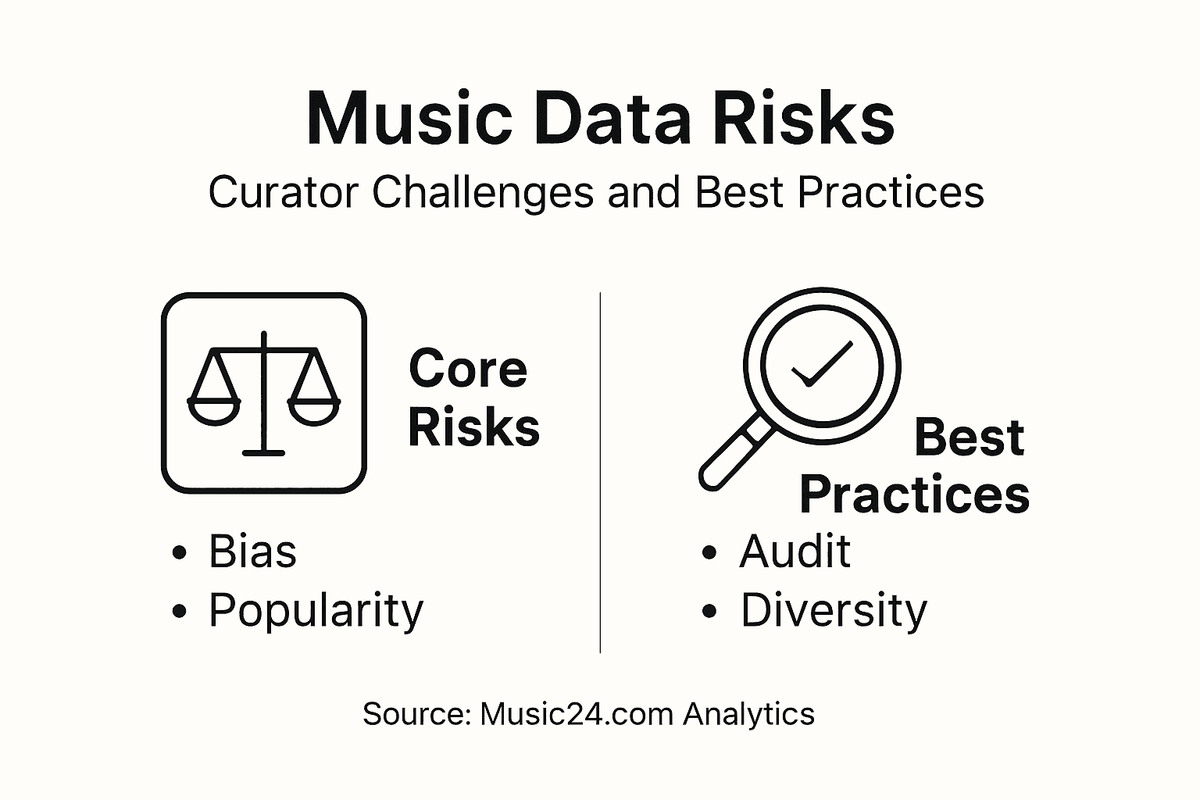
Popularity bias represents one of the most pervasive risks in algorithmic music recommendation, where existing successful artists consistently receive disproportionate exposure. This dynamic creates a self-reinforcing cycle that makes it increasingly difficult for new and diverse musical voices to break through established recommendation systems. By prioritizing already popular artists, these algorithms inadvertently suppress musical innovation and reduce the potential for discovering genuinely unique talent across different genres and cultural backgrounds.
Addressing these systemic challenges requires a multifaceted approach that integrates human expertise with technological capabilities. Ethical curation demands transparent algorithms that actively work to counterbalance inherent biases, create equitable exposure opportunities, and maintain a commitment to musical diversity. This means developing recommendation systems that not only personalize user experiences but also intentionally create pathways for lesser-known artists to gain meaningful visibility. Platforms must continuously audit their recommendation engines, incorporate diverse curatorial perspectives, and remain committed to fostering a more inclusive musical ecosystem.
Pro tip: Develop robust diversity metrics and regularly audit your recommendation algorithms to ensure fair representation across artist backgrounds, genres, and emerging musical movements.
Below is a summary of biases and best practices in data-driven music curation:
| Challenge | Potential Impact | Mitigation Strategy |
|---|---|---|
| Popularity Bias | Limits exposure for new artists | Transparent algorithms, active auditing |
| Genre Homogeneity | Reduces musical diversity | Diverse curator input, equity metrics |
| Regional Oversights | Marginalizes local trends | Incorporate regional playlist analysis |
Unlock the Power of Data-Driven Music Curation Today
The challenge of identifying emerging trends and authentic musical innovation before mainstream recognition is more complex than ever. As this article highlights, private playlist data and curator insights offer a critical window into real listener behavior and early artist discovery—far beyond what public charts can reveal. Pain points like popularity bias, limited genre diversity, and missing regional trends create barriers for A&R teams and music professionals aiming to find genuine breakout talent.
Music24.com specializes in unlocking these exact insights by analyzing millions of anonymized private playlists worldwide. Our platform reveals the hidden influence of top curators, uncovers emerging micro-trends, and delivers predictive analytics tailored to your talent scouting and marketing goals. By integrating the nuanced context of human curation with cutting-edge data science, you gain a competitive edge in navigating the evolving music discovery landscape.
Harness the power of private playlist data to transform your approach to artist development and trend prediction. Explore how Music24 can help you connect the dots between early signals and industry success.

Discover the future of music curation with Music24.com now. Don’t wait until trends go mainstream to make strategic moves. Visit our landing page to learn how data-driven insights can elevate your A&R and marketing strategies. Start turning curator influence and private playlist patterns into your most valuable music industry assets.
Frequently Asked Questions
What is the role of music curators in the modern music landscape?
Music curators act as gatekeepers who transform how audiences discover music. They craft playlists that go beyond simple song selection, creating meaningful connections between artists and listeners through curated narratives and cultural interpretation.
How do editorial curators differ from algorithmic selectors?
Editorial curators are music experts who create genre-specific and mood-based playlists with a strategic narrative, whereas algorithmic selectors use data and machine learning to generate personalized recommendations based on listener behavior.
What advantages do independent playlist creators offer?
Independent playlist creators focus on niche and specialty playlists, often discovering talent before it reaches mainstream recognition. They provide unique musical journeys that cater to specific audiences, enriching the overall music discovery ecosystem.
Why is private playlist data important for trend prediction?
Private playlist data offers insights into genuine listener preferences that are not captured by public metrics. Analyzing this data helps identify early trends, genre blending, and emerging artist momentum, allowing industry professionals to make informed decisions about music and talent development.
Recommended
- 7 Influential Curator Examples for Early Artist Discovery - Blog - Music24.com
- 7 Curator Influence Examples for Data-Driven Talent Discovery - Blog - Music24.com
- Role of Curators in Music Discovery Explained - Blog - Music24.com
- 7 Examples of Influential Curators Every Pro Should Know - Blog - Music24.com

