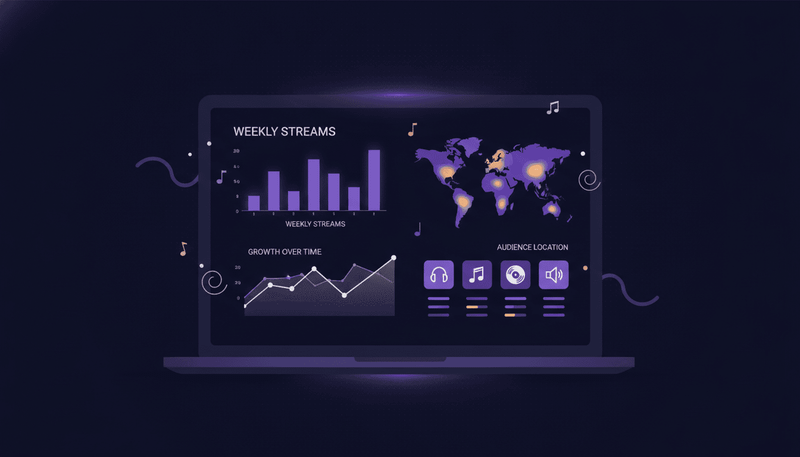
Advanced Analytics in Music: Predicting Talent Breakouts
Advanced analytics in music empowers A&Rs to spot emerging artists, understand curator influence, and leverage private playlist data for early breakthroughs.

Most record labels miss emerging talent because they rely on public streaming data that hides genuine fan behavior. For American and global A&R executives, private playlist analytics deliver a new edge by revealing authentic listening patterns. These advanced insights go deeper than surface trends, showing how influences spread, which micro-genres thrive, and who might become the next breakout artist. With over 60 percent of young American listeners curating private playlists, understanding this private data unlocks real discovery potential.
Table of Contents
- Defining Advanced Analytics In Music
- Types Of Music Analytics And Private Data
- How Private Playlist Analysis Works
- Predictive Artist Discovery And Trend Detection
- Curator Influence And Genre Blending Insights
- Risks, Limitations, And Data Compliance
Key Takeaways
| Point | Details |
|---|---|
| Advanced Analytics in Music | Advanced analytics leverage AI and machine learning to derive actionable insights from musical data, enhancing predictions on trends and audience behavior. |
| Types of Music Analytics | Key types like behavioral analysis and private data mining provide deeper insights into listener preferences and emerging trends. |
| Private Playlist Analysis | This technique utilizes user data to uncover genuine musical preferences, aiding in precise predictions of artist success. |
| Ethical Considerations | Professionals must address ethical challenges such as algorithmic bias and data privacy while leveraging innovative analytics. |
Defining Advanced Analytics in Music
Advanced analytics in music represents a sophisticated approach to understanding, predicting, and interpreting musical data through cutting-edge computational techniques. At its core, this discipline leverages artificial intelligence and machine learning to transform raw musical information into actionable insights. Advanced AI techniques in music analysis have dramatically expanded our ability to decode complex musical patterns and trends.
The field encompasses multiple sophisticated approaches, including deep neural networks, statistical modeling, and algorithmic pattern recognition. These technologies enable unprecedented exploration of musical characteristics such as genre classification, emotional resonance, listener preferences, and potential artist breakout potential. By applying complex mathematical models to musical datasets, researchers and industry professionals can now generate nuanced predictions about musical trends, artist potential, and audience behavior that were previously impossible.
Key components of advanced music analytics include feature extraction, predictive modeling, and multimodal analysis. Professionals can now examine intricate relationships between musical elements like rhythm, harmony, instrumentation, and listener engagement. Comprehensive data science approaches allow for deeper understanding of music's structural and emotional components, transforming how we comprehend and interact with musical content.
Here's a summary of advanced analytics techniques and their roles in the music industry:
| Technique | Key Purpose | Typical Business Impact |
|---|---|---|
| Deep Neural Networks | Uncover complex musical patterns | Improves prediction of hit songs |
| Statistical Modeling | Analyze trends and audience behavior | Guides strategic marketing decisions |
| Feature Extraction | Analyze musical elements (rhythm, harmony) | Enhances playlist personalization |
| Multimodal Analysis | Integrate audio, text, and user data | Enables richer listener insights |
Pro tip: Focus on developing interdisciplinary skills combining music theory, data science, and machine learning to become a competitive advanced music analytics professional.
Types of Music Analytics and Private Data
Music analytics represents a sophisticated ecosystem of data exploration techniques that enable deep insights into musical consumption, creation, and audience behavior. Big data analytics in music enterprises reveal multiple distinct categories of analytical approaches, each serving unique strategic purposes for industry professionals.
The primary types of music analytics include behavioral analysis, trend prediction, playlist personalization, and social media data mining. Professionals leverage these techniques to understand listener preferences, track emerging musical trends, and develop targeted marketing strategies. By examining AI methods in music data processing, researchers can extract nuanced insights from complex datasets, transforming raw information into actionable intelligence about artist potential and audience engagement.
Private playlist data has emerged as a critical resource in advanced music analytics, offering unprecedented granularity in understanding listener behavior. Unlike public streaming metrics, private playlist information provides unfiltered insights into genuine musical preferences, enabling more accurate predictions of artist breakout potential. These datasets allow for sophisticated analysis of listener habits, genre crossovers, and emerging musical trends that traditional public metrics might overlook.
This table contrasts public versus private music data in analytics applications:
| Data Type | Source | Depth of Insight | Impact on Trend Discovery |
|---|---|---|---|
| Public Streaming Metrics | Platform-wide user activity | General patterns, limited personalization | May overlook emerging micro-trends |
| Private Playlist Data | Individual user playlists | Reveals genuine preferences, sequence behaviors | Detects hidden artist breakout signals |
Pro tip: Develop expertise in both technical data analysis skills and musical domain knowledge to become a truly effective music analytics professional.
How Private Playlist Analysis Works
Private playlist analysis represents a sophisticated data mining approach that transforms individual listening patterns into actionable musical insights. Data mining techniques in playlist analysis enable researchers to extract complex behavioral patterns while maintaining strict user privacy protections, creating a nuanced understanding of musical consumption that goes far beyond traditional metrics.
The technical process involves multiple sophisticated stages of data extraction and machine learning. Researchers utilize advanced algorithms to anonymize and aggregate user listening data, creating comprehensive models of musical preferences. Automatic music analysis techniques allow professionals to identify subtle trends in listening behavior, such as emerging genre crossovers, artist discovery patterns, and listener demographic correlations, without compromising individual user identities.
Key components of private playlist analysis include feature extraction, sequence modeling, and predictive recommendation generation. By analyzing the intricate relationships between song selections, playlist structures, and listening sequences, music analytics professionals can develop incredibly precise insights into audience preferences. These techniques enable record labels and streaming platforms to understand not just what music listeners enjoy, but how they discover and integrate new musical experiences into their personal soundscapes.

Pro tip: Develop strong skills in machine learning, data privacy protocols, and musical trend analysis to excel in advanced playlist analytics.
Predictive Artist Discovery and Trend Detection
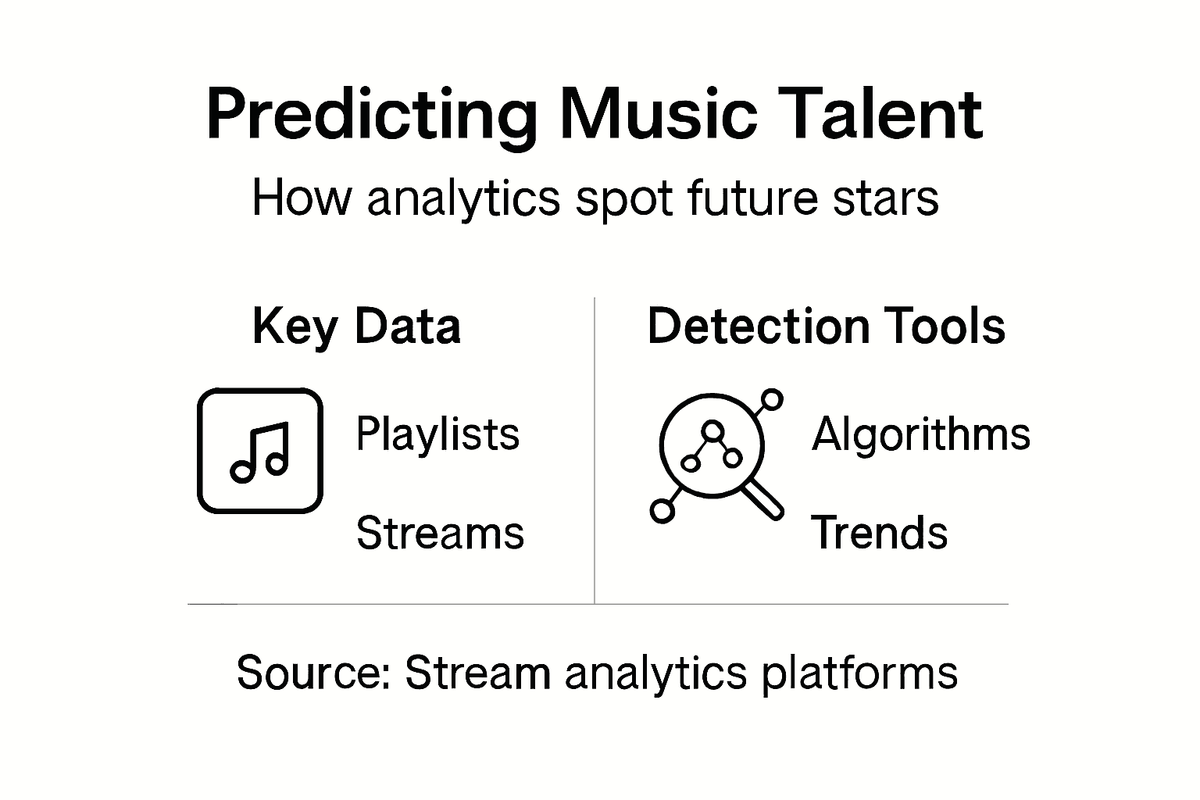
Predictive artist discovery represents a revolutionary approach to identifying emerging musical talent before traditional metrics catch up. Big data analytics in music enables music industry professionals to forecast talent breakouts by analyzing complex streaming behaviors, social interactions, and listener engagement patterns that signal potential success.
The process involves sophisticated machine learning algorithms that examine multiple data dimensions simultaneously. These advanced models go beyond surface-level metrics, diving deep into nuanced listener interactions, playlist dynamics, and temporal trends. AI models for music trend prediction can now detect subtle signals of artist potential by analyzing factors like listener retention, cross-genre appeal, and organic growth trajectories that traditional scouting methods might completely miss.
Key strategies in predictive artist discovery include tracking micro-trends in private playlists, analyzing listener behavior across different platforms, and understanding emerging genre fusion patterns. By combining quantitative data with qualitative insights, A&R professionals can develop a more holistic understanding of an artist's potential trajectory. The most advanced analytics platforms can now predict an artist's likelihood of breakthrough with unprecedented accuracy, transforming how record labels and music managers identify and nurture new talent.
Pro tip: Develop a multidisciplinary skill set combining data science, music theory, and cultural trend analysis to become an exceptional talent scout in the digital music landscape.
Curator Influence and Genre Blending Insights
Playlist curators have emerged as critical transformative agents in modern music discovery, wielding unprecedented power to shape listener experiences and musical trends. Data science research on music curation reveals how these influential tastemakers strategically blend genres, introducing audiences to innovative musical crossovers that challenge traditional categorical boundaries.
The mechanics of curator influence extend far beyond simple playlist creation. Advanced analytics demonstrate that influential curators function as cultural bridge builders, systematically constructing musical journeys that guide listener exploration. Curator-driven playlist dynamics showcase how strategic genre mixing can introduce listeners to unexpected musical connections, creating hybrid sonic experiences that gradually reshape audience preferences and industry trends.
Key insights from sophisticated music analytics highlight three primary mechanisms of curator influence. First, curators identify and amplify emerging artist talent across genre boundaries. Second, they create narrative musical experiences that transcend traditional genre limitations. Third, they serve as critical early-stage trend accelerators, detecting and promoting innovative musical fusion before mainstream recognition. By carefully mapping listener receptivity and musical compatibility, these cultural architects fundamentally transform how musical discovery occurs in the digital age.
Pro tip: Build a diverse listening portfolio and develop cross-genre musical knowledge to understand the nuanced art of playlist curation and trend creation.
Risks, Limitations, and Data Compliance
Advanced music analytics introduces critical ethical challenges that demand rigorous scrutiny and responsible implementation. Big data risks in music analytics reveal complex privacy concerns that extend beyond traditional data protection frameworks, challenging professionals to balance innovative insights with fundamental user rights and ethical considerations.
Multiple significant limitations emerge in contemporary music analytics approaches. Algorithmic bias represents a primary challenge, with machine learning models potentially reinforcing existing commercial trends and inadvertently limiting artistic diversity. These systems can systematically marginalize emerging artists from underrepresented backgrounds, creating feedback loops that amplify existing market inequities. Algorithmic compliance challenges demonstrate that technical sophistication must be balanced with robust ethical oversight to prevent unintended discriminatory outcomes.
Comprehensive data compliance requires a multifaceted approach integrating technological safeguards, transparent methodologies, and proactive privacy protections. Key strategies include anonymizing individual user data, implementing strict consent mechanisms, developing algorithmic auditing processes, and creating clear opt-out protocols. Music analytics platforms must continuously evolve their compliance frameworks to address emerging regulatory requirements and protect individual user privacy while maintaining the innovative potential of data-driven insights.
Pro tip: Develop a comprehensive understanding of international data protection regulations and maintain transparent, ethical data handling practices in your music analytics work.
Unlock the Power of Private Playlist Analytics to Predict Music Talent Breakouts
The article highlights the challenge of identifying rising artists before they hit mainstream visibility. Traditional public streaming metrics often miss the subtle signs of breakthrough potential captured in private playlist data. Pain points include the need for deeper listener insights, understanding genre blending, and detecting early trend signals that are hidden from standard charts. By leveraging concepts like predictive artist discovery and private playlist analysis, music professionals can gain a crucial advantage in talent scouting and marketing strategy development.
Music24.com directly addresses these challenges: Music24 reads 14,000,000+ public and private playlists from the last 13 months, including private playlists from FreeYourMusic libraries, and finds music discovery patterns that public charts alone do not show. Our advanced analytics focus on genre fusion insights, curator influence, and geographic micro-trends to help you spot genuine breakout artists early and craft data-driven campaigns.
Discover how you can spot what is rising before it peaks, with playlist data made for the music industry. Explore the possibilities now at Music24.com.
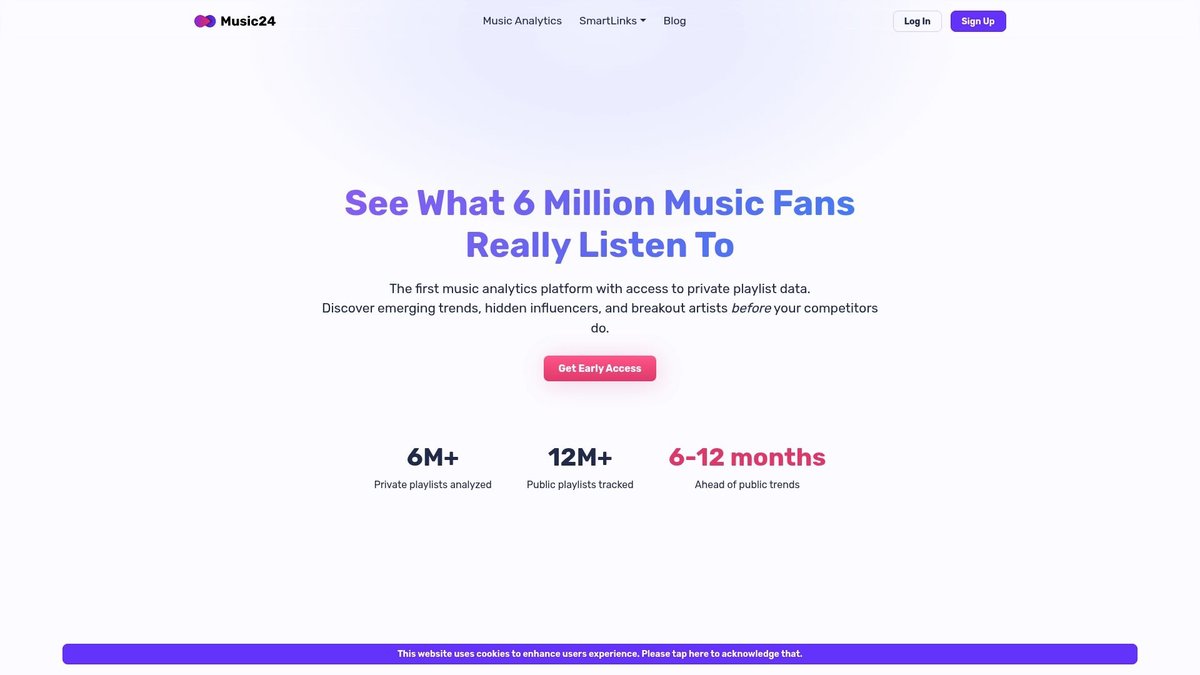
Take control of your artist discovery today by visiting Music24.com. Experience the difference that proprietary private playlist data makes in transforming your music analytics.
Music24 also does the work around a release: add a song and it makes the posts and the videos, plans the rollout and publishes to TikTok, Instagram, YouTube, Facebook and Threads.
Frequently Asked Questions
What are advanced analytics in music?
Advanced analytics in music involves the use of artificial intelligence and machine learning to analyze musical data, uncover trends, and make predictions about listener behavior, artist potential, and musical trends.
How does predictive artist discovery work?
Predictive artist discovery utilizes machine learning algorithms to analyze multiple data dimensions, including streaming behaviors and listener engagement patterns, to identify emerging musical talent before they reach mainstream recognition.
What role do private playlists play in music analytics?
Private playlists provide deeper insights into individual listening preferences compared to public streaming metrics, helping industry professionals make more accurate predictions about artist breakout potential and listener habits.
What are some risks associated with advanced music analytics?
Key risks include algorithmic bias, which can marginalize underrepresented artists, and privacy concerns surrounding user data. It's essential for professionals to implement ethical practices and robust data compliance to address these challenges.
Recommended
Get your music heard. Skip the content grind.
Add a song. Music24 makes the posts and the videos, plans your release and publishes it on every channel. Free for 7 days on the Pro plan, no card.