Music trend analysis explained: A guide for professionals
Learn how music trend analysis uses streaming data, social metrics, and machine learning to identify breakout artists and emerging trends for A&R and marketing professionals.

Music trend analysis has evolved from subjective intuition to a data-driven science transforming how labels, A&R teams, and marketers identify breakout artists. Understanding the metrics behind streaming growth, social virality, and algorithmic discovery is now essential for making informed decisions. This guide explains how to interpret music data to spot emerging trends and capitalize on commercial opportunities before competitors.
Table of Contents
- Why Data Has Transformed Music Trend Analysis
- Core Metrics And Analytical Methods For Trend Detection
- The Impact Of Streaming Platforms And Social Media Algorithms
- Applying Music Trend Analysis To Identify Breakout Artists
- Where Music24 fits
Key takeaways
| Point | Details |
|---|---|
| Data analytics now underpin trend identification | Streaming metrics, social signals, and machine learning models predict hit potential with over 90% accuracy. |
| Streaming and social platforms shape discovery | Algorithmic recommendations on Spotify and TikTok virality create new pathways for artist breakout success. |
| Advanced feature extraction enhances classification | Converting audio signals into network mappings improves genre detection and trend forecasting. |
| TikTok virality drives commercial opportunities | Sound adoption rate and cross-platform migration signal audience engagement and brand campaign potential. |
| Human curation validates data insights | Combining quantitative metrics with qualitative judgment captures authentic talent and cross-cultural appeal. |
Why data has transformed music trend analysis
Traditional A&R professionals relied on scouting and gut feeling to discover talent, attending live shows and networking within music communities. That approach limited reach and introduced bias. Now streaming platforms generate millions of data points daily on listener behavior, geographic spread, and engagement patterns.
Data on streaming growth, skip rates, and social virality guide investment decisions. Labels analyze metrics to understand which songs resonate with audiences before committing marketing budgets. Why streaming metrics matter for early trend detection becomes clear when you see how completion rates and save percentages predict commercial success.
Key data types transforming A&R include:
- Streaming numbers across platforms and regions
- Skip rates and completion percentages indicating listener retention
- Geographic spread showing multi-market appeal
- TikTok sound adoption and video creation volume
- Playlist placements by both algorithmic and human curators
The shift means decisions stem from audience behavior rather than executive intuition. As one industry observer noted, the audience now makes the decision for labels, fundamentally changing the A&R role from gatekeeper to data interpreter.
"The shift in A&R from instinct to data means the audience now often makes the decision for labels."
This transformation enables professionals to spot micro-trends in specific cities or demographic groups before they reach mainstream awareness, creating competitive advantage for labels and managers willing to invest in analytics capabilities.
Core metrics and analytical methods for trend detection
Audio feature extraction reveals characteristics that predict listener response. Metrics like instrumentalness measure the absence of vocals, while valence captures emotional positivity. Speechiness quantifies spoken word content, and duration affects playlist placement and streaming algorithm recommendations.

Predictive models classify hit potential with remarkable accuracy. Logistic Regression and Random Forest models achieve over 90% accuracy in predicting Billboard Hot 100 inclusion by analyzing audio features, social metrics, and streaming patterns. Machine learning identifies patterns human analysts miss.
| Model | Accuracy | Key Strengths |
|---|---|---|
| Logistic Regression | 90%+ | Simple interpretation, fast training |
| Random Forest | 92%+ | Handles complex feature interactions |
| XGBoost | 93%+ | Superior performance on imbalanced datasets |
Advanced feature extraction methods convert audio sequences into complex network mappings for genre classification. These approaches analyze how musical elements connect and evolve throughout a track, revealing structural patterns that define emerging subgenres.
Combining multiple metrics strengthens trend detection signals. A track showing high valence, low instrumentalness, and increasing completion rates across markets indicates mainstream appeal. Conversely, high instrumentalness with niche geographic concentration suggests underground or experimental trend potential.
Pro Tip: Track metric changes over time rather than snapshots. A song with modest current streaming but 200% week-over-week growth signals early trend momentum worth investigating.
How to interpret music analytics early trend discovery requires understanding baseline expectations for different genres and markets. Electronic music typically shows higher instrumentalness than pop, while regional hip-hop may concentrate in specific cities before spreading nationally.
The most effective approach layers quantitative metrics with qualitative context. Data reveals what is happening; human judgment explains why and predicts sustainability.
The impact of streaming platforms and social media algorithms
Streaming platforms shape discovery through recommendation algorithms that determine which tracks reach new listeners. Spotify's algorithm prioritizes songs meeting specific engagement thresholds: completion rates above 60%, save rates exceeding 5%, and share rates over 1%. Falling short limits algorithmic promotion.
Algorithmic recommendations create echo chambers that reinforce existing preferences while limiting exposure to diverse artists. Fans report discovery fatigue from repetitive viral trends dominating playlists. This algorithmic bias challenges emerging artists lacking initial momentum to trigger recommendation engines.
Key algorithmic challenges include:
- Echo chambers reinforcing mainstream preferences
- Limited exposure for niche and diverse artists
- Viral trend saturation reducing discovery novelty
- Geographic bias favoring established markets
- Genre classification errors misplacing experimental music
Yet algorithms also create opportunities. Labels monitoring playlist data interpretation steps trend detection can optimize release strategies around algorithmic preferences, timing drops for maximum playlist inclusion and recommendation visibility.
TikTok transformed music discovery with virality metrics distinct from traditional streaming. Sound adoption rate, video volume, cross-platform migration, and demographic signals indicate commercial potential. A song generating 10,000 video creations in 48 hours demonstrates audience engagement that translates to streaming growth and brand campaign opportunities.
Pro Tip: Monitor cross-platform engagement to maximize breakout chances. A track trending on TikTok should trigger coordinated pushes on Spotify, Apple Music, and YouTube to capitalize on social momentum before it fades.
The role of data music marketing extends beyond discovery to campaign optimization. Real-time metrics enable rapid strategy adjustments, shifting budgets toward platforms and markets showing strongest response.
Successful labels balance algorithmic optimization with artist authenticity, ensuring data-driven decisions enhance rather than compromise creative vision.
Applying music trend analysis to identify breakout artists
Identifying breakout artists requires systematic data monitoring combined with contextual judgment. Follow this process:
- Track streaming velocity across multiple platforms and markets
- Monitor social media engagement metrics and content creation volume
- Analyze playlist placement patterns from algorithmic and editorial sources
- Evaluate demographic spread and geographic concentration
- Assess live performance impact on streaming and social metrics
- Validate findings with qualitative listening and cultural context
Performance at major festivals dramatically impacts artist metrics. Coachella performances boost streaming by 50-300% in the following weeks, signaling breakout potential to labels and brands. Monitoring post-performance metric trajectories identifies which artists sustain momentum versus brief spikes.
| Metric | Pre-Coachella | Post-Coachella | Change |
|---|---|---|---|
| Monthly Listeners | 250,000 | 650,000 | +160% |
| Playlist Adds | 1,200 | 4,800 | +300% |
| TikTok Videos | 3,500 | 18,000 | +414% |
| Instagram Followers | 45,000 | 120,000 | +167% |
Multi-market streaming growth indicates sustainable appeal beyond single-territory trends. An artist showing simultaneous growth in North America, Europe, and Asia demonstrates global potential worth significant investment.
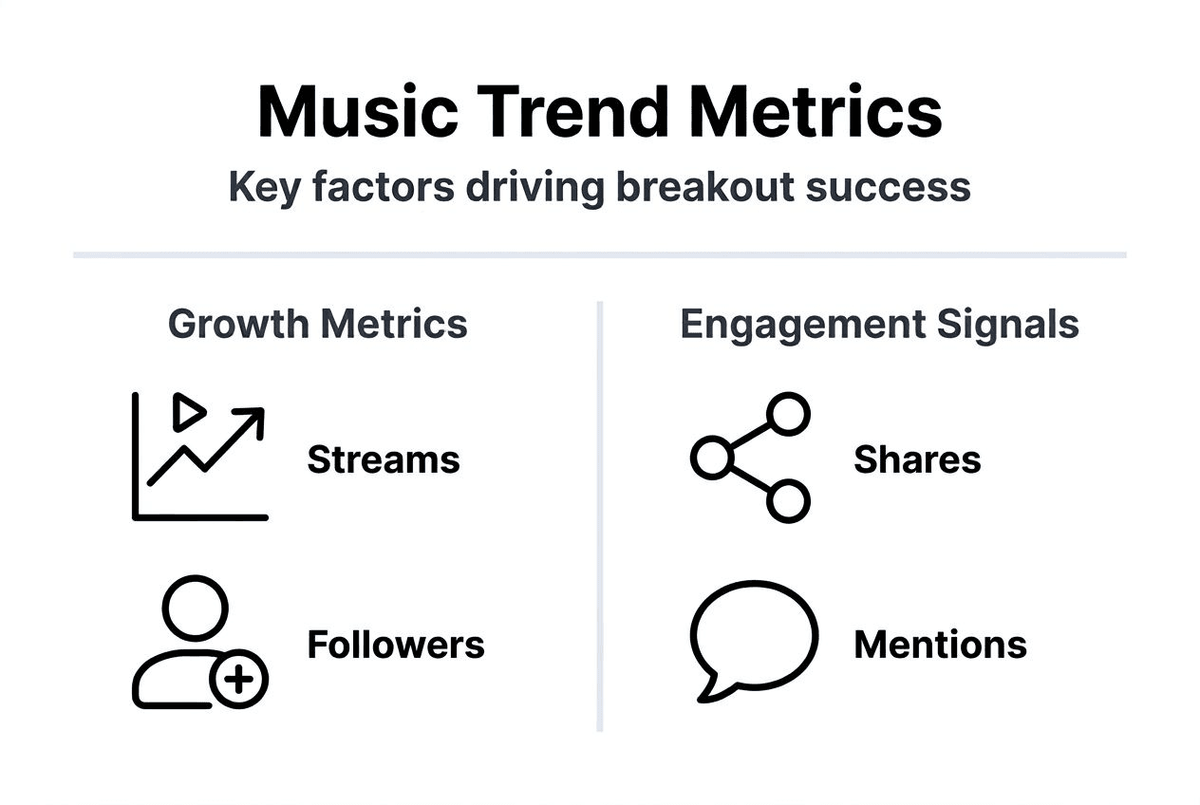
TikTok virality translates to commercial opportunities including brand campaigns, sync licensing, and playlist inclusion. Labels tracking sound adoption speed identify which viral moments convert to lasting careers versus fleeting memes.
Pro Tip: Leverage data alongside human curation to validate breakout potential. Quantitative metrics reveal momentum; qualitative assessment determines artistic sustainability and cultural relevance.
How to detect micro trends in music involves monitoring niche communities and regional platforms before trends reach mainstream awareness. Early identification enables strategic positioning ahead of competitors.
Music trend analysis early insights come from proprietary data sources like private playlist behavior that reveals authentic discovery before public metrics reflect changes. This competitive advantage separates proactive labels from reactive followers.
The most successful A&R strategies combine data-driven discovery with artist development expertise, ensuring commercial potential aligns with creative vision and long-term career building.
Where Music24 fits
Music24 reads millions of public playlists and charts every day. Its public data shows which playlists add songs like the ones you work with, which tracks and artists are gaining playlists fastest in a genre, and the countries where that genre grows. Follow the artists, tracks and playlists you care about and get an email when they move.
Start free with Music24: 7 days of the Pro plan, no card, then a Free plan for as long as you like.
FAQ
What is the most important metric for predicting music trend success?
Popularity metrics combined with streaming growth and social virality are most predictive of trend success. These indicators capture both current audience size and momentum trajectory. Instrumentalness and valence also influence hit likelihood by revealing emotional tone and production style that resonate with listeners.
How do TikTok and social media impact artist discovery?
TikTok virality metrics heavily influence brand campaigns and playlist placement, redefining discovery pathways for emerging artists. Sound adoption rate and cross-platform migration signal commercial viability and audience engagement that translate to streaming success. Labels now prioritize social metrics alongside traditional radio and streaming data when evaluating new talent.
What are common challenges with algorithm-driven music recommendations?
Streaming algorithms often reinforce echo chambers and overlook niche diversity, frustrating music fans seeking fresh discoveries. Algorithmic bias favors established artists and mainstream genres while limiting exposure for experimental or regional sounds. Fans report repetitive recommendations that recycle viral trends rather than introducing genuinely new music.
How can labels balance data insights with artistic intuition?
Successful labels use data to identify opportunities while relying on human judgment to assess artistic merit and cultural fit. Metrics reveal which artists are gaining momentum, but experienced A&R professionals determine whether that momentum aligns with label capabilities and market positioning. The most effective approach treats data as one input among many in holistic artist evaluation.
What role do private playlists play in trend detection?
Private playlists reveal authentic listener preferences before public metrics reflect changes. Analyzing private playlist behavior identifies emerging artists and genres gaining organic traction outside algorithmic promotion. This proprietary data provides competitive advantage by spotting trends weeks or months before they appear on public charts or social platforms.
Recommended
Get your music heard. Grow the fans who stay.
Add a song. Music24 makes the posts and the videos, plans your release and publishes it on every channel. Free for 7 days on the Pro plan, no card.