Music Industry Trends in 2026: What Artists, Curators, and Labels Need to Know
Explore the biggest music industry trends in 2026, from streaming data and AI tools to indie growth, playlist curation shifts, and sync licensing. Essential reading for A&R teams, curators, and label executives.
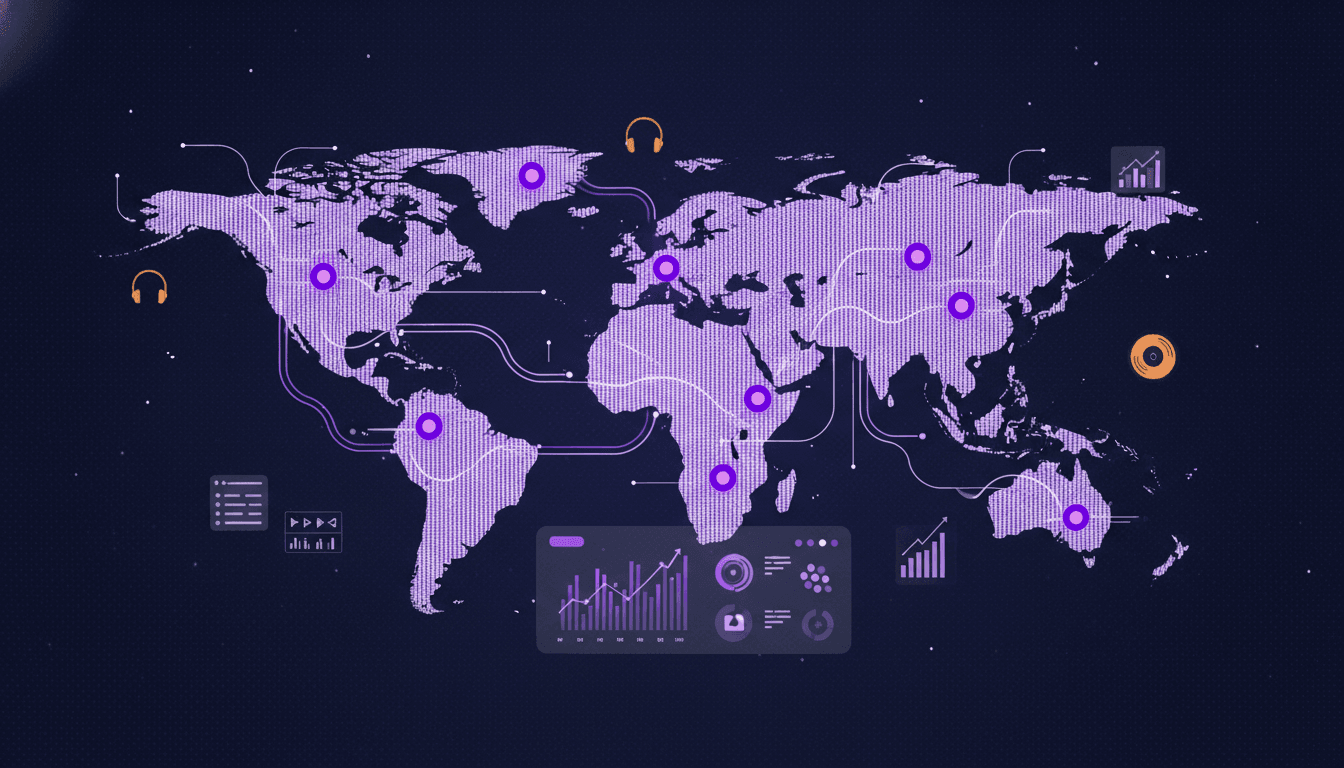
The global music industry generated over $45 billion in 2025, and 2026 is on track to push past $50 billion. Streaming now accounts for more than 70% of total recorded music revenue. AI tools are reshaping production workflows. Independent artists are claiming a larger slice of the pie every quarter. And playlist curation is evolving from a side hustle into a career path with measurable influence.
This guide breaks down the biggest music industry trends in 2026, backed by current data and built for professionals who need to make decisions, not just follow headlines.
The State of the Music Industry in 2026
Quick answer: The music industry in 2026 is growing faster than at any point since the pre-digital era. Streaming dominates revenue, AI is rewriting creative workflows, and independent distribution is eroding the major-label monopoly on market access.
Three forces are shaping the industry right now:
- Streaming revenue continues to climb, with paid subscription growth concentrated in emerging markets across Latin America, Southeast Asia, and Africa.
- AI-powered tools are changing how artists produce, distribute, and promote music, while regulators scramble to set rules.
- Independent artists now capture roughly 35% of global streaming revenue, up from 31% in 2024.
For A&R teams, label executives, and music marketers, these shifts create both pressure and opportunity. The professionals who adapt fastest will sign the right artists, allocate budgets more effectively, and spot breakout moments before public charts catch up.
Streaming Revenue and Market Growth
Quick answer: Global streaming revenue crossed $25 billion in 2025 and is projected to reach $28 billion by end of 2026. Growth is slowing in North America and Western Europe but accelerating in emerging markets.
Global Streaming Numbers
Paid streaming subscriptions worldwide passed 750 million in early 2026. That number is expected to hit 800 million before year end. The average revenue per user (ARPU) remains around $4.50/month globally, though it ranges from $10+ in the US to under $2 in markets like India and Nigeria.
Key stats for 2026:
- Global recorded music revenue: projected $50+ billion
- Streaming share of total revenue: 72%
- Year-over-year streaming revenue growth: 10.5%
- Fastest-growing markets: Brazil (+18%), Indonesia (+22%), Nigeria (+25%)
Revenue Distribution Changes
The debate over artist payouts is louder than ever. Per-stream rates remain between $0.003 and $0.005 on major platforms, and the user-centric payment model (where your subscription money goes only to artists you actually listen to) is gaining traction. Several platforms are now testing or have partially rolled out user-centric models, which tend to benefit niche and mid-tier artists at the expense of ambient background music.
For labels, the practical takeaway: streaming analytics matter more than ever, because revenue distribution is shifting toward artists with dedicated, repeat listeners rather than passive reach.
| Platform | Estimated Market Share (2026) | YoY Growth | Avg. Per-Stream Rate |
|---|---|---|---|
| Spotify | 31% | +8% | $0.003 - $0.004 |
| Apple Music | 15% | +5% | $0.007 - $0.01 |
| Amazon Music | 13% | +10% | $0.004 - $0.005 |
| YouTube Music | 10% | +14% | $0.002 - $0.003 |
| Tencent Music | 13% | +6% | $0.001 - $0.002 |
| Others | 18% | +12% | Varies |
AI and Music: Where We Stand
Quick answer: AI is no longer a hypothetical disruptor. It is a daily tool for producers, curators, and marketers. The legal framework around AI-generated music is still being written, but the technology is already embedded in professional workflows.
AI-Generated Music Debate
Fully AI-generated tracks now number in the tens of millions across streaming platforms. The legal landscape is evolving: the US Copyright Office has clarified that AI-generated works without meaningful human authorship cannot receive copyright protection. The EU AI Act includes transparency requirements for AI-generated content in creative industries.
What this means for labels: signing an artist whose catalog includes AI-generated material carries real legal risk. A&R teams should audit creative workflows during the signing process. On the flip side, AI-generated background music is flooding platforms with low-value content, which dilutes per-stream revenue pools and makes it harder for emerging artists to surface organically.
AI Tools for Artists and Curators
The more immediate impact is practical. AI tools are now standard in:
- Production: Stem separation, automated mastering, beat generation, and vocal processing
- Marketing: Automated ad copy, audience segmentation, and predictive release timing
- Curation: Algorithmic playlist generation, listener clustering, and trend detection
- Analytics: Pattern recognition across streaming data, social signals, and playlist activity
For curators and A&R professionals, the real advantage is using AI-assisted analytics to find artists before they hit public radar. Platforms that aggregate private playlist data (where listeners save music they genuinely love, not just share for social clout) give you a signal that public metrics miss entirely.
Music24 reads millions of public playlists and charts every day to surface this kind of signal. When a track starts appearing across many playlists in a specific genre cluster, that is a sign of momentum worth watching. See how it works.
The Rise of Independent Artists
Quick answer: Independent artists and labels now account for roughly 35% of global streaming revenue. DIY distribution tools, direct-to-fan platforms, and social media marketing have made it possible to build a career without a major-label deal.
DIY Distribution Growth
Distributors like DistroKid, TuneCore, and CD Baby collectively delivered over 100,000 new tracks per day to streaming platforms in 2025. That number has only increased in 2026. The barrier to entry is effectively zero: any artist with a finished recording can reach every major platform within 48 hours for under $30/year.
This has two consequences for the industry:
- The supply of music is enormous. Over 120,000 new tracks are uploaded to streaming platforms daily. Discovery is the bottleneck, not distribution.
- Quality filtering shifts to curators and algorithms. With this volume of new releases, playlist curators and recommendation algorithms are the primary gatekeepers for new music discovery.
Direct-to-Fan Models
Artists are increasingly building revenue outside of streaming. Platforms for direct fan subscriptions, exclusive content drops, and community memberships let artists monetize their most engaged listeners at rates far above streaming payouts.
The numbers tell the story:
- Top independent artists earn 3x to 5x more per fan through direct channels than through streaming alone
- Fan subscription platforms grew 40% in active creators during 2025
- Merchandise bundled with music releases now accounts for 15% to 20% of independent artist revenue
For labels evaluating potential signings, understanding an artist's direct-to-fan revenue and community engagement is now as important as streaming numbers. An artist with 50,000 dedicated fans who buy merch and attend shows may be a better investment than one with 5 million passive streams.
Playlist Curation Trends
Quick answer: Playlist curation in 2026 is splitting into two lanes: algorithm-driven personalization at scale, and human-curated niche playlists that drive genuine fan conversion. Both matter, but they serve different purposes.
Algorithm vs. Human Curation
Algorithmic playlists (Discover Weekly, Release Radar, Daily Mix) drive the majority of first-listen discovery on streaming platforms. These playlists are powered by collaborative filtering, natural language processing, and audio analysis. They are effective at matching listeners to music they are statistically likely to enjoy.
Human-curated playlists operate differently. A skilled curator builds a listening experience around mood, narrative, or cultural context. The conversion rate from playlist listen to artist follow is significantly higher on human-curated playlists than on algorithmic ones, because listeners trust the curator's taste and associate the playlist with a specific identity.
For artist discovery, both channels matter. But if you want to predict which artists will build lasting fanbases (not just spike in streams), track the human-curated playlists where dedicated listeners save tracks to their own libraries.
Niche Playlists and Micro-Curators
The fastest-growing segment of playlist curation is niche. Micro-curators with 1,000 to 50,000 followers in specific genre verticals (lo-fi jazz, Afrobeats fusion, ambient electronic, Latin indie) are driving outsized discovery for emerging artists.
Why micro-curators matter:
- Higher engagement rates. Followers of niche playlists listen longer and save more tracks
- Stronger genre signal. A track added to 20 niche playlists in the same genre cluster is a stronger breakout indicator than one add to a single large playlist
- Authentic discovery. Listeners trust curators who specialize. The recommendation carries more weight
Music24's public data shows which playlists add songs like yours, how fast they grow and who curates them. Our curator influence analysis guide explains how to tell real listener behavior (saves, follows, repeat plays) from surface-level metrics.
Sync Licensing and Brand Partnerships
Quick answer: Sync licensing revenue hit $1.2 billion globally in 2025 and continues to grow. Brands, streaming platforms, and content creators are all competing for music rights, creating new revenue streams for artists and labels.
Sync placements remain one of the highest-value revenue events for individual tracks. A single placement in a major TV show, film trailer, or global ad campaign can generate $50,000 to $500,000+ in licensing fees, plus a measurable streaming spike.
Key trends in sync for 2026:
- Short-form content demand. TikTok, Instagram Reels, and YouTube Shorts have created massive demand for 15 to 30-second sync-ready clips. Labels are now editing and pitching tracks specifically for short-form formats.
- Gaming integration. Music licensing for games (both in-game soundtracks and live events in platforms like Fortnite and Roblox) is a growth category, with licensing revenue from gaming up 30% year-over-year.
- Micro-sync volume. Smaller brands and independent content creators are licensing music at lower price points but in much higher volume. Catalog monetization through micro-sync is becoming a reliable revenue stream for indie labels.
For artists and managers, having a catalog of sync-ready tracks and proactive relationships with music supervisors is now a core part of revenue strategy, not an afterthought.
Social Media and Music Discovery
Quick answer: Social media is the top discovery channel for listeners under 30. Short-form video drives initial awareness, but converting a viral clip into sustained streaming requires a deliberate strategy.
TikTok's Evolving Role
TikTok remains the single most influential platform for music discovery in 2026, but its role has matured. The early days of random viral moments are giving way to a more structured ecosystem where labels, artists, and marketers engineer campaigns around short-form content.
What has changed:
- Payola-adjacent practices are under scrutiny. Paying creators to use specific sounds is standard, but regulators and platforms are pushing for transparency.
- Discovery-to-stream conversion is improving. Direct links to streaming platforms from TikTok posts now drive measurable spikes, especially when timed with release campaigns.
- Catalog tracks are having a moment. Older tracks resurfacing through TikTok trends can generate millions of new streams, making back-catalog management a strategic priority.
Short-Form Video Impact on Streams
The data is clear: a track that trends on short-form video platforms sees an average streaming increase of 300% to 500% in the first week. But sustaining those numbers requires follow-through.
Best practices for converting social virality into lasting streams:
- Release timing. Coordinate social pushes with playlist pitching and advertising spend for maximum impact
- Content sequencing. One viral clip is a spike. A sequence of creator content over 2 to 4 weeks builds a trend
- Playlist capture. Get the track onto editorial and algorithmic playlists during the viral window to sustain streams after social buzz fades
- Fan conversion. Use the attention spike to drive follows, saves, and email/SMS list signups for long-term fan relationship building
What This Means for Artists, Curators, and Labels
Quick answer: The winners in 2026 are the professionals who combine data-driven decision-making with authentic creative instincts. Streaming growth, AI tools, and social media are accelerating the pace of change, but the fundamentals remain the same: find great music early, build real fan connections, and allocate resources based on signal, not noise.
For artists:
- Prioritize building a direct fan relationship alongside streaming growth
- Invest in short-form video content as a discovery channel, not just a marketing add-on
- Keep your catalog sync-ready and actively pitch to music supervisors
- Use analytics tools to understand where your listeners are and how they found you
For curators:
- Your influence is measurable and growing. Platforms and labels are paying more attention to curator-driven discovery
- Niche specialization beats broad reach. Build authority in a specific genre or mood vertical
- Track your playlist's real impact: saves, follows, and repeat listens, not just stream counts
For labels and A&R:
- Playlist data shows momentum before the charts do. If you are still relying only on public metrics, you are late
- AI tools can accelerate your workflow, but they cannot replace A&R instinct. Use them to filter and prioritize, then trust your ears
- Independent artists with strong direct-to-fan revenue and community engagement are often better signing targets than artists with high passive stream counts
- Budget allocation should reflect where discovery actually happens: social media, niche playlists, and sync placements, not just traditional PR
FAQ
What are the biggest music industry trends in 2026?
The biggest trends are continued streaming revenue growth (especially in emerging markets), AI integration into production and analytics workflows, the rise of independent artists capturing 35% of streaming revenue, niche playlist curation driving discovery, and short-form video remaining the top channel for music discovery among younger listeners.
How is AI changing the music industry in 2026?
AI is being used across the industry for production (mastering, stem separation, beat generation), marketing (audience segmentation, predictive analytics), and curation (playlist generation, trend detection). The legal framework for AI-generated music is still being defined, with the US Copyright Office ruling that fully AI-generated works cannot receive copyright protection.
How much revenue does music streaming generate in 2026?
Global music streaming revenue is projected to reach $28 billion in 2026, representing roughly 72% of total recorded music industry revenue. Paid subscriptions worldwide have passed 750 million, with the fastest growth in Brazil, Indonesia, and Nigeria.
Are independent artists making more money in 2026?
Yes. Independent artists and labels now account for approximately 35% of global streaming revenue, up from 31% in 2024. Direct-to-fan platforms and DIY distribution tools have made it possible to build sustainable careers without major-label deals. Top independent artists earn 3x to 5x more per fan through direct channels than through streaming alone.
How do playlist curators influence music discovery?
Playlist curators act as gatekeepers for new music discovery in an environment where over 120,000 tracks are uploaded daily. Human-curated playlists drive higher artist-follow conversion rates than algorithmic playlists. Niche micro-curators (1,000 to 50,000 followers) in specific genre verticals are driving outsized discovery for emerging artists through higher engagement and stronger genre signaling.
What role does TikTok play in music marketing in 2026?
TikTok remains the top platform for music discovery among listeners under 30. Tracks that trend on TikTok see average streaming increases of 300% to 500% in the first week. The platform's role has matured from random viral moments to a structured ecosystem where labels and marketers engineer short-form content campaigns around releases.
How can labels spot breakout artists earlier?
Music24 reads millions of public playlists and charts every day and shows which playlists add songs like yours, which tracks and artists are gaining playlists fastest in a genre, and the countries where that genre grows.
Releasing music soon? Start free with Music24: 7 days of the Pro plan, no card, then a Free plan for as long as you like.
Get your music heard. Grow the fans who stay.
Add a song. Music24 makes the posts and the videos, plans your release and publishes it on every channel. Free for 7 days on the Pro plan, no card.