Step by Step Early Artist Discovery Using Playlist Data
Learn step by step early artist discovery using private playlist data to find and verify emerging talent before public trends for a real competitive edge.

Traditional scouting methods rarely surface the artists who shape the future of global music. For A&R representatives driven to spot talent before the mainstream does, private playlist analytics offer an inside view on shifting trends and curator influence. By securing authorized data access and filtering for real signals, you can move faster than competitors and connect with emerging artists as their first waves of listener engagement appear.
Table of Contents
- Step 1: Set Up Private Playlist Analytics
- Step 2: Identify Emerging Artist Patterns
- Step 3: Analyze Influential Curator Activity
- Step 4: Validate Artist Breakout Potential
Quick Summary
| Key Insight | Explanation |
|---|---|
| 1. Secure Proper Authorization | Obtain developer credentials and implement OAuth for privacy compliance and data access approvals. |
| 2. Monitor Key Music Indicators | Track playlist placement velocity and listener engagement to identify artists gaining real momentum. |
| 3. Analyze Curator Influence | Evaluate curators by follower growth and update frequency to determine their impact on artist discovery. |
| 4. Validate Emerging Artists | Cross-reference curator picks and historical data to confirm an artist's breakout potential. |
| 5. Create Scorecards for Metrics | Use scorecards to evaluate curator credibility and artist validation, ensuring data-driven decisions. |
Step 1: Set Up Private Playlist Analytics
Setting up private playlist analytics starts with securing the right access and permissions. You'll need developer credentials and OAuth authentication protocols to legally tap into private playlist data without violating user privacy or platform policies.
Here's what you need to do first:
- Obtain developer credentials from your data platform. Most APIs require you to register an application and receive authentication keys.
- Implement secure authentication using OAuth or similar permission workflows. This ensures users explicitly consent to data access.
- Comply with data privacy standards including GDPR, CCPA, and platform-specific guidelines. Non-compliance can shut down your entire operation.
- Document user consent clearly so you have proof of authorization when analyzing private playlists.
The technical foundation matters here. Securing authorized access through platform APIs and implementing robust authentication workflows protects both your label and your data sources. Without proper setup, you risk losing access to the insights that give you a competitive edge.
Once credentials are configured, test your connection before scaling up. Run a small batch of queries to verify that data is flowing correctly and that your system captures the metadata you need. This includes genre classifications, geographic information, playlist creator profiles, and listener engagement metrics.
Proper setup also means deciding which data points matter most for your A&R goals. Are you tracking playlist adds? Creator influence? Genre blending patterns? Geographic micro-trends? Define these priorities now so your analytics dashboards capture exactly what you need to identify emerging artists before they trend publicly.
Here's a quick summary of key analytics data points and their business value:
| Data Point | Purpose | Business Impact |
|---|---|---|
| Genre classification | Understand music trends | Targets rising genres early |
| Geographic information | Track regional markets | Prioritizes expansion regions |
| Playlist creator profile | Identify tastemakers | Focuses outreach effectively |
| Listener engagement | Measure song appeal | Confirms genuine fan interest |
Getting authentication right from day one prevents expensive troubleshooting later and ensures your competitive advantage stays intact.
Pro tip: Test your API connections with a small, controlled dataset first—verify data accuracy and completeness before scaling to full playlist analysis across your target regions.
Step 2: Identify Emerging Artist Patterns
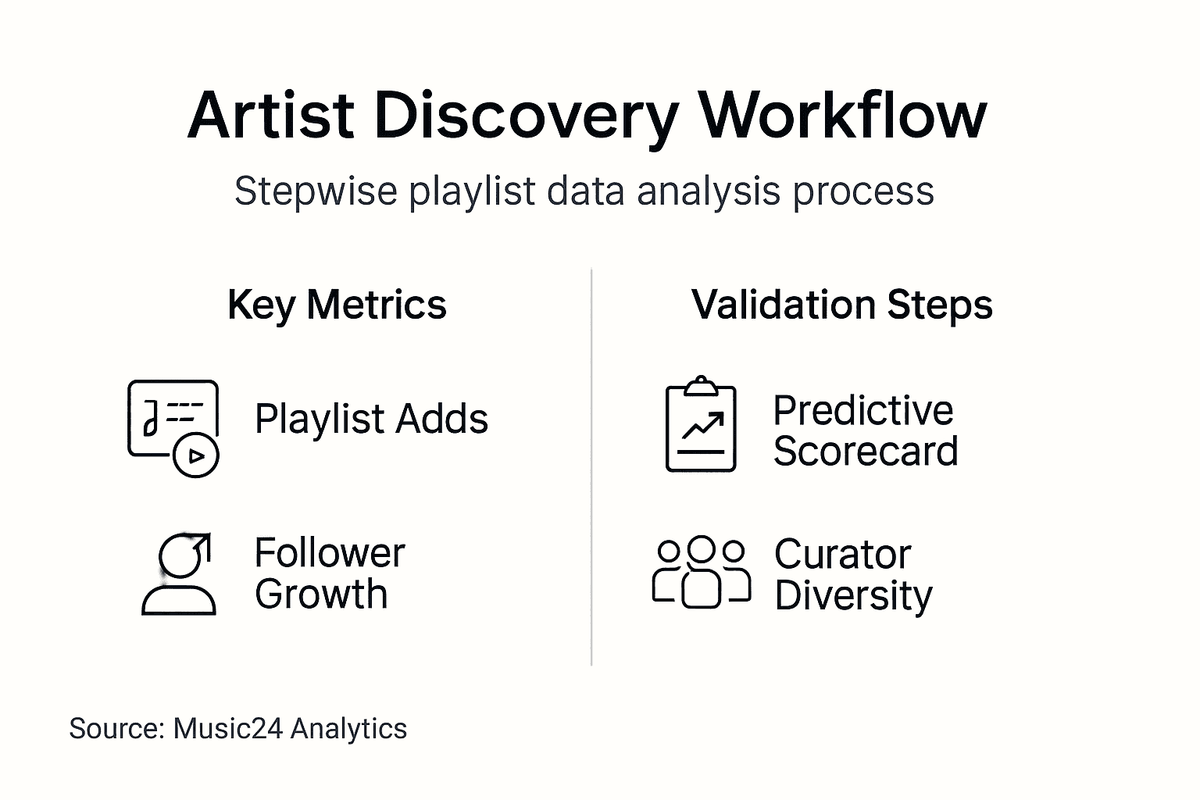
Now that your analytics foundation is set, it's time to look for the signals that reveal which artists are gaining real momentum. Emerging artist patterns show up in how playlists treat new music and how listeners respond to it.
Start by monitoring these critical indicators:
- Playlist placement velocity tells you how quickly an artist appears in new playlists. Rapid placement across multiple curators suggests organic buzz, not paid promotion.
- Listener engagement metrics reveal whether people actually listen to new songs or skip them. High completion rates and repeat plays signal genuine interest.
- Curator diversity shows if mainstream playlists are picking up an artist alongside independent curators. This crossover is a strong breakout signal.
- Genre coherence shifts indicate when an artist is blending categories or crossing into new listener bases. This often precedes explosive growth.
Observing shifts in playlist placement dynamics and engagement metrics helps you spot rising talents before mainstream adoption. The key is continuous monitoring—emerging patterns evolve weekly, not monthly.

Track geographic micro-trends too. An artist gaining traction in Nordic markets before expanding to North America shows you where momentum originates. These regional patterns often predict global success.
Compare current data against historical baselines. When a new artist's playlist adds spike 150% above average artists in their genre, that's a data-driven confirmation they're breaking through. Set threshold alerts so you catch these moments when they happen, not after competitors have already signed them.
Early detection happens when you watch for multiple signals aligning—placement velocity plus engagement plus curator diversity equals a confirmed emerging pattern.
Pro tip: Create weekly comparison reports tracking your target artists against baseline metrics in their genre; this reveals breakout acceleration faster than static dashboards.
Step 3: Analyze Influential Curator Activity
Curators are the hidden kingmakers of music discovery. Understanding their influence helps you identify which playlists actually move the needle for emerging artists and which ones waste your attention.
Start by identifying curators worth tracking:
- Follower count and growth trajectory show curator reach. A curator gaining 50,000 followers monthly has more power than a stagnant 100,000-follower account.
- Playlist update frequency reveals active curation. Weekly updates signal engagement; monthly updates mean the curator abandoned the playlist.
- Artist rotation patterns indicate how quickly new artists enter and exit playlists. Frequent rotation exposes artists to fresh ears.
- Geographic coverage shows if a curator influences specific regions or operates globally. Regional curators often catch emerging artists before major platforms.
Mapping curator impact by tracking playlist follower growth and update rates reveals who actually shapes discovery. Not all curators are equal. A niche curator with 10,000 devoted followers in your target market often matters more than a mainstream curator with 500,000 inactive followers.
Filter your curator list by these credibility markers: artist inclusion frequency, genre focus, and listener retention. When the same emerging artist appears across three credible curators within two weeks, you've identified a real signal, not random placement.
Track curator behavior over time. Does a specific curator consistently surface breakout artists before competitors notice them? That curator deserves priority attention. Build relationships with them because their early picks often predict market success.
Compare curator evaluation criteria for effective playlist analysis:
| Criterion | Why It Matters | Potential Outcome |
|---|---|---|
| Follower growth | Signals increasing reach | Greater artist exposure |
| Update frequency | Shows curator engagement | Timely inclusion of new music |
| Rotation patterns | Measures artist turnover | Discover emerging talent faster |
| Geographic coverage | Reveals influence spread | Pinpoints breakout locations |
Curator credibility comes from consistent taste and active engagement, not follower count alone.
Pro tip: Create a curator scorecard tracking update frequency, follower growth, and artist discovery accuracy; rank curators monthly to focus your outreach on proven tastemakers.
Step 4: Validate Artist Breakout Potential
Finding promising signals is one thing. Confirming they actually predict breakout success is another. This step separates real opportunities from false alarms that waste your time and resources.
Start your validation process with these checks:
- Cross-reference curator endorsements against your emerging patterns. If three independent curators added the same artist within two weeks, that's stronger validation than one curator's pick.
- Compare against historical baselines to ensure this artist's growth outpaces typical emerging artists. A 200% playlist add increase beats a 20% increase every time.
- Analyze temporal trends across the past three to six months. Does the artist show consistent acceleration or just a one-week spike? Consistency wins.
- Check listener demographic shifts to see if the artist is crossing into new geographic markets or age groups. Expansion signals broader appeal.
Applying predictive analytics to aggregate playlist trends and engagement metrics provides data-driven confidence in your picks. The goal is minimizing false positives so you act only on artists with genuine momentum.
Look for convergence across multiple signals. When playlist velocity accelerates, curator diversity increases, and listener retention stays high all at the same time, you have validation. One metric moving up means luck. Three metrics aligning means science.
Run your top candidates through a final sanity check: Would you sign this artist based purely on playlist data, ignoring hype and social media buzz? If the answer is yes, you've found a real breakout candidate worth pursuing.
Validation happens when multiple independent data sources point to the same conclusion about an artist's potential.
Pro tip: Build a validation scorecard assigning weighted points to curator diversity, temporal consistency, and demographic expansion; only advance artists scoring above your threshold.
Unlock Breakthrough Artist Discovery with Music24
The challenge of early artist discovery lies in accessing reliable private playlist data and interpreting complex signals like playlist placement velocity, curator diversity, and geographic micro-trends. This article highlights how overcoming hurdles such as secure authentication and validating emerging artist patterns can be tedious and prone to error without the right tools. If your goal is to confidently identify genuine breakout artists and make data-driven decisions before the competition, Music24 offers the solution you need.
Music24 specializes in analyzing millions of anonymized private playlists to deliver detailed insights into genre blending, curator influence, and listener engagement that go far beyond public charts. By leveraging proprietary access to private playlist data, our platform empowers A&R teams, artist managers, and music marketers to track emerging artist momentum with predictive analytics and actionable reports. Say goodbye to guesswork and tedious cross-referencing with independent curator endorsements.
Ready to transform how you discover rising stars and sharpen your competitive edge?
Discover the power of early artist discovery with Music24
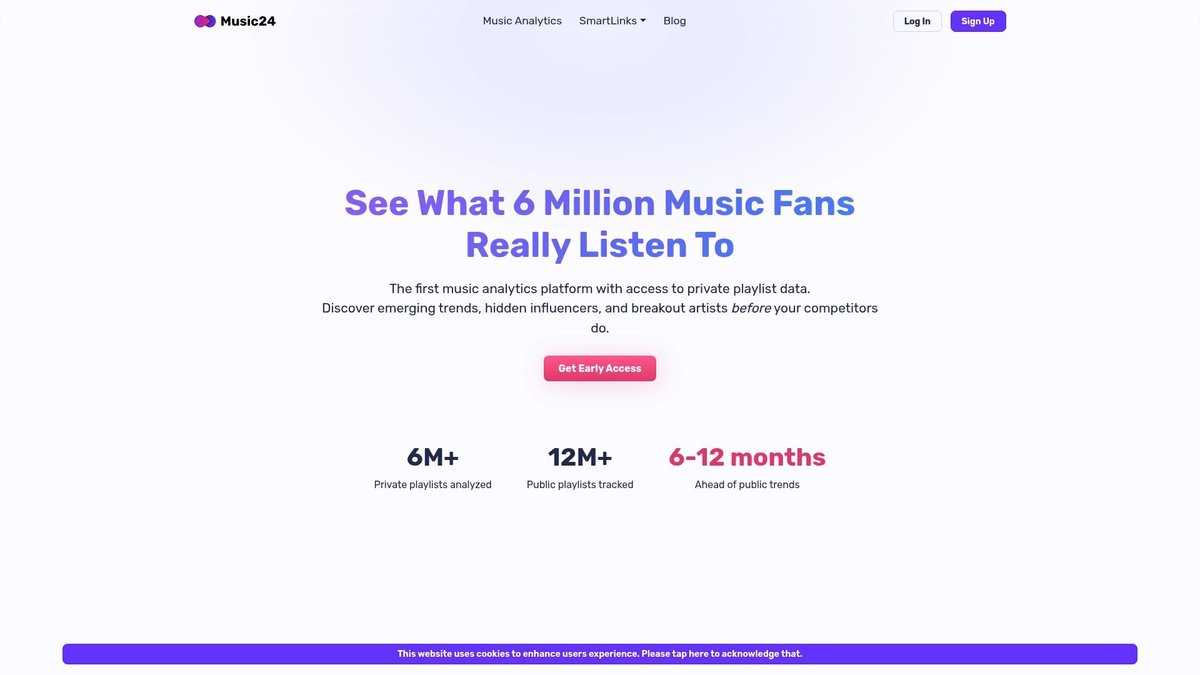
Explore how our platform can streamline your playlist data analytics. Visit Music24.com today and start uncovering tomorrow’s chart-toppers before anyone else. Don’t wait for trends to become public knowledge when you can act now with confidence.
Frequently Asked Questions
What are the first steps to set up playlist data analytics for early artist discovery?
To set up playlist data analytics, start by obtaining developer credentials from your data platform and implementing secure authentication protocols like OAuth. Ensure you document user consent and comply with data privacy standards to protect your operation.
How can I identify emerging artist patterns using playlist data?
Monitor indicators such as playlist placement velocity, listener engagement metrics, and curator diversity. Tracking these will help you spot artists who are gaining momentum and may break out soon.
What data points should I focus on when analyzing playlists for artist discovery?
Key data points include genre classifications, geographic information, playlist creator profiles, and listener engagement rates. Prioritize these metrics to align your analytics with your artist and repertoire (A&R) goals effectively.
How do I validate the breakout potential of an emerging artist?
Cross-reference curator endorsements and compare the artist's growth against historical baselines. Look for consistent acceleration in engagement metrics over three to six months to confirm their potential.
What role do playlist curators play in the artist discovery process?
Playlist curators significantly influence which artists gain visibility by actively updating and rotating tracks. Identifying and building relationships with influential curators can enhance your chances of discovering emerging talent early.
Why is proper authentication crucial in setting up playlist analytics?
Proper authentication protects user privacy and ensures compliance with data regulations, preventing potential operational shutdowns. By getting authentication right from the start, you can avoid costly troubleshooting and maintain a competitive edge.
Recommended
- Step by Step Playlist Analytics for Early Artist Discovery - Blog - Music24.com
- Step by Step Emerging Artist Discovery for A&Rs - Blog - Music24.com
- How to Spot Rising Artists Using Private Playlist Data - Blog - Music24.com
- Master the Artist Discovery Process With Private Playlist Data - Blog - Music24.com
Get your music heard. Skip the content grind.
Add a song. Music24 makes the posts and the videos, plans your release and publishes it on every channel. Free for 7 days on the Pro plan, no card.