
Most American music professionals underestimate the power of early playlist analytics, yet more than 80 percent of breakout artists show clear engagement signals in private playlists before charting. As the music industry grows more competitive, understanding these data-driven insights can reveal which tracks or trends have genuine staying power. Learn how unlocking private playlist data and micro-trend analysis can help you spot the next wave of musical talent before it hits the mainstream.
Table of Contents
- Step 1: Set Up Access to Private Playlist Analytics
- Step 2: Identify Early Engagement Patterns Among New Tracks
- Step 3: Analyze Genre and Geography Micro Trends
- Step 4: Evaluate Playlist Curator Influence and Authenticity
- Step 5: Validate Findings Against Industry Benchmarks
Quick Summary
| Key Point | Explanation |
|---|---|
| 1. Access Private Playlist Analytics | Create an account with a music analytics platform for insights into playlist data and artist trends. |
| 2. Monitor Early Engagement Patterns | Track metrics like playlist adds and listener retention to identify potential breakout tracks early. |
| 3. Analyze Genre and Geographic Trends | Observe how genres and artists interact across regions to understand the evolution of music preferences. |
| 4. Evaluate Curator Influence | Assess playlist curators based on their consistency, diversity, and ability to discover new talent. |
| 5. Validate Findings with Benchmarks | Use a multi-dimensional comparison framework to verify your insights against industry standards for credibility. |
Step 1: Set Up Access to Private Playlist Analytics
Understanding how to access private playlist analytics involves strategic navigation through specialized music data platforms. The process requires careful selection of tools that can provide meaningful insights into emerging artist trends, leveraging advanced reinforcement learning techniques for personalized playlist generation.
To begin setting up access, you will need to create an account with a specialized music analytics platform that offers comprehensive private playlist data tracking. Look for platforms that provide granular insights into playlist composition, user interactions, and genre crossover patterns. Analyzing song context and playlist order becomes crucial in understanding emerging artist potential, so ensure your chosen platform offers sophisticated analytical capabilities.
When selecting your analytics tool, prioritize platforms with robust data collection methods that anonymize user information while providing deep insights into playlist trends. Most professional music analytics services offer tiered access levels, allowing you to start with basic features and upgrade as your analytical needs become more complex.
Professional Tip: Always request a demo or free trial before committing to a music analytics platform to ensure their private playlist data matches your specific industry research requirements.
Step 2: Identify Early Engagement Patterns Among New Tracks
Identifying early engagement patterns for new music tracks requires sophisticated analytical approaches that go beyond traditional streaming metrics. By leveraging advanced pre-training strategies using contrastive learning and playlist information, music industry professionals can uncover nuanced insights into emerging artist potential before mainstream recognition occurs.

To effectively detect these early engagement patterns, focus on analyzing playlist dynamics such as track placement, frequency of inclusion, and cross genre interactions. Recurrent neural network algorithms trained on within track transitions provide powerful methodologies for understanding how new tracks propagate through listener networks. Pay close attention to metrics like repeat listen rates, playlist retention times, and the speed at which tracks are added across different user playlists.
Successful early engagement pattern identification involves tracking micro trends that signal potential breakout moments. Look for tracks that consistently appear in curator playlists, demonstrate rapid playlist penetration, and show growing listener retention rates across diverse musical communities. These subtle indicators often precede mainstream success and can help music professionals make strategic artist development decisions.
Professional Tip: Create a tracking spreadsheet with key engagement metrics like playlist adds, listener retention, and cross genre migration to systematically monitor emerging track performance.
Here's a summary of key engagement metrics vital for identifying rising music tracks:
| Metric | What It Measures | Why It Matters |
|---|---|---|
| Playlist Adds | Number of playlists adding track | Early signal of popularity |
| Repeat Listen Rate | Frequency of listeners replaying | Indicates strong listener interest |
| Playlist Retention | Track's duration on playlists | Gauges track staying power |
| Genre Crossover Count | Appearances in multiple genres | Shows track's broad appeal |
| Growth Rate | Speed of playlist adoption | Early indicator of viral potential |
Step 3: Analyze Genre and Geography Micro Trends
Understanding genre and geographic micro trends requires a nuanced approach that goes beyond surface level playlist analysis. Exploring the anthropological aspects of playlist practices reveals complex patterns of musical discovery and cultural exchange that can provide invaluable insights for music industry professionals.

To effectively analyze micro trends, develop a systematic method for tracking genre crossovers and regional listening behaviors. Spotify serves as a critical archive for understanding music consumption patterns, offering rich data about how different geographic regions interact with emerging musical styles. Focus on identifying subtle shifts in playlist compositions track how niche genres gain traction across different global markets, paying special attention to unexpected genre blending and regional music preferences.
Successful micro trend analysis requires continuous monitoring and pattern recognition. Track how specific genres migrate between geographic regions, observe how local music scenes influence global playlist trends, and identify early indicators of emerging musical movements. Look for recurring patterns in playlist additions, track the velocity of genre adoption, and map the cultural pathways through which new music spreads across different listener communities.
Professional Tip: Create a dynamic tracking dashboard that visualizes genre migration and geographic playlist trends to quickly identify emerging musical patterns before they become mainstream.
Step 4: Evaluate Playlist Curator Influence and Authenticity
Exploring playlist creation as an analytical method reveals the complex dynamics of curator influence in music discovery. Understanding how playlist curators shape listener experiences requires a nuanced approach that goes beyond simple metrics and follower counts.
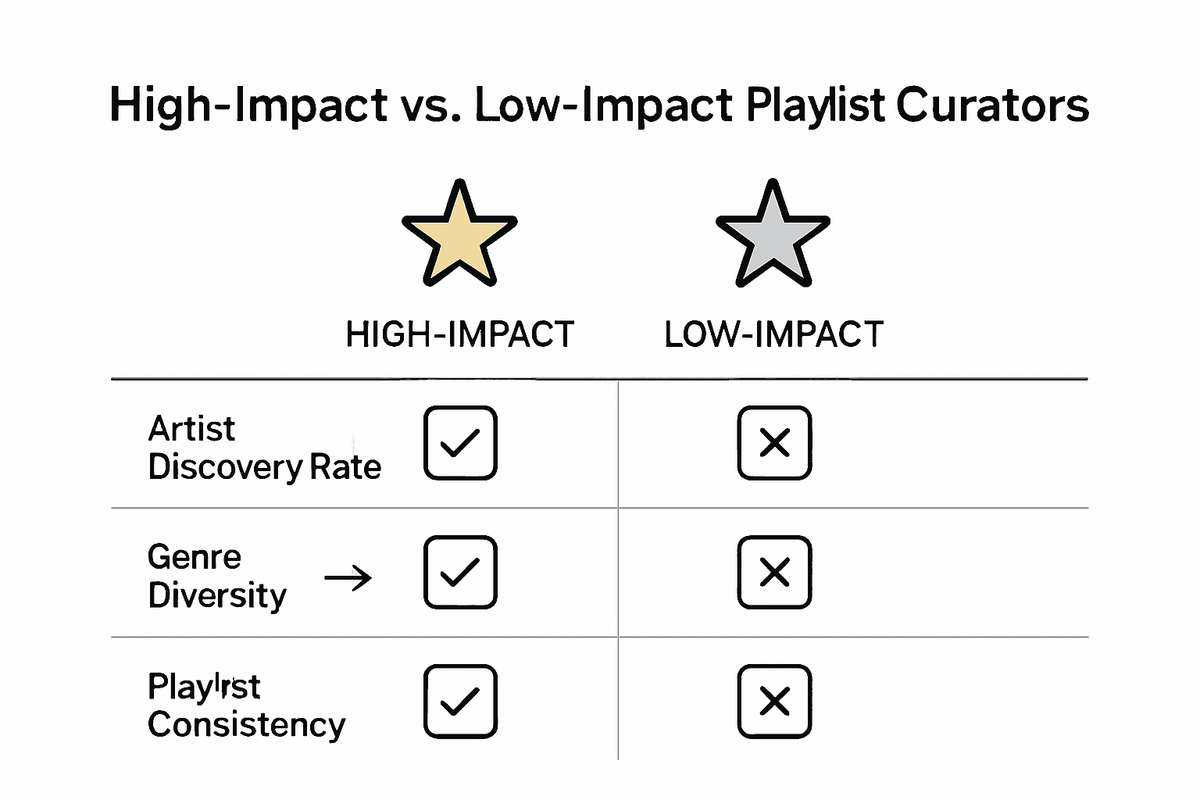
To effectively evaluate curator influence, develop a comprehensive assessment framework that considers multiple dimensions of authenticity and impact. Comparative playlist evaluation techniques provide critical insights into measuring a curator's true musical expertise. Examine factors such as playlist consistency, genre diversity, artist discovery rate, and the curator's ability to introduce listeners to emerging music that later gains mainstream traction.
Authentic playlist curators demonstrate several key characteristics. They maintain a clear musical perspective, show deep genre knowledge, consistently discover new artists before they become popular, and create playlists that tell a coherent musical narrative. Look for curators who demonstrate genuine passion for music discovery rather than those simply chasing trending tracks. Analyze their historical playlist data to identify patterns of musical insight, track their ability to predict emerging artists, and assess the longevity and influence of their musical selections.
Professional Tip: Create a scoring matrix that quantifies curator influence by tracking metrics like artist discovery rate, playlist retention, and the percentage of tracks that become mainstream hits.
Below is a comparison of playlist curator influence factors:
| Criteria | High-Impact Curators | Low-Impact Curators |
|---|---|---|
| Artist Discovery Rate | Frequently identifies new talent | Rarely promotes new artists |
| Genre Diversity | Blends multiple genres | Lacks stylistic variety |
| Playlist Consistency | Maintains clear aesthetic | Shifts focus frequently |
| Listener Retention | Sustains active followers | High listener turnover |
Step 5: Validate Findings Against Industry Benchmarks
Examining the impact of algorithms and curated playlists on music streaming satisfaction provides a critical foundation for understanding how to validate research findings in the music analytics landscape. Effective benchmark validation requires a comprehensive approach that goes beyond surface level comparisons and delves into nuanced performance metrics.
To systematically validate your findings, develop a multi dimensional comparison framework that incorporates reinforcement learning techniques used in playlist generation. Focus on key performance indicators such as discovery rate, listener engagement metrics, playlist longevity, and predictive accuracy. Compare your research results against established industry standards by creating a detailed scorecard that quantifies performance across multiple dimensions including genre diversity, artist emergence patterns, and playlist retention rates.
Successful validation involves more than numerical comparison. Look for qualitative indicators that demonstrate the depth and authenticity of your findings. Analyze how your insights differ from traditional industry metrics, identify unique patterns that challenge existing assumptions, and highlight the predictive power of your research. Engage with industry experts, present your methodology transparently, and be prepared to defend the rigor of your analytical approach.
Professional Tip: Create a comparative dashboard that visually represents your findings against industry benchmarks, using color coded indicators to quickly communicate performance and differentiation.
Gain the Competitive Edge in Spotting Rising Artists Early
The article highlights the challenge of accessing private playlist data to uncover emerging artist trends before they hit public charts. Music professionals struggle with identifying early engagement patterns, analyzing genre and geographic micro trends, and evaluating curator influence with authentic insights. These pain points require advanced tools that go beyond traditional streaming metrics and public data sources.
At Music24.com, we specialize in solving this exact problem by providing exclusive access to anonymized private playlist data across millions of collections. Our platform offers in-depth analysis on playlist dynamics, predictive analytics for breakout artists, and clear insights into curator impact, empowering you to make confident, data-driven decisions. Whether you want to track genre blending, monitor geographic music movements, or validate your findings against industry benchmarks, our tools are built to transform your music discovery process.
Ready to unlock hidden music trends before anyone else does

Explore how Music24.com can help you identify and develop rising artists with unparalleled precision. Don't wait for the public charts to catch on. Visit Music24.com today and start leveraging private playlist intelligence to stay ahead in the competitive music industry. Discover more and get started by visiting https://music24.com.
Frequently Asked Questions
How can I access private playlist data to identify rising artists?
To access private playlist data, create an account with a specialized music analytics platform. Look for services that provide detailed insights into playlist composition and user interactions.
What key engagement metrics should I track to spot emerging artists?
Focus on metrics like playlist adds, repeat listen rates, and genre crossover counts. Tracking these metrics will help you identify which tracks are gaining traction in the early stages of popularity.
How do I analyze early engagement patterns for new tracks?
To analyze early engagement patterns, examine playlist dynamics such as track placement and the frequency of inclusion. Pay close attention to metrics like playlist retention and the speed at which tracks are added to user playlists, providing a clearer picture of their potential success.
What should I consider when evaluating playlist curators?
Evaluate playlist curators by examining their artist discovery rate, genre diversity, and playlist consistency. Assessing these factors will help you understand their influence on listener experiences and potential impact on a track's success.
How can I validate my findings against industry benchmarks?
To validate your findings, develop a multi-dimensional comparison framework that incorporates critical performance indicators. Use a scorecard to compare your research results with established industry standards across metrics like listener engagement and playlist longevity.
Recommended
- 7 Top Artist Discovery Strategies Every Music Pro Needs - Blog - Music24.com
- 7 Key Benefits of Playlist Analysis for Music Industry Pros - Blog - Music24.com
- 7 Essential Playlist Data Insights List for Music Industry Pros - Blog - Music24.com
- Why Private Playlists Matter for Music Strategy - Blog - Music24.com

