
Most advice about music discovery underestimates the hidden power of private playlists in shaping what becomes the next American hit. Trends do not start on the charts—they begin in those thousands of playlists quietly curated by real listeners. With over 120 million active streaming users nationwide, understanding authentic behavior is no longer optional. This approach reveals how early analysis of private playlists, curator networks, and evolving genres can spot talent and trends long before they appear in mainstream American media.
Table of Contents
- Leverage Private Playlist Data for Early Trends
- Identify Influential Playlist Curators and Networks
- Spot Emerging Genre Blends and Micro-Trends
- Use Predictive Analytics to Forecast Breakout Talent
- Analyze Geographic Patterns for Local Star Potential
- Monitor Listener Behavior Beyond Public Metrics
- Integrate Data-Driven Insights Into A&R Decisions
Quick Summary
| Takeaway | Explanation |
|---|---|
| 1. Leverage Private Playlist Data | Analyze private playlist data to find emerging trends before they hit the mainstream. |
| 2. Identify Influential Curators | Focus on curators who show strong audience engagement and adapt to trends quickly. |
| 3. Spot Emerging Genre Blends | Use analytics to track genre fusions and micro-trends in music. |
| 4. Apply Predictive Analytics | Utilize predictive tools to discover potential breakout artists before they gain popularity. |
| 5. Monitor Local Music Scenes | Analyze local music ecosystems to uncover talent that reflects regional characteristics and preferences. |
1. Leverage Private Playlist Data for Early Trends
Music discovery is no longer about guessing. It is about understanding the hidden patterns in how people actually consume music. Private playlist data represents an untapped gold mine of insights for music professionals seeking to identify emerging artists and trends before they hit mainstream channels.
By analyzing repeated music exposure patterns, professionals can uncover critical insights about listener behavior and artist potential. The research reveals that repeated playlist inclusions significantly impact user interest and music perception more than traditional public metrics.
When leveraging private playlist data, you gain access to authentic listener preferences that have not yet been influenced by public rankings or algorithmic recommendations. This approach allows you to detect micro trends and emerging artist movements long before they become visible through standard streaming platforms.
Specifically, professionals can track three key indicators in private playlist data: frequency of track inclusion, playlist diversity, and cross genre blending. These metrics provide deeper insights into an artist potential than standard play counts or social media followers.
Strategic Playlist Analysis Techniques:
- Monitor playlist creator demographics
- Analyze track placement frequency
- Track cross genre playlist appearances
- Identify recurring artist collaborations
- Examine listener retention patterns
Understanding how contrastive learning models can pre train music representation further enhances the ability to classify and predict music discovery trends with unprecedented accuracy.
Pro tip: Create a tracking system that captures private playlist data across multiple genres and demographics to build a comprehensive view of emerging music landscapes.
2. Identify Influential Playlist Curators and Networks
Playlist curators are the unsung heroes of music discovery, wielding significant power in shaping listener preferences and artist visibility. Understanding their ecosystems is crucial for music professionals seeking strategic insights into emerging trends and audience behaviors.
The world of playlist curation is far more complex than simply creating song collections. Music recommendation networks reveal intricate structures that demonstrate how certain curators become pivotal in connecting artists with audiences across different genres and listener demographics.
Key Characteristics of Influential Playlist Curators:
- High follower engagement rates
- Consistent genre specific expertise
- Cross genre collaboration patterns
- Innovative track selection approaches
- Quick adaptation to emerging music trends
Professionals can leverage personalized music curator recommendation frameworks to identify curators who consistently demonstrate strong audience alignment and trend recognition capabilities. This approach goes beyond simple follower counts and focuses on the nuanced aspects of curation quality.
Successful curator identification involves analyzing several strategic metrics: playlist refresh frequency, listener retention rates, genre diversity, and the curator ability to introduce emerging artists before they become mainstream.
Strategic Curator Tracking Methods:
- Monitor playlist evolution over time
- Analyze cross platform curator influence
- Study listener interaction patterns
- Evaluate curator discovery rate of new artists
- Track listener retention and engagement metrics
Pro tip: Develop a systematic approach to curator tracking by creating a dynamic database that captures curator performance metrics across multiple streaming platforms and music genres.
3. Spot Emerging Genre Blends and Micro-Trends
Music genres are no longer static classifications but dynamic ecosystems constantly evolving through artist experimentation and listener preferences. Understanding how these musical landscapes transform requires sophisticated analytical approaches that go beyond traditional genre boundaries.
Music intelligence tools like The Echo Nest have revolutionized our ability to track and predict emerging genre fusion patterns. By analyzing granular musical attributes such as rhythmic structures, harmonic progressions, and sonic textures, professionals can identify micro trends before they become mainstream.
Key Strategies for Genre Trend Detection:
- Monitor cross genre collaboration frequencies
- Track emerging artist geographic clusters
- Analyze playlist inclusion patterns
- Study sonic characteristic migrations
- Evaluate listener demographic shifts
One groundbreaking approach involves mapping music genres through comprehensive data visualization), which allows music professionals to understand complex genre interconnections. Glenn McDonald groundbreaking work demonstrates how over 6,000 music genres can be charted and analyzed systematically.
Successful genre trend identification requires a multidimensional approach that considers not just musical elements but also cultural contexts, technological innovations, and global listener behaviors. Professionals must develop adaptive frameworks that can quickly recognize and interpret emerging musical fusion patterns.
Emerging Genre Analysis Framework:
- Quantitative sonic attribute tracking
- Qualitative cultural context evaluation
- Cross platform listener behavior analysis
- Temporal trend progression mapping
- Predictive genre evolution modeling
Pro tip: Create a dynamic genre trend dashboard that aggregates data from multiple streaming platforms, enabling real time tracking of musical micro trends and hybrid genre emergence.
4. Use Predictive Analytics to Forecast Breakout Talent
Predictive analytics has transformed talent discovery from gut instinct to a sophisticated data driven approach. Music professionals can now leverage advanced algorithms to identify emerging artists before they become mainstream sensations.
Content driven recommendation systems have revolutionized how industry experts predict artist potential by analyzing complex behavioral patterns and musical interactions. These sophisticated models go far beyond traditional metrics like streaming numbers or social media followers.
Key Predictive Analytics Strategies:
- Analyze cross platform listener engagement
- Track incremental audience growth rates
- Measure audience demographic diversity
- Evaluate artist collaboration networks
- Monitor playlist inclusion momentum
Understanding how playlist brands influence music consumption provides critical insights into potential breakout trajectories. By examining listener behavior patterns, professionals can identify artists with exponential growth potential before they become widely recognized.
Advanced Predictive Talent Assessment Framework:
- Quantitative performance metrics
- Qualitative audience sentiment analysis
- Listener retention and loyalty tracking
- Genre adaptability scoring
- Social network influence measurement
Successful predictive analytics requires a holistic approach that combines mathematical modeling with nuanced understanding of musical ecosystems. Professionals must develop adaptive frameworks that can quickly interpret complex data signals and translate them into actionable insights.
Pro tip: Create a customized talent scoring system that weights multiple data points including streaming growth, playlist appearances, listener engagement, and cross genre appeal to generate comprehensive artist potential assessments.
5. Analyze Geographic Patterns for Local Star Potential
Music discovery is inherently local, with geographic nuances playing a critical role in identifying emerging talent that might otherwise go unnoticed. Understanding regional music ecosystems provides music professionals with a strategic advantage in talent identification.
Human curators play a pivotal role in local music curation, revealing intricate connections between geographic context and musical innovation. These local insights offer unprecedented opportunities to discover artists who are generating authentic regional momentum.
Geographic Music Discovery Strategies:
- Map local music scene energy
- Analyze regional playlist composition
- Track micro genre variations
- Identify local cultural music influences
- Monitor grassroots music community engagement
Successful geographic pattern analysis requires a multidimensional approach that considers cultural context, technological infrastructure, and community musical preferences. Professionals must develop adaptive frameworks that can interpret complex local music signals and translate them into actionable insights.
Regional Talent Identification Framework:
- Local streaming platform analysis
- Community music event tracking
- Underground venue performance metrics
- Social media local engagement rates
- Cultural music tradition mapping
Each geographic region presents unique musical landscapes with distinctive sonic characteristics and audience behaviors. By understanding these nuanced local dynamics, music professionals can uncover talent that represents not just individual potential but cultural musical expression.
Pro tip: Develop a geographically segmented talent tracking system that captures local music ecosystem variations, allowing for more precise and culturally informed artist discovery strategies.
6. Monitor Listener Behavior Beyond Public Metrics
Public metrics like play counts and social media followers only tell part of the story. Music professionals need to dive deeper into listener behavior patterns that reveal authentic audience connections and emerging artist potential.
User aware listening contexts offer unprecedented insights by analyzing sophisticated data points beyond traditional streaming numbers. These advanced approaches track nuanced listener interactions that traditional metrics miss entirely.
Advanced Listener Behavior Tracking Strategies:
- Analyze device specific listening patterns
- Monitor contextual audio consumption
- Track listener session duration
- Evaluate repeat listening frequencies
- Examine cross platform engagement rates
Understanding the challenges of algorithmic bias and platform dependence is crucial for music professionals seeking authentic listener insights. Public metrics can be manipulated, but granular behavioral data reveals true audience connections.
Comprehensive Listener Behavior Analysis Framework:
- Contextual listening environment tracking
- Audio consumption pattern mapping
- Listener emotional engagement scoring
- Device specific interaction metrics
- Passive and active listening differentiation
Successful listener behavior monitoring requires a holistic approach that combines technological sophistication with human behavioral understanding. Professionals must develop adaptive frameworks that can interpret complex listener signals and translate them into actionable artist insights.
Pro tip: Develop a multidimensional listener behavior scoring system that weights different engagement metrics beyond traditional streaming counts, providing a more nuanced view of audience connection.
7. Integrate Data-Driven Insights Into A&R Decisions
Traditional artist discovery methods are becoming obsolete. Music professionals now require sophisticated data analysis frameworks that transform raw information into strategic talent identification approaches.
Big data analytics are revolutionizing music industry talent scouting by providing unprecedented insights into artist potential beyond conventional metrics. These advanced approaches combine multiple data streams to create comprehensive artist profiles.
Data Driven A&R Integration Strategies:
- Develop holistic artist scoring models
- Create multidimensional talent evaluation frameworks
- Implement predictive performance algorithms
- Track cross platform audience engagement
- Analyze listener retention patterns
Playlist brand influence provides critical insights into artist trajectory and audience connection. Understanding these nuanced metrics allows A&R professionals to make more informed talent selection decisions.
Comprehensive A&R Data Integration Framework:
- Quantitative performance metrics analysis
- Qualitative audience sentiment tracking
- Predictive potential modeling
- Comparative artist ecosystem mapping
- Dynamic talent potential scoring
Successful data integration requires a strategic approach that balances technological sophistication with human intuition. Professionals must develop adaptive frameworks that can interpret complex musical signals and transform them into actionable talent insights.
Pro tip: Establish a standardized data integration protocol that weights multiple performance indicators, creating a comprehensive artist potential assessment system that goes beyond traditional streaming and social media metrics.
Below is a comprehensive table summarizing the main strategies and methods discussed throughout the article regarding music discovery and trend analysis:
| Topic | Description | Key Strategies & Benefits |
|---|---|---|
| Private Playlist Data | Analyzing private playlists for early trend detection and understanding listener behaviors. | Monitor track inclusion, cross genre blending, and playlist diversity for better trend mapping. |
| Influential Playlist Curators | Identifying key curators who impact music discovery and listener preferences. | Track playlist evolution, engagement, and curator influence across platforms. |
| Emerging Genre Blends | Detecting new genre fusions and micro trends in music. | Use music intelligence tools to map genre interconnections and study sonic migrations. |
| Predictive Analytics | Leveraging advanced algorithms to forecast emerging talent. | Evaluate artist engagement, growth, and collaboration networks to predict breakout potential. |
| Geographic Patterns | Understanding local music ecosystems to identify regional talent. | Analyze regional playlist composition, cultural influences, and community engagement. |
| Listener Behavior | Monitoring listener interactions for deeper insights beyond public metrics. | Track listening patterns, session durations, and platform engagement to understand audience connection. |
| Data-Driven A&R Decisions | Integrating sophisticated data analytics into artist discovery processes. | Develop holistic artist scoring models and predictive performance algorithms for talent evaluation. |
Unlock Breakthrough Artist Discovery with Data-Driven Precision
The challenge of identifying rising stars early is more complex than ever. This article highlights key hurdles like leveraging private playlist data, tracking influential curators, and analyzing micro-trends that traditional public metrics miss. Music professionals must decode repeated music exposure patterns, cross genre blending, and geographic nuances to stay ahead. If you want to move beyond superficial play counts and social media followers and discover authentic listener behavior and emerging talent, you need a powerful solution designed for these exact goals.
Music24.com specializes in harnessing anonymized private playlist data to reveal these hidden insights before they hit mainstream awareness. The platform’s advanced analytics provide detailed views on emerging genres, curator influence, and breakout artist potential, enabling you to make confident, data-driven decisions. With proprietary access to millions of user playlists, Music24 transforms complex patterns into clear opportunities so you can act fast and maintain a competitive edge.
Take your artist discovery strategies to the next level with actionable analytics that truly reflect authentic audience preferences and trends. Explore how predictive analytics and private playlist insights empower A&R teams, artist managers, and music marketers to identify breakout talent earlier than ever.
Ready to lead the future of music discovery with comprehensive, data-backed insights?
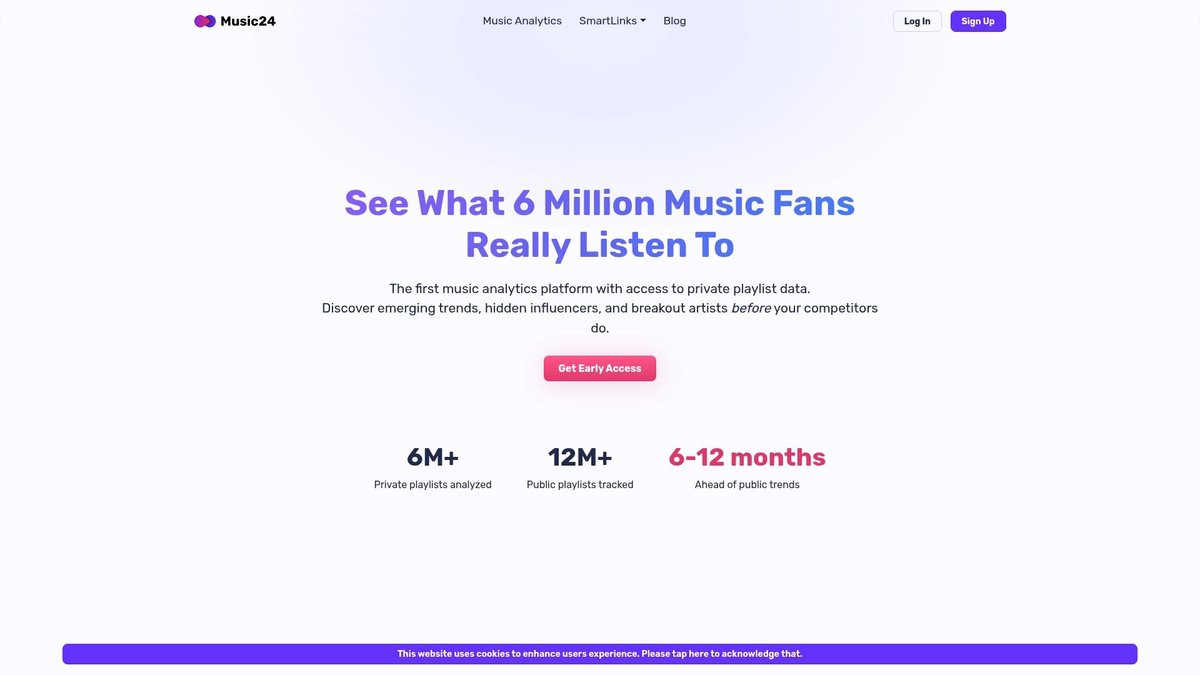
Visit Music24.com now and start uncovering the music trends and emerging artists everyone else will be talking about tomorrow.
Frequently Asked Questions
What are the most effective strategies for discovering emerging artists?
To discover emerging artists effectively, utilize private playlist data, analyze influential playlist curators, and monitor listener behavior. Focus on tracking metrics like playlist inclusion frequency and curator performance to identify potential breakout talent early.
How can I analyze private playlist data to identify music trends?
You can analyze private playlist data by monitoring track inclusion frequency, playlist diversity, and cross-genre blending. Set up a system to systematically capture this data across multiple genres, allowing you to spot micro trends before they hit mainstream channels.
What role do playlist curators play in artist discovery?
Playlist curators significantly influence which artists gain visibility and popularity. Identify curators who engage their audience effectively and have a strong track record of recognizing emerging trends by tracking their playlist refresh rates and listener engagement metrics.
How can I use predictive analytics for talent scouting?
Use predictive analytics to assess artist potential by tracking incremental audience growth and engagement rates across platforms. Implement a scoring system to rank artists based on various metrics, helping you forecast which talents are likely to break out in the coming months.
What geographic factors should I consider when identifying local artists?
When searching for local artists, consider mapping local music scenes and analyzing regional playlist compositions. By monitoring grassroots engagement and local cultural influences, you can uncover talent that reflects the unique musical characteristics of specific areas.
Recommended
- 7 Steps to Build a Powerful Music Discovery Checklist - Blog - Music24.com
- 7 Data-Driven Examples of Rising Artists for Executives - Blog - Music24.com
- What is a Music Discovery Platform? Understanding Its Role - Blog - Music24.com
- Understanding Types of Music Discovery Trends: An Insight - Blog - Music24.com

