
Over 60 percent of American music listeners create private playlists, reshaping how trends are quietly formed behind the scenes. These hidden collections offer a rare glimpse into authentic preferences that public data often overlooks. Understanding the power of private playlist insights helps artists, industry professionals, and even avid fans discover what truly resonates, shining a light on the real musical choices driving American culture and revealing opportunities no public chart can predict.
Table of Contents
- Private Playlist Insights Explained Clearly
- Types of Playlist Data and Key Differences
- How Private Playlist Analysis Predicts Trends
- Uncovering Influential Curators and Micro-Trends
- Integrating Insights Into A&R and Marketing Strategies
- Risks, Data Ethics, and Misinterpretations
Key Takeaways
| Point | Details |
|---|---|
| Importance of Private Playlists | Private playlists provide deeper insights into listener behavior, revealing authentic preferences that public metrics may overlook. |
| Attention to Playlist Curation | Elements like playlist title and cover design significantly influence listener selection, impacting musical discovery. |
| Trend Prediction Advantages | Analyzing private playlists allows music professionals to identify emerging artists and genre shifts before they reach mainstream recognition. |
| Ethical Considerations | Navigating data privacy and ensuring user consent are crucial in maintaining trust and responsible use of private playlist data. |
Private Playlist Insights Explained Clearly
Private playlists represent a hidden ecosystem of musical discovery, offering unprecedented insights into listener behavior beyond traditional public streaming metrics. Music industry professionals recognize these personalized collections as critical indicators of emerging trends, artist potential, and genre evolution. Understanding private playlist dynamics requires a nuanced approach that goes beyond surface-level analytics.
Research indicates that playlist curation is deeply personal, with listeners carefully constructing sonic journeys that reflect their unique musical identities. Playlist title and cover design significantly influence user selection behaviors, suggesting that these seemingly minor elements play a substantial role in musical discovery and engagement. Professionals analyzing these private collections can uncover authentic listener preferences that conventional public metrics might miss.
Private playlists function as microcosms of individual musical taste, offering granular insights into genre blending, cross-pollination, and emerging artist popularity. By examining these curated collections, music industry professionals can identify breakthrough artists before they hit mainstream channels. Playlist architecture reveals complex listener behaviors - tracking how different tracks are sequenced, discovering unexpected genre combinations, and understanding the emotional narratives listeners construct through their musical selections.
Pro Tip for Music Professionals: Develop a systematic approach to analyzing private playlist data by creating a structured tracking system that captures genre transitions, repeated artist appearances, and unique track combinations across multiple listener collections.
How to Leverage Private Playlist Data for Artist Growth provides deeper insights into transforming these raw musical preferences into actionable industry strategies.
Types of Playlist Data and Key Differences
Playlist data represents a complex ecosystem of musical information, categorized into distinct types that offer unique insights for music industry professionals. Public playlists and private playlists form the primary categories, each providing different levels of analytical value. While public playlists are visible and easily tracked through streaming platforms, private playlists represent a more nuanced and authentic representation of listener preferences.
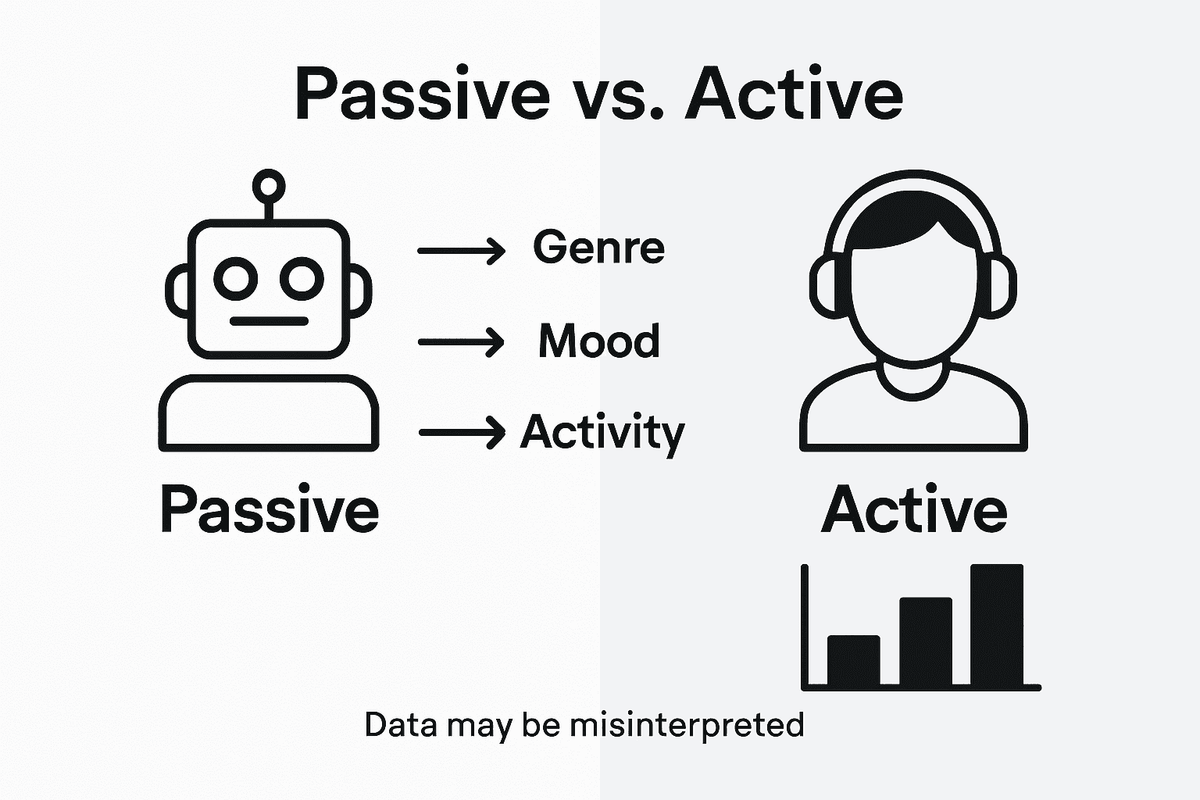
The primary playlist data types include genre-specific collections, mood-based compilations, activity-oriented playlists, and algorithm-generated recommendations. Understanding the different types of playlist data reveals the intricate ways listeners organize and consume music. Personal playlists often blend multiple genres, challenge traditional categorizations, and provide unexpected insights into musical cross-pollination that standard industry metrics might overlook.
Music industry professionals distinguish between passive and active playlist data. Passive data includes algorithmic recommendations and platform-generated playlists, while active data represents intentionally curated collections that reflect genuine listener preferences. These active playlists, typically created manually, offer the most valuable insights into authentic musical taste, revealing how listeners construct their personal sonic narratives and discover new artists outside mainstream channels.
Pro Tip for Music Analysts: Develop a multi-dimensional scoring system that weights playlist data based on curator influence, playlist complexity, and frequency of artist rotation to generate more nuanced music discovery metrics.
Understanding the Role of Playlist Data in Music Industry provides deeper context into how these data types transform music industry strategies.
The table below contrasts public and private playlist analytics in music industry contexts:
| Aspect | Public Playlist Data | Private Playlist Data |
|---|---|---|
| Visibility | Accessible by all users | Restricted to creator and select users |
| Insight Depth | Reflects broad trends | Reveals authentic personal preferences |
| Trend Prediction | Captures established hits | Detects early/emerging artist signals |
| Data Complexity | Standardized structures | Unique sequencing and genre blends |
| Business Impact | Supports wide marketing campaigns | Enables targeted, innovative strategies |
How Private Playlist Analysis Predicts Trends
Private playlist analysis represents a revolutionary approach to predicting music industry trends, offering unprecedented insights into listener behavior that traditional metrics cannot capture. Trend prediction through private playlist examination allows music professionals to identify emerging artists, genre shifts, and listener preferences before they become mainstream phenomena.

Personalized playlist generation methods demonstrate how sophisticated algorithmic analysis can uncover complex patterns in musical consumption. By tracking the subtle transitions, genre blending, and repeated artist appearances across numerous private playlists, analysts can detect nascent musical movements that conventional streaming data might overlook. These granular insights reveal how listeners are actively constructing their musical identities, creating intricate sonic landscapes that challenge traditional genre boundaries.
The most sophisticated private playlist trend analysis goes beyond simple track repetition, examining deeper contextual elements like playlist sequencing, emotional arc, and cross-genre pollination. Music industry professionals can leverage these insights to predict breakthrough artists, understand emerging listener demographics, and develop targeted marketing strategies that align with authentic musical discovery patterns. Private Playlist Analysis Guide provides additional context for professionals seeking to master these advanced analytical techniques.
Pro Tip for Music Trend Analysts: Create a dynamic scoring matrix that weights playlist data based on curator influence, playlist complexity, and the velocity of artist discovery across different listener segments.
Industry experts recognize that private playlist analysis offers a more authentic window into musical preferences compared to public streaming metrics, providing a predictive edge in an increasingly competitive music landscape.
Uncovering Influential Curators and Micro-Trends
Music industry professionals recognize that playlist curation represents far more than simple track selection. Influential curators serve as critical gatekeepers who shape musical discovery, transforming private playlists into sophisticated cultural artifacts that reveal emerging listener preferences and genre evolution.
Playlist characteristics play a crucial role in understanding musical coherence and trend emergence, demonstrating how sophisticated curators construct intricate sonic narratives. By analyzing playlist architectures, music professionals can identify micro-trends that challenge traditional genre boundaries, revealing complex listener behaviors that conventional streaming metrics often miss. These granular insights expose unexpected musical connections and emerging artist trajectories before they enter mainstream consciousness.
The most sophisticated curator analysis goes beyond simple track repetition, examining deeper contextual elements like playlist sequencing, emotional progression, and cross-genre pollination. 7 Examples of Influential Curators Every Pro Should Know highlights how certain playlist creators can exponentially accelerate artist discovery by strategically introducing new sounds within familiar sonic landscapes. These influential curators function as musical tastemakers, creating intricate ecosystem pathways that connect listeners with emerging talent.
Pro Tip for Playlist Analysts: Develop a multi-dimensional curator scoring system that evaluates influence based on playlist diversity, artist introduction frequency, and cross-genre exploration potential.
Industry experts understand that identifying influential curators provides a critical competitive advantage in predicting and shaping musical trends before they become widely recognized.
Integrating Insights Into A&R and Marketing Strategies
Private playlist analytics represent a transformative approach for A&R teams and music marketing professionals, offering unprecedented insights into authentic listener behavior that traditional metrics cannot capture. These granular data points provide a sophisticated lens for identifying emerging talent, predicting genre shifts, and developing targeted promotional strategies.
The integration of private playlist insights requires a multidimensional approach that goes beyond simple track counting. Understanding music marketing analytics reveals how sophisticated professionals leverage playlist data to create nuanced artist development and promotional strategies. By examining playlist architectures, genre transitions, and curator influence, A&R teams can identify breakthrough artists with significantly higher precision than conventional discovery methods.
Marketing professionals can utilize private playlist insights to develop hyper-targeted strategies that align with authentic listener preferences. These insights enable precise audience segmentation, allowing record labels to craft marketing campaigns that resonate with specific listener demographics. The ability to track genre blending, emotional playlist progression, and emerging artist networks provides a competitive intelligence framework that traditional market research cannot match.
Pro Tip for Music Industry Strategists: Develop a dynamic scoring matrix that weights playlist data based on curator influence, cross-genre exploration potential, and listener engagement metrics to create predictive artist development models.
Understanding Music Analytics Best Practices offers additional strategies for professionals seeking to transform raw playlist data into actionable industry intelligence.
Risks, Data Ethics, and Misinterpretations
Data privacy and ethical considerations represent critical challenges in the emerging landscape of private playlist analytics, requiring music industry professionals to navigate complex ethical terrain while extracting meaningful insights. The potential for misunderstanding listener behavior demands a nuanced, responsible approach to data interpretation and usage.
Playlist selection behavior reveals significant complexities that can lead to potential misinterpretations, underscoring the importance of careful, contextual analysis. Professionals must recognize that raw playlist data does not always represent a straightforward narrative of musical preference. Factors like mood, context, algorithmic recommendations, and temporary experimentation can significantly distort perceived listener trends, making it crucial to develop sophisticated analytical frameworks that account for these nuanced variables.
Ethical data collection and usage require stringent protocols that prioritize user anonymity and consent. Music industry professionals must implement robust anonymization techniques, ensuring that individual user identities remain protected while extracting aggregate insights. This approach demands developing advanced statistical methods that can generate meaningful trends without compromising personal privacy, creating a delicate balance between innovative analysis and individual data protection.
Pro Tip for Ethical Data Analysts: Establish a comprehensive data governance framework that includes clear consent mechanisms, strict anonymization protocols, and regular ethical audits to ensure responsible use of playlist insights.
Industry leaders recognize that maintaining user trust through transparent, ethical data practices is fundamental to the long-term viability of private playlist analytics as a strategic tool.
Below is a summary of key risks and ethical considerations in private playlist analytics:
| Risk/Challenge | Example Scenario | Ethical Safeguard |
|---|---|---|
| Data Privacy | Identifiable user preferences exposed | Employ robust anonymization protocols |
| Misinterpretation | Mood-based playlists read as genre shift | Include contextual analysis procedures |
| Consent Issues | Data collected without user knowledge | Secure explicit user opt-in consent |
| Algorithmic Bias | Playlist curation influenced by recommendations | Regularly audit for unbiased data practices |
Harness the Power of Private Playlist Insights to Revolutionize Your Music Discovery
The challenge highlighted in "Private Playlist Insights: Accelerating Music Discovery" centers on understanding authentic listener preferences hidden within private playlists—insights that traditional public metrics often miss. Music professionals struggle to detect emerging artists early, analyze intricate playlist architectures, and leverage genre blending and influential curator data for smarter A&R and marketing decisions. If you want to overcome these obstacles and gain a competitive edge, it is essential to access comprehensive analytics that capture the true pulse of music discovery.
Music24.com offers a transformative solution that addresses these exact pain points by analyzing millions of anonymized private playlists to uncover micro-trends and influential curators shaping the future of music. With proprietary access to private playlist data, we provide predictive analytics that enable record labels, A&R teams, artist managers, and marketers to identify breakout artists ahead of public charts. Our platform decodes complex playlist sequencing and genre cross-pollination, empowering you to design targeted strategies grounded in real listener behavior.
Unlock the full potential of private playlist analytics with Music24.com. Discover how you can leverage these insights today to accelerate artist discovery and shape music marketing like never before in Private Playlist Analysis Guide and learn advanced techniques for actionable strategies in Understanding Music Analytics Best Practices.
Ready to transform your approach to music discovery and marketing? Experience the competitive advantage of proprietary private playlist insights now.
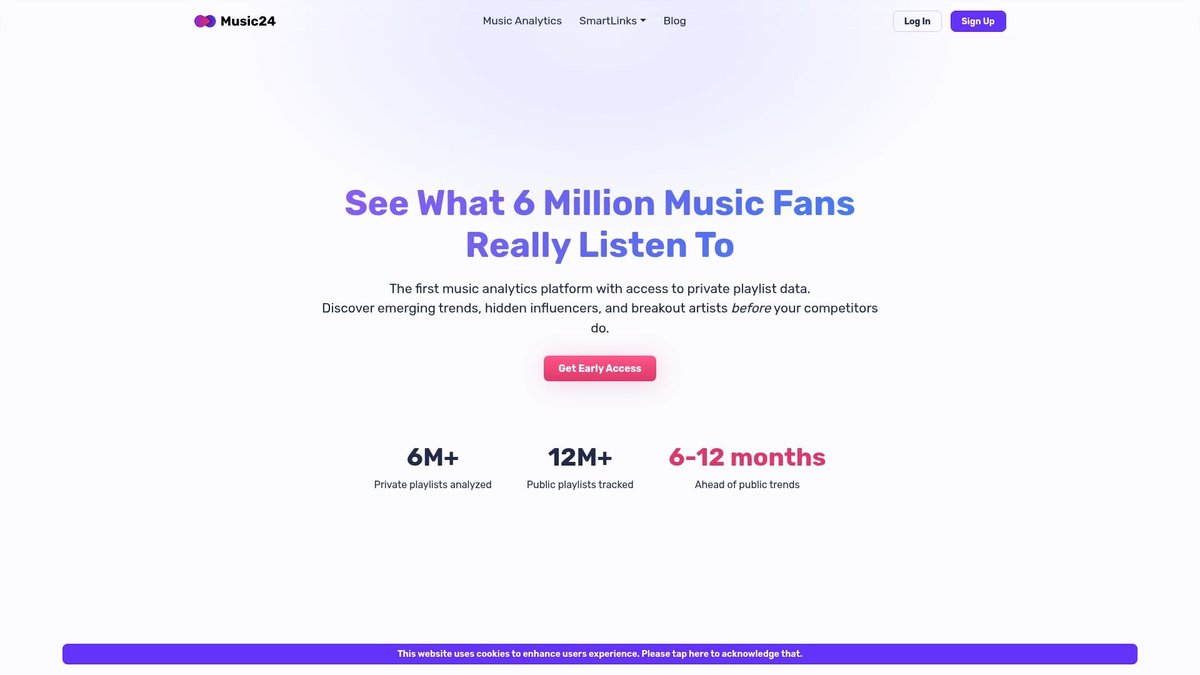
Visit Music24.com to get started and redefine how you find and promote music talent.
Frequently Asked Questions
What are private playlists and why are they important?
Private playlists are curated collections of music that are not publicly accessible. They are important because they provide valuable insights into listener behavior and preferences that traditional public playlists cannot capture.
How can private playlist analysis help predict music trends?
Private playlist analysis helps predict music trends by revealing emerging artists, genre shifts, and listener preferences through an in-depth examination of curated collections, including the sequencing of tracks and genre blending.
What types of data can be derived from private playlists?
Data from private playlists includes insights into genre-specific collections, mood-based compilations, and unique artist appearances. This active data reflects genuine listener preferences and can uncover micro-trends in music.
What ethical considerations should be taken into account when analyzing playlist data?
When analyzing playlist data, it is crucial to prioritize data privacy, ensuring user anonymity and consent. Implementing robust anonymization protocols and ethical data practices is essential to maintain trust and protect user information.
Recommended
- 7 Examples of Playlist Trends Shaping the Music Industry - Blog - Music24.com
- Understanding What is Playlist Data and Its Impact - Blog - Music24.com
- Understanding Types of Playlist Data in the Music Industry - Blog - Music24.com
- How to Leverage Private Playlist Data for Artist Growth - Blog - Music24.com

