
Playlist data is rewriting the rules of the music industry. Recent research shows that playlist inclusion can instantly boost an artist’s visibility and revenue opportunities, sometimes before a single public chart notice. You might expect playlists to be just digital mixtapes, shuffling your favorite tracks at random. Actually, these data sets hold the keys to audience trends, music discovery, and even the next big genre crossover—offering deeper insights than any top 10 list ever could.
Table of Contents
- Defining Playlist Data: What It Is And Why It Matters
- The Role Of Playlist Data In Music Discovery And Distribution
- Types Of Playlist Data: Curated, Algorithmic, And User-Generated
- Impact Of Playlist Data On Artist Success And Revenue Streams
- Analyzing Playlist Data: Tools And Techniques For Insights
Quick Summary
| Takeaway | Explanation |
|---|---|
| Playlist data reveals listener preferences. | Understanding playlist data helps identify what listeners are enjoying the most across genres and times. |
| Playlist inclusion boosts artist visibility. | Being featured on playlists increases the chances for artists to reach larger audiences, driving engagement and sales. |
| Data-driven strategies optimize marketing. | Analyzing playlist data allows music professionals to craft more targeted promotion strategies, improving effectiveness. |
| User-generated playlists reflect authentic tastes. | These playlists provide genuine insights into listener preferences that can inform marketing and artist development. |
| Advanced analytics uncover hidden trends. | Applying machine learning and visualization techniques can reveal important patterns in listener behavior that inform strategic decisions. |
Defining Playlist Data: What It Is and Why It Matters
In the digital music ecosystem, playlist data represents a complex and dynamic collection of information that provides unprecedented insights into listener preferences, artist discovery, and music consumption patterns. At its core, playlist data encompasses far more than just song lists.
The Fundamental Nature of Playlist Data
Playlist data is a comprehensive record of musical selections created by users, algorithms, and curators across streaming platforms. Research from the National Institutes of Health indicates that these collections represent more than simple track compilations. They serve as intricate maps of musical taste, social connections, and emerging cultural trends.
The types of playlist data vary significantly, including:
- Metadata: Information about tracks like artist, genre, release date
- User Interaction: Listening duration, skip rates, addition/removal patterns
- Contextual Data: Playlist themes, creation timestamps, user demographics
Strategic Importance in Music Industry Analytics
For music industry professionals, playlist data is a critical strategic resource. Read more about leveraging private playlist insights to understand how these datasets transform artist development and marketing strategies. By analyzing playlist compositions, record labels and A&R teams can:
- Identify emerging artist trends
- Predict potential breakout musicians
- Understand cross-genre listener preferences
- Map geographic music consumption patterns
Understanding playlist data allows professionals to move beyond traditional metrics, providing a nuanced view of music discovery and listener behavior that public charts cannot capture. This granular approach enables more targeted and effective music promotion strategies.
The Role of Playlist Data in Music Discovery and Distribution
Playlist data has revolutionized how music professionals identify, develop, and promote artists in an increasingly complex digital landscape. By transforming raw listening information into actionable insights, these datasets have become crucial navigational tools for understanding music consumption patterns.
Mechanism of Music Discovery
Modern music discovery is driven by intricate playlist algorithms and user-generated collections. Research from the International Music Industry Association demonstrates that playlist data serves as a sophisticated map of listener preferences, revealing emerging talent and genre trends before traditional metrics catch up.
Key mechanisms of music discovery through playlist data include:
- Algorithmic Recommendations: Streaming platforms analyze listening behaviors to suggest new tracks
- Curator Influence: Professional and user playlists signal potential breakout artists
- Cross Genre Pollination: Playlists reveal unexpected musical connections and listener crossovers
Strategic Distribution Channels
Playlist data transforms music distribution from a one dimensional approach to a nuanced strategic process. Explore our insights on playlist analytics strategies to understand how record labels and artist managers leverage these insights. By analyzing playlist inclusion rates, skip frequencies, and listener retention, professionals can:
- Target precise audience segments
- Optimize release strategies
- Predict potential viral tracks
- Understand listener engagement beyond traditional streaming numbers
Understanding playlist data enables music industry professionals to make informed decisions about artist promotion, genre positioning, and audience targeting. This data-driven approach represents a fundamental shift from intuition based strategies to precision marketing in the music ecosystem.

Types of Playlist Data: Curated, Algorithmic, and User-Generated
Playlist data exists in three primary manifestations, each offering unique insights into music consumption and listener behavior. Understanding these different types provides music industry professionals with a comprehensive view of how music discovery and engagement occur in the digital ecosystem.
Curated Playlist Data
Curated playlists represent carefully crafted collections created by music experts, industry professionals, and recognized tastemakers. According to music industry research from Billboard, these playlists serve as critical pathways for artist exposure and genre exploration.
Key characteristics of curated playlist data include:
- Professional Selection: Tracks chosen by industry experts
- Thematic Coherence: Playlists organized around specific moods, genres, or concepts
- Strategic Positioning: Intentional artist and track placement
Algorithmic Playlist Data
Algorithmic playlists are dynamically generated by streaming platforms using complex machine learning models that analyze user listening patterns. Discover more about emerging music trend detection to understand how these algorithms predict and shape listener preferences.
Unique aspects of algorithmic playlist data involve:
- Personalized Recommendations: Tailored to individual listener histories
- Real Time Adaptation: Continuously updating based on recent listening behavior
- Cross Genre Exploration: Suggesting tracks beyond user's typical selections
User Generated Playlist Data
User generated playlists represent organic, grassroots music collections created by individual listeners. These datasets provide unfiltered insights into authentic musical preferences and social listening trends. Unlike curated or algorithmic playlists, these collections reflect genuine, unmediated musical taste.
By synthesizing these three playlist data types, music industry professionals can develop nuanced strategies for artist development, marketing, and audience engagement.
Below is a table comparing the three major types of playlist data discussed in the article, highlighting their main characteristics and roles in music discovery.
| Playlist Data Type | Created By | Key Features | Role in Music Discovery |
|---|---|---|---|
| Curated | Industry experts, tastemakers | Thematic coherence, strategic track placement | Enhances artist exposure, signals credibility |
| Algorithmic | Streaming platform algorithms | Personalized recommendations, real-time updates | Reveals hidden listener preferences, facilitates cross-genre discovery |
| User-Generated | Individual listeners | Reflects authentic taste, grassroots collections | Provides genuine insights into listener trends |
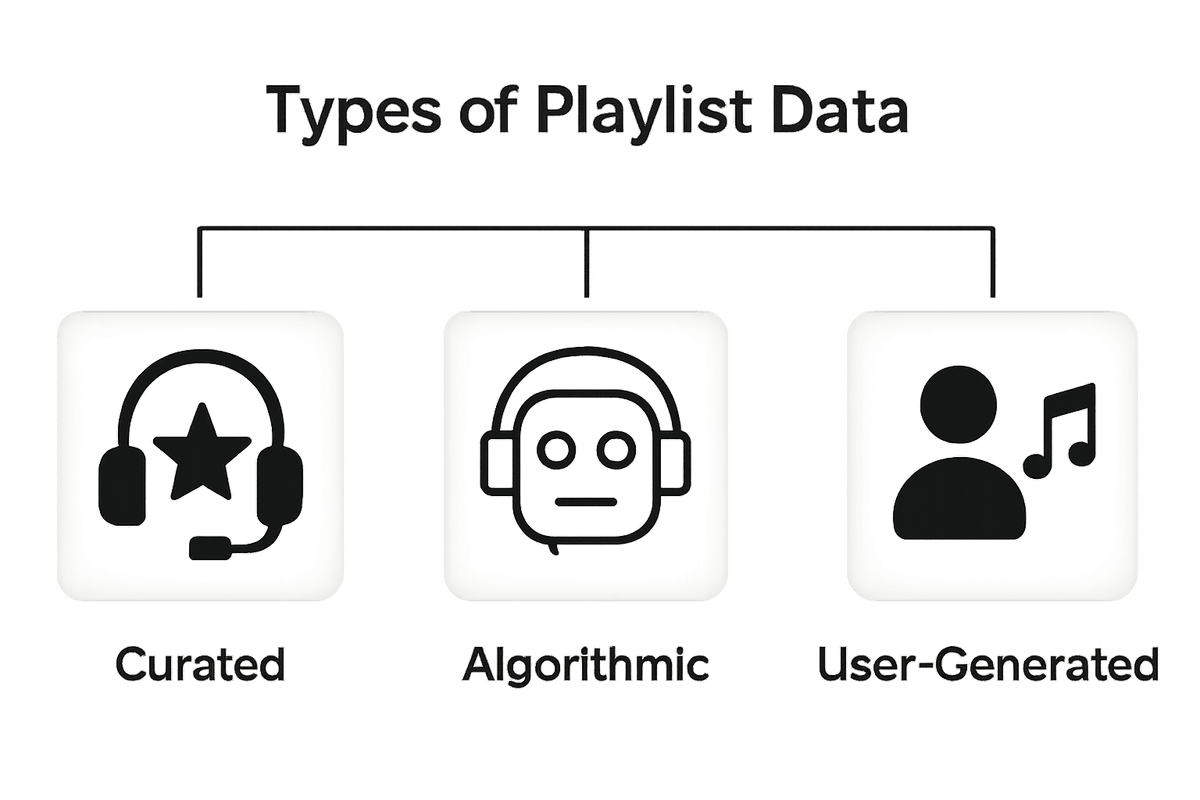 Each data type offers a unique lens into the complex world of musical consumption and discovery.
Impact of Playlist Data on Artist Success and Revenue Streams
Playlist data has fundamentally transformed how artists generate revenue, gain exposure, and build sustainable careers in the digital music landscape. By providing granular insights into listener behavior, these datasets have become critical navigational tools for music industry professionals seeking to understand and monetize artistic potential.
Exposure and Audience Development
Research from Parliamentary briefings on digital music economics demonstrates that playlist inclusion directly correlates with artist visibility and financial success. Playlist data reveals intricate pathways for audience expansion and genre crossover potential.
The following table summarizes the key mechanisms through which playlist data drives exposure and impacts artist revenue in the digital music industry.
| Mechanism | Description |
|---|---|
| Algorithmic Amplification | Platforms promote artists using playlist performance metrics |
| Listener Discovery | Artists reach new audiences through playlist inclusion |
| Credibility Signaling | Being featured provides social proof for musical quality |
| Listener Retention | Tracks that engage listeners earn higher royalties |
| Playlist Longevity | Longer presence on playlists increases revenue over time |
| Cross Platform Performance | Multiple platform inclusion boosts reach and earning potential |
Key mechanisms of playlist driven exposure include:
- Algorithmic Amplification: Platforms recommend artists based on playlist performance
- Listener Discovery: Increased chances of reaching new audience segments
- Credibility Signaling: Playlist inclusion acts as social proof of musical quality
Revenue Generation Metrics
Modern streaming platforms calculate royalties through complex playlist interaction metrics. By analyzing factors beyond simple play counts, artists can strategically position themselves for financial success. Learn more about music trend detection strategies to understand how playlist data influences revenue potential.
Critical revenue generation aspects include:
- Listener Retention: Tracks that maintain audience engagement earn higher royalties
- Playlist Longevity: Sustained playlist inclusion increases revenue potential
- Cross Platform Performance: Consistent playlist presence across multiple platforms
Strategic Career Development
Playlist data provides unprecedented insights into listener preferences, allowing artists and managers to make data driven decisions about musical direction, marketing strategies, and audience targeting. By understanding playlist dynamics, musicians can craft more resonant artistic narratives and build more sustainable careers in an increasingly competitive music ecosystem.
Analyzing Playlist Data: Tools and Techniques for Insights
Effective playlist data analysis requires sophisticated tools and advanced analytical techniques that transform raw musical information into strategic intelligence. Music industry professionals now leverage complex technological frameworks to extract meaningful insights from increasingly complex datasets.
Data Collection and Preprocessing
Academic research on music data analytics highlights the critical importance of robust data collection methodologies. Preprocessing involves cleaning, normalizing, and structuring playlist data to enable meaningful analysis.
Key preprocessing techniques include:
- Data Normalization: Standardizing track and artist information
- Metadata Enrichment: Adding contextual details to raw playlist entries
- Noise Reduction: Removing irrelevant or duplicate data points
Advanced Analytical Techniques
Modern playlist data analysis employs sophisticated machine learning and statistical methods to uncover hidden patterns and predictive insights. Explore our comprehensive guide to music data interpretation to understand the depth of analytical possibilities.
Critical analytical approaches involve:
- Machine Learning Algorithms: Predicting listener preferences
- Network Analysis: Mapping interconnections between artists and genres
- Sentiment and Mood Tracking: Understanding emotional resonance of tracks
Visualization and Reporting
Transforming complex playlist data into actionable insights requires advanced visualization techniques. Professionals use interactive dashboards, network graphs, and dynamic charts to communicate nuanced findings. These visual representations enable music industry stakeholders to quickly understand complex patterns, track emerging trends, and make data driven strategic decisions about artist development, marketing, and audience engagement.
Turn Hidden Playlist Data Into Your Industry Advantage
Are you struggling to predict music trends or identify genuine breakout artists before everyone else? The article explores the crucial differences between curated, algorithmic, and user-generated playlist data, highlighting how public metrics often leave you behind when it comes to timely discovery and real audience insight. If you want to move beyond surface-level data and truly understand private listening habits, now is the time to act.
Join leading music professionals who trust Music24.com to leverage advanced analytics across millions of private playlists. Our analytics platform unlocks insights on genre blending, offline discovery, and influencer-driven trends long before they hit the public charts. Ready to find tomorrow's hits and influential curators ahead of the curve? Explore how our music data interpretation tools and playlist analytics examples can help you gain the competitive edge you need. Visit Music24.com and see what real, predictive playlist data can do for your business today.
Frequently Asked Questions
What are the different types of playlist data in the music industry?
Playlist data mainly exists in three types: Curated playlists, which are created by music experts; Algorithmic playlists, generated by streaming platforms based on user listening patterns; and User-generated playlists, created by individual listeners reflecting their personal musical tastes.
How does curated playlist data impact artist exposure?
Curated playlists significantly enhance artist exposure by showcasing carefully selected tracks that align with specific themes or moods, enabling undiscovered artists to reach wider audiences through expert-approved visibility.
What role do algorithmic playlists play in music discovery?
Algorithmic playlists utilize machine learning to analyze user listening behaviors, offering personalized track recommendations and exposing listeners to new artists and genres they might not typically explore, thus playing a crucial role in music discovery.
Why is user-generated playlist data important for understanding listener behavior?
User-generated playlists offer authentic insights into genuine musical preferences, revealing social listening trends and showing how real audiences engage with music beyond the curated or algorithmic selections. This data helps music professionals understand and connect with their target audiences.

