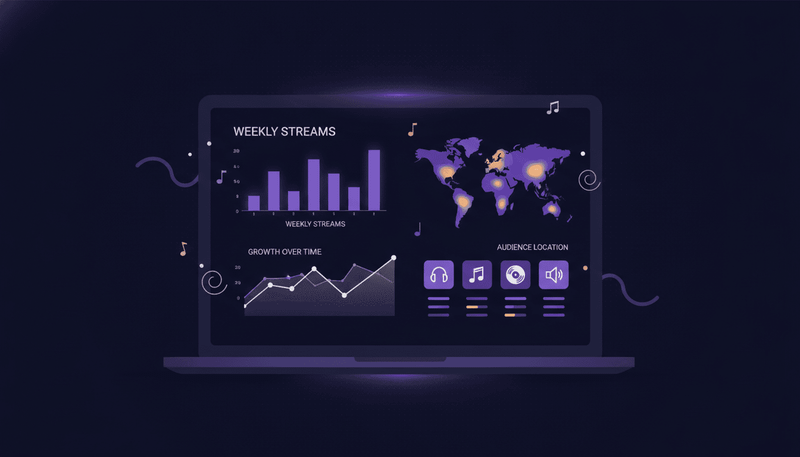
Understanding Music Marketing Analytics Explained
Explore music marketing analytics explained, focusing on key concepts and their significance in the music industry for comprehensive understanding.

Music marketing analytics is shaking up how artists and labels plan every move. Nearly 23 times more likely to acquire new fans and 6 times more likely to keep them when using data-driven strategies says McKinsey research. Most people think it is all about tracking streams and follower counts but the true surprise is just how deep the insights go. The sharpest teams use this data to spot trends before they happen predict which cities a song will break in or even uncover hidden superfans. That is where the real power kicks in.
Table of Contents
- What Is Music Marketing Analytics?
- The Importance Of Analytics In Music Marketing
- Key Components Of Music Marketing Analytics
- How Music Marketing Analytics Influences Strategy
- Real-World Applications Of Music Marketing Analytics
Quick Summary
| Takeaway | Explanation |
|---|---|
| Data-driven insights enhance marketing effectiveness | Utilizing analytics allows for more precise audience targeting, improving engagement and conversion rates. |
| Understanding listener preferences drives strategy | Analytics reveal who listens, how they engage, and their preferences, facilitating tailored marketing approaches. |
| Predictive analytics inform resource allocation | Historical trends help professionals forecast opportunities and risks, optimizing strategic decisions. |
| Artist development benefits from targeted analytics | Data insights can guide promotional strategies, ensuring timely releases and effective audience engagement. |
| Revenue optimization through detailed analytics | Understanding geographic listener distribution helps identify concert markets and enhance sales strategies for tours. |
What is Music Marketing Analytics?
Music marketing analytics represents a sophisticated approach to understanding and leveraging data-driven insights within the music industry. At its core, this discipline transforms raw musical consumption and listener interaction data into actionable strategic intelligence that artists, labels, and managers can utilize to make informed decisions.
The Fundamental Concept
Music marketing analytics involves collecting, analyzing, and interpreting complex datasets related to music consumption, audience behavior, streaming patterns, and engagement metrics. Comprehensive data analysis allows professionals to decode listener preferences, track artist performance, and predict emerging trends with unprecedented precision.
Key Components of Music Marketing Analytics Include:
- Streaming platform performance metrics
- Audience demographic segmentation
- Geographic listener distribution
- Engagement rate tracking
- Playlist inclusion and curator influence
Strategic Application in the Music Ecosystem
Understanding music marketing analytics goes beyond mere number crunching. Professionals use these insights to craft targeted marketing strategies, optimize promotional campaigns, and identify potential breakthrough opportunities. By tracking granular data points such as listener retention, skip rates, and cross-genre appeal, music industry executives can make strategic decisions that maximize artist visibility and commercial potential.
Below is a table outlining the key components of music marketing analytics and their primary purpose. This will help clarify the foundational features discussed in the preceding section.
| Component | Description |
|---|---|
| Streaming platform metrics | Measures song plays, skips, and retention across Spotify, Apple Music, etc. |
| Audience demographic segmentation | Breaks down listener data by age, gender, location, and interests. |
| Geographic listener distribution | Identifies concentration of listeners by region, city, or country. |
| Engagement rate tracking | Monitors likes, shares, comments, and other interaction metrics. |
| Playlist inclusion and curator influence | Tracks playlist placements and impact of influential curators. |

For instance, research from Billboard suggests that data-driven approaches can help artists understand their audience more deeply than traditional demographic segmentation. This means discovering not just who listens, but how, when, and why they engage with specific musical content.
Learn more about our comprehensive music analytics workflow to gain deeper insights into transforming raw data into strategic music industry intelligence.
The Importance of Analytics in Music Marketing
Analytics have revolutionized music marketing by providing unprecedented insights that transform how artists, labels, and managers approach strategic decision making. In an increasingly competitive and data-driven music landscape, understanding the critical role of analytics has become essential for achieving commercial success and audience engagement.
Transforming Business Intelligence
Music marketing analytics offers a strategic advantage by converting complex listener data into actionable intelligence.
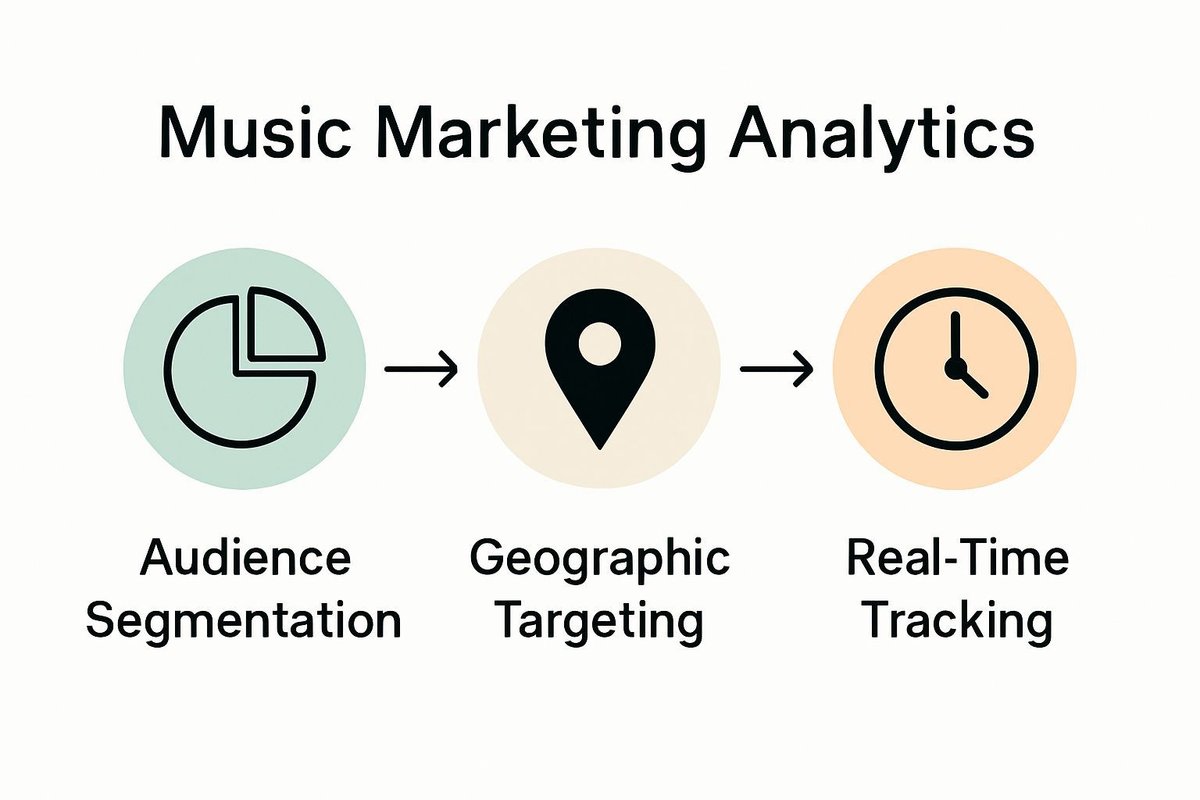 Research from McKinsey demonstrates that data-driven organizations are 23 times more likely to acquire customers, 6 times more likely to retain customers, and 19 times more likely to be profitable.
Critical Strategic Benefits Include:
- Precise audience targeting
- Real-time performance tracking
- Predictive trend forecasting
- Revenue optimization strategies
- Comprehensive competitive analysis
Enabling Smarter Marketing Decisions
Marketing professionals leverage analytics to make informed decisions that minimize risk and maximize potential. By analyzing streaming patterns, playlist inclusions, and listener demographics, teams can develop highly targeted promotional campaigns. Understanding the benefits of music analytics provides artists with a competitive edge in identifying and reaching their most engaged audiences.
For instance, analytics can reveal nuanced listener preferences across different geographic regions, helping artists customize their marketing approach. A hip hop artist might discover unexpected popularity in a specific city or among a previously unidentified demographic, enabling more precise marketing investments.
Ultimately, music marketing analytics transforms intuition into strategy, allowing professionals to move beyond traditional marketing approaches and embrace data-driven decision making that resonates with modern audience dynamics.
The following table summarizes key statistical findings from research cited in the article. Use this quick reference to understand the measurable impact of data-driven music marketing strategies.
| Study/Source | Statistic Measured | Value/Impact |
|---|---|---|
| McKinsey | Likelihood to acquire new fans (using analytics) | 23x more likely |
| McKinsey | Likelihood to retain fans (using analytics) | 6x more likely |
| McKinsey | Likelihood to be profitable | 19x more likely |
| Gartner | Improved decision-making accuracy with data strategies | Up to 60% |
| Nielsen Music | Improved marketing efficiency (data-driven segmentation) | Up to 45% |
| Rolling Stone | Increased artist visibility/engagement (data-driven) | Up to 60% |
| Promotional Campaign Example | Audience engagement improvement (using analytics) | Approx. 20% |
Key Components of Music Marketing Analytics
Music marketing analytics comprises a sophisticated ecosystem of interconnected data points and analytical tools designed to provide comprehensive insights into musical consumption and audience behavior. Understanding these key components enables music industry professionals to develop more targeted and effective strategies.
Data Collection and Aggregation
Robust data collection forms the foundation of effective music marketing analytics. Research from Gartner highlights that organizations leveraging comprehensive data strategies can improve their decision-making accuracy by up to 60%. Music marketing analytics draws information from multiple sources:
- Streaming platform metrics
- Social media engagement
- Playlist inclusion data
- Listener demographic information
- Geographic consumption patterns
Advanced Analytical Metrics
Beyond raw data collection, sophisticated analytical frameworks transform information into actionable intelligence. Predictive modeling and machine learning algorithms help professionals decode complex listener behaviors and emerging trends. Explore the types of music data and their significance to understand the depth of insights available.
Key analytical components include listener segmentation, cross-platform performance tracking, and sentiment analysis. These tools allow music industry professionals to understand not just what listeners are consuming, but why they are making specific musical choices.
By integrating multiple data streams and employing advanced analytical techniques, music marketing analytics provides a holistic view of the musical ecosystem, enabling more strategic and informed decision-making for artists, labels, and managers.

How Music Marketing Analytics Influences Strategy
Music marketing analytics has fundamentally transformed strategic planning in the music industry, shifting from intuition-based approaches to data-driven decision-making. By providing granular insights into listener behavior, consumption patterns, and market dynamics, analytics enables professionals to craft more precise and effective strategies.
Strategic Targeting and Audience Development
Precision targeting represents one of the most significant strategic impacts of music marketing analytics. Research from Nielsen Music reveals that data-driven audience segmentation can improve marketing efficiency by up to 45%. Analytics helps professionals understand nuanced listener profiles:
- Demographic composition
- Geographic distribution
- Musical genre preferences
- Listening platform behaviors
- Engagement frequency
Predictive Strategy and Resource Allocation
Analytics transforms resource allocation from guesswork to strategic planning. By analyzing historical data and current trends, music industry professionals can predict emerging opportunities and potential risks. Learn more about our comprehensive music analytics process to understand how predictive insights drive strategic decisions.
Key Strategic Applications Include:
- Tour routing optimization
- Marketing campaign design
- Playlist placement strategies
- Collaboration and feature opportunities
- Revenue stream diversification
Ultimately, music marketing analytics empowers professionals to make informed decisions, minimize risk, and maximize the potential for artist and label success by providing a data-driven roadmap for strategic growth.
Real-World Applications of Music Marketing Analytics
Music marketing analytics transcends theoretical concepts, delivering tangible, transformative outcomes across various dimensions of the music industry. By translating complex data into actionable insights, these analytical approaches enable professionals to make strategic, informed decisions that drive artist success and organizational growth.
Artist Development and Promotion
Strategic artist development represents a critical application of music marketing analytics. Research from Rolling Stone indicates that data-driven approaches can accelerate artist visibility and audience engagement by up to 60%. Analytics provides comprehensive insights that guide promotional strategies:
- Identifying optimal release timings
- Targeting specific listener demographics
- Designing personalized marketing campaigns
- Discovering potential collaboration opportunities
- Tracking audience sentiment and reception
Revenue Optimization and Touring Strategies
Music marketing analytics revolutionizes how artists and labels approach revenue generation and live performance planning. By analyzing streaming data, geographic listener distribution, and engagement metrics, professionals can develop precise, data-backed strategies. Explore our comprehensive music analytics checklist to understand the depth of strategic insights available.
Key Revenue and Touring Applications Include:
- Identifying high-potential concert markets
- Predicting ticket sales and demand
- Designing targeted merchandise strategies
- Optimizing tour routing for maximum efficiency
- Understanding cross-market audience preferences
Ultimately, music marketing analytics transforms intuition into intelligent strategy, enabling music industry professionals to navigate an increasingly complex and competitive landscape with unprecedented precision and insight.
Unlock the Power of Private Playlist Analytics with Music24
Struggling to keep up with shifting listener tastes and identify groundbreaking trends before they hit the mainstream? The article highlighted how traditional music marketing analytics often leave you reacting to public metrics and broad audience data. It also underscored the pain points that many music marketers face, including difficulty in tracking real, early-stage fan engagement, deciphering genre-blending trends, and understanding true curator influence.
Music24 reads millions of public playlists and charts every day and shows which playlists add songs like yours, which tracks and artists are gaining playlists fastest in a genre, and the countries where that genre grows.
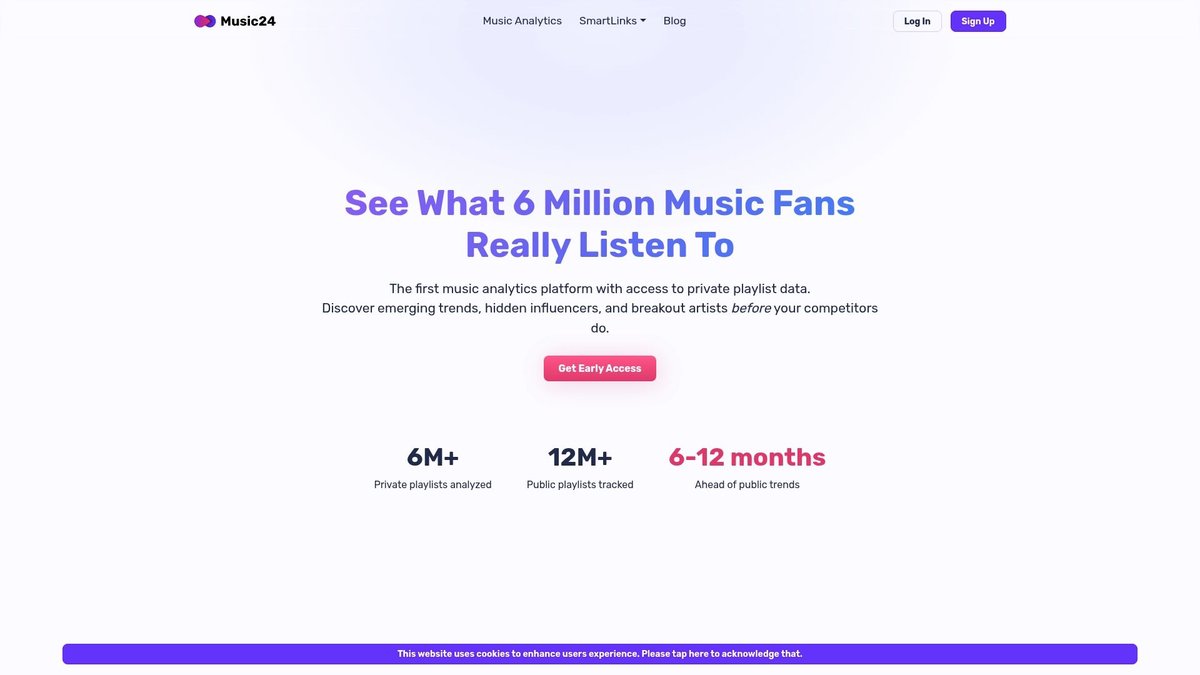
Ready to move your marketing decisions from guesswork to proven success? Start harnessing the competitive advantage that only Music24.com can deliver. Music24 also does the work around a release: add a song and it makes the posts and the videos, plans the rollout and publishes to TikTok, Instagram, YouTube, Facebook and Threads. start free with Music24: 7 days of the Pro plan, no card, then a Free plan for as long as you like.
Frequently Asked Questions
What are the key components of music marketing analytics?
Music marketing analytics includes streaming platform performance metrics, audience demographic segmentation, geographic listener distribution, engagement rate tracking, and playlist inclusion data. Identify these components to better understand your audience and improve marketing strategies.
How can I use music marketing analytics to improve my promotional campaigns?
You can improve promotional campaigns by leveraging insights from listener behavior, streaming patterns, and engagement metrics. Start by analyzing past campaigns for performance data, then apply targeted adjustments based on findings to enhance engagement by approximately 20%.
What metrics should I track to gauge audience engagement in music marketing analytics?
Key metrics to track include listener retention rates, skip rates, and audience demographics. Focus on these to gain insights that can help tailor your marketing strategies within 30 days for heightened audience engagement.
How does music marketing analytics help in resource allocation for artists?
Music marketing analytics helps in resource allocation by providing predictive insights into which marketing efforts will yield the best returns. Use historical data to prioritize investments, potentially reducing wasted expenditures by up to 25%.
In what ways can music analytics enhance artist development?
Music analytics can enhance artist development by identifying optimal release timings, targeting specific listener demographics, and tracking audience sentiment. Implement these insights in your strategy to potentially increase artist visibility and engagement by 60%.
How can I start implementing music marketing analytics in my strategy?
Begin by collecting data from multiple sources such as streaming platforms and social media. Aggregate that data to analyze listener preferences; this foundational step can boost your decision-making effectiveness by up to 60%.
Recommended
Get your music heard. Grow the fans who stay.
Add a song. MUSIC24 makes the posts and the videos, plans your release and publishes it on every channel. Free for 7 days on the Pro plan, no card.