How to Get on Spotify Discover Weekly in 2026: A Data-Driven Guide
Learn how Spotify's Discover Weekly algorithm selects tracks and apply 7 data-backed strategies to land your artists on millions of personalized playlists in 2026.

Spotify's Discover Weekly reaches over 100 million listeners every Monday. Each playlist is unique, built from signals most teams never see. Getting your artist onto those playlists means millions of passive, high-intent impressions with zero ad spend.
This guide breaks down exactly how the algorithm picks songs, what signals matter most, and seven strategies you can execute this quarter to increase Discover Weekly placements.
What Is Spotify Discover Weekly?
Quick answer: Discover Weekly is Spotify's flagship personalized playlist, refreshed every Monday with 30 tracks tailored to each listener's taste. It draws from collaborative filtering, audio analysis, and real listening behavior to surface songs a user has never streamed but is statistically likely to save.
Discover Weekly launched in 2015 and quickly became one of the most powerful discovery engines in streaming. Unlike editorial playlists that rely on human curators, Discover Weekly is fully algorithmic. No pitch form. No playlist editor. The machine decides.
For A&R teams and artist managers, that distinction matters. Editorial placements require relationships and timing. Discover Weekly placements require listener behavior signals that compound over weeks and months. The upside: once an artist's signal profile is strong enough, Discover Weekly placements can recur indefinitely across millions of unique playlists.
The playlist updates every Monday at midnight (local time for each user). Tracks that go unsaved disappear after seven days. Tracks that get saved feed back into the algorithm, strengthening the artist's signal for future cycles.
How the Discover Weekly Algorithm Works
Quick answer: Discover Weekly combines three core methods: collaborative filtering (what similar listeners enjoy), content-based signals (audio features and metadata), and natural language processing of web content about artists and tracks. Together, these systems match unfamiliar songs to listeners most likely to engage.
Collaborative Filtering
Collaborative filtering is the backbone. Spotify groups listeners into taste clusters based on overlapping streaming and save behavior. If User A and User B share 80% of their listening habits, songs that User A streams regularly but User B has never heard become candidates for User B's Discover Weekly.
This is why playlist adds and saves matter more than raw streams. A listener who saves a track signals genuine preference. That save gets weighted heavily when the algorithm maps taste clusters. Ten thousand casual streams generate weaker collaborative filtering signal than two thousand saves.
For label teams tracking artist development, the ratio of saves to streams is a leading indicator of Discover Weekly eligibility. Artists with save rates above 15% consistently outperform on algorithmic placements.
Content-Based Signals
Spotify's audio analysis engine examines every track's tempo, key, energy, danceability, acousticness, and dozens of other features. These attributes create a sonic fingerprint. When a listener's history shows preference for tracks in a specific audio cluster, new releases with similar fingerprints surface in Discover Weekly.
This system rewards sonic consistency during an artist's development phase. An artist who releases five tracks in a tight audio range builds a stronger content-based signal than one who swings between genres every single. The algorithm needs a pattern to match against.
Metadata quality also feeds content signals. Accurate genre tags, complete artist profiles, and proper credits all help Spotify's NLP systems categorize an artist correctly. Incomplete metadata is a silent killer for algorithmic discovery.
Release Radar vs. Discover Weekly
These two algorithmic playlists serve different functions. Release Radar delivers new music from artists a listener already follows or streams. Discover Weekly surfaces music from artists a listener has never heard.
| Feature | Discover Weekly | Release Radar |
|---|---|---|
| Update cycle | Every Monday | Every Friday |
| Source | Artists the listener has never streamed | Artists the listener follows or streams |
| Track age | Any age (catalog + new) | Released in last 28 days |
| Primary signal | Collaborative filtering + audio match | Follow/stream history |
| Strategic value | New audience acquisition | Retention and engagement |
For artist development, both matter. But Discover Weekly is the acquisition engine. It puts your artist in front of listeners who have never encountered them before but are statistically primed to connect with their sound. That makes it the highest-leverage algorithmic playlist for growing an artist's base.
7 Proven Strategies to Get on Discover Weekly
Quick answer: The most effective strategies focus on strengthening the behavioral signals that feed collaborative filtering: saves, playlist adds, consistent releases, and niche playlist targeting. Profile optimization and listener engagement amplify every other tactic.
1. Optimize Your Spotify Artist Profile
A complete Spotify for Artists profile is table stakes, but most teams treat it as a checkbox. The algorithm's NLP systems scan artist bios, genre tags, and "fans also like" connections to categorize and recommend music. An incomplete profile limits how accurately the algorithm can match your artist to taste clusters.
Action items:
- Write a bio that includes genre descriptors and sonic reference points (these feed NLP classification)
- Upload high-quality images (profiles with images get higher click-through from Discover Weekly)
- Verify the "fans also like" section reflects your target peer group; streaming overlap with those artists strengthens collaborative filtering
- Use Spotify for Artists to pin a current track as your artist pick
2. Encourage Saves and Playlist Adds
Saves are the single strongest signal for Discover Weekly placement. A save tells the algorithm: "This listener wants to hear this track again." That intent signal carries more weight than passive streams, skip rates, or even repeat listens.
Playlist adds to personal playlists carry similar weight. When a listener drops your track into a playlist alongside other artists, the algorithm maps those co-placements as taste connections. Your artist inherits collaborative filtering proximity to every other artist in that playlist.
Practical tactics:
- Include a direct Spotify link (not a smartlink aggregator) in all release marketing to reduce friction between intent and action
- Brief artists to ask for saves in their social content, not just streams
- Track save-to-stream ratios weekly as a leading KPI for algorithmic performance
Understanding how listeners interact with playlists at scale reveals which tracks generate genuine engagement versus passive background listening.
3. Release Consistently
The algorithm favors artists with active release histories. A new track every four to six weeks keeps your artist in Spotify's recommendation pipeline and generates fresh data points for collaborative filtering. Long gaps between releases cause signal decay: the algorithm deprioritizes artists whose listener engagement data is stale.
Consistency does not mean rushing. A steady release cadence of singles or EPs outperforms an annual album drop for algorithmic purposes. Each release refreshes your artist's data footprint and gives the algorithm new tracks to test against taste clusters.
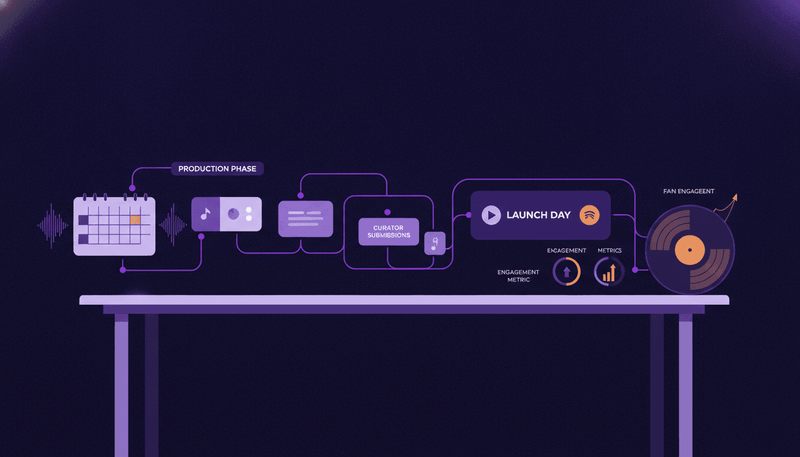
Plan your release calendar around this reality. Map out 8 to 12 releases per year, including singles, remixes, and acoustic versions. Each release is a new entry point into Discover Weekly.
4. Target Niche Playlists First
Large editorial playlists (500K+ followers) are high-visibility but low-signal for Discover Weekly. The listener base is too broad, and passive streaming from ambient playlists generates weak collaborative filtering data.
Niche playlists with 1,000 to 50,000 followers in a specific genre or mood category are far more valuable. Their listeners are active curators with strong taste profiles. When your track performs well in a niche playlist, the saves and playlist adds generate concentrated collaborative filtering signal within a well-defined taste cluster.
This concentrated signal is exactly what Discover Weekly needs to confidently recommend your track to similar listeners. Think of niche playlists as the training data for your artist's algorithmic profile.
Music24 reads millions of public playlists and charts every day, showing which niche playlists add songs like yours and how fast they grow. If you are trying to identify which playlist placements lead to Discover Weekly appearances, that curator-level data is the missing link most teams lack.
5. Use Pre-Save Campaigns Strategically
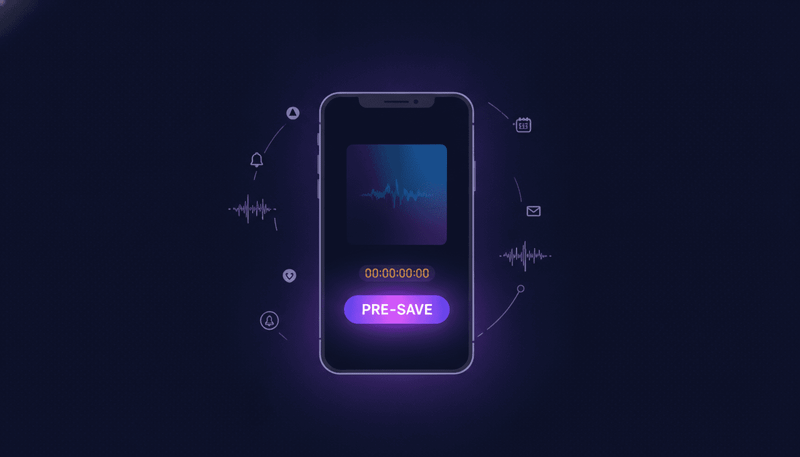
Pre-saves prime the algorithm before release day. When listeners pre-save a track, it automatically adds to their library on release. That day-one save surge creates an immediate signal spike that Spotify's recommendation systems pick up within the first 72 hours.
A well-executed pre-save campaign can generate hundreds or thousands of saves before the track has a single organic stream. That head start compounds through collaborative filtering as the algorithm begins matching pre-save listeners to similar taste clusters.
Coordinate pre-saves with your broader release strategy to maximize day-one signal density.
6. Analyze Your Algorithmic Performance
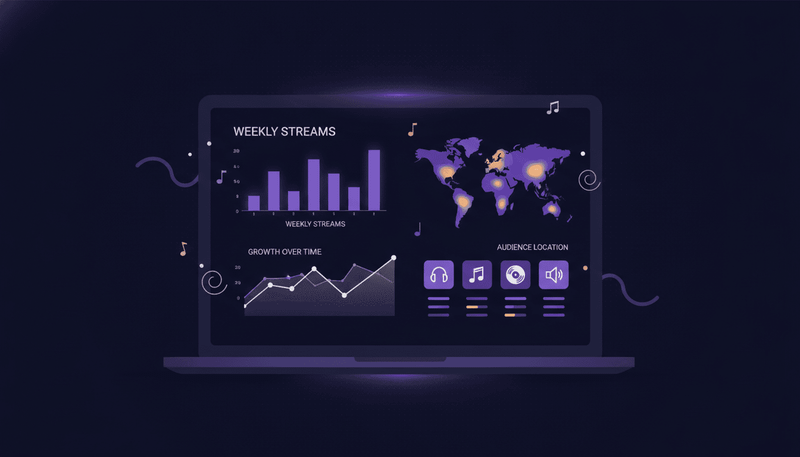
Spotify for Artists provides some algorithmic data, but it only shows you your own artist's performance in isolation. To understand why your tracks are or are not landing on Discover Weekly, you need comparative context: how does your save rate stack up against artists in the same genre tier? Which playlist placements actually preceded algorithmic pickups?
Track these metrics weekly:
- Save rate (saves divided by total streams)
- Discover Weekly listener count (available in Spotify for Artists)
- Playlist add rate from editorial and independent playlists
- Listener source breakdown (algorithmic vs. editorial vs. direct)
Building a structured analytics workflow helps your team spot patterns in algorithmic performance and adjust strategy before signal decay sets in.
7. Build Cross-Platform Momentum
Spotify's NLP systems crawl the web for mentions of artists and tracks. Blog coverage, social media buzz, and playlist features on other platforms all feed into Spotify's understanding of an artist's cultural relevance and genre positioning.
An artist generating conversation across multiple platforms builds a richer content signal profile. Spotify's algorithm does not operate in a vacuum; it reads the broader digital footprint. Coordinated release campaigns that generate press coverage, social engagement, and cross-platform playlist adds create a compounding effect on algorithmic recommendation.
Understanding how music trends develop across platforms helps you time cross-platform pushes for maximum algorithmic impact.
How to Measure Discover Weekly Performance
Quick answer: Track Discover Weekly listener counts, save rates from algorithmic sources, and week-over-week placement consistency. Compare these against your release cadence and playlist strategy to identify which actions drive algorithmic pickups.
Spotify for Artists breaks down streams by source: algorithmic playlists, editorial playlists, listener's own playlists, and direct. The algorithmic segment is your scorecard.
Key performance indicators for Discover Weekly:
| Metric | What it tells you | Target benchmark |
|---|---|---|
| Discover Weekly listeners (weekly) | Reach of algorithmic placements | Consistent week-over-week presence |
| Save rate from algorithmic sources | Listener intent quality | Above 15% indicates strong signal |
| Skip rate on algorithmic streams | Content-audience fit | Below 30% for healthy engagement |
| Repeat listen rate | Depth of engagement | Above 20% signals strong match |
| Weeks with active DW placement | Algorithm confidence | 4+ consecutive weeks shows sustained signal |
The most important pattern to watch: does Discover Weekly placement increase after specific actions? Map your release dates, playlist placements, and marketing pushes against weekly algorithmic data. Over three to six months, you will see which levers consistently move your algorithmic numbers.
For teams that want to go deeper, Music24 follows the artists, tracks and playlists you pick and emails you when they move. That data reveals what listeners actually save and add to personal playlists: the exact signals Discover Weekly weights most heavily. Public charts and editorial placements only tell part of the story. Private listening behavior is where algorithmic recommendations are born.
Releasing music soon? Start free with Music24: 7 days of the Pro plan, no card, then a Free plan for as long as you like.
Frequently Asked Questions
How long does it take to get on Discover Weekly?
Most artists begin seeing Discover Weekly placements 4 to 12 weeks after building consistent save and playlist add signals. The algorithm needs enough behavioral data to confidently match your tracks to taste clusters. A steady release cadence with strong save rates accelerates this timeline.
Can you pay to get on Discover Weekly?
No. Discover Weekly is fully algorithmic and cannot be influenced through Spotify Ad Studio, playlist pitching, or any paid placement. The only way to increase placements is by strengthening the behavioral signals (saves, playlist adds, consistent engagement) that feed the recommendation algorithm.
Does Discover Weekly favor new releases over catalog tracks?
Discover Weekly can surface tracks of any age, unlike Release Radar which focuses on releases from the last 28 days. Catalog tracks with strong ongoing save signals regularly appear in Discover Weekly. New releases do generate fresh data points that help the algorithm reassess an artist's recommendation profile.
How many streams does a Discover Weekly placement generate?
Individual placements vary widely based on how many taste clusters your track matches. A single Discover Weekly cycle can generate anywhere from a few hundred to tens of thousands of streams. The real value is compounding: consistent placements across multiple weeks build sustained listener acquisition that grows your artist's base audience.
What is the difference between Discover Weekly and Daily Mix?
Discover Weekly focuses exclusively on songs from artists a listener has never streamed, updating once per week. Daily Mix blends familiar favorites with occasional new recommendations, updating daily. For artist acquisition, Discover Weekly is the higher-value target because every listener who encounters your track there is a genuinely new audience member.
Do playlist pitches through Spotify for Artists affect Discover Weekly?
Playlist pitches target editorial playlists, not algorithmic ones. A successful editorial placement can indirectly boost Discover Weekly performance. When a track lands on an editorial playlist and generates saves from those listeners, the collaborative filtering signal strengthens, making Discover Weekly placement more likely in subsequent cycles.
Get your music heard. Grow the fans who stay.
Add a song. Music24 makes the posts and the videos, plans your release and publishes it on every channel. Free for 7 days on the Pro plan, no card.