How to Forecast Music Trends 2025: Pro Methods Unveiled
Learn how to forecast music trends 2025 with this step-by-step guide using private playlist analytics for actionable industry insights and early artist discovery.

Over 85 percent of American music professionals now rely on advanced analytics to stay competitive in a fast-changing industry. With private playlists driving authentic music discovery, knowing how to unlock these hidden data sources can set you apart from the crowd. This guide breaks down the most effective strategies for analyzing private playlists, uncovering discovery patterns, and predicting the next big moves in the American music scene.
Table of Contents
- Step 1: Set Up Access to Private Playlist Analytics
- Step 2: Identify Authentic Discovery Patterns
- Step 3: Analyze Genre and Geographic Micro-Trends
- Step 4: Spot Influential Curators and Early Adopters
- Step 5: Validate Forecasts with Predictive Metrics
Quick Summary
| Key Point | Explanation |
|---|---|
| 1. Choose the Right Analytics Platform | Identify a music analytics platform specializing in private playlist data for deeper insights into music discovery patterns. |
| 2. Analyze Authentic Discoveries | Focus on user behaviors and playlist interactions to uncover genuine preferences beyond standard algorithmic recommendations. |
| 3. Track Genre and Regional Micro-Trends | Use advanced analytics to examine niche genre shifts and regional music preferences, identifying new cultural trends. |
| 4. Identify Influential Curators | Spot curators who consistently introduce unique artists and have an impact on listener preferences and trends. |
| 5. Validate Your Predictions | Implement comprehensive metrics to validate music trend forecasts and enhance the accuracy of your predictive models. |
Step 1: Set Up Access to Private Playlist Analytics
Accessing private playlist analytics requires strategic navigation through specialized music data platforms. Understanding playlist analytics strategy becomes crucial for music professionals seeking deeper insights into emerging trends.
To begin setting up access, start by identifying a comprehensive music analytics platform that specializes in private playlist data. These platforms collect anonymized playlist information from millions of user collections, offering unprecedented visibility into authentic music discovery patterns. You will want to research platforms that provide detailed metrics beyond traditional public streaming charts, focusing on tools that offer granular insights into genre blending, geographic micro-trends, and playlist creator influence.
Registration typically involves creating an account, selecting an appropriate subscription tier, and configuring your specific research parameters. Professional music industry teams should prioritize platforms offering API access, comprehensive data visualization tools, and predictive analytics capabilities. Look for services that provide real-time updates and historical trend comparisons to maximize your strategic planning.
Pro Tip: Before committing to a platform, request a demonstration or free trial to evaluate the depth and accuracy of their private playlist data analytics, ensuring the tool meets your specific industry research needs.
Here's a summary of advanced features to look for in music analytics platforms:
| Feature | Description | Business Benefit |
|---|---|---|
| API Access | Integrates analytics into existing workflows | Streamlined data retrieval and automation |
| Real-Time Updates | Provides up-to-the-minute trends | Agile response to emerging markets |
| Predictive Analytics | Forecasts future music trends | Informs early investment and promotion |
| Data Visualization | Converts data into clear visuals | Accelerates insight extraction and reporting |
Step 2: Identify Authentic Discovery Patterns
Identifying authentic music discovery patterns requires a strategic approach to analyzing user behavior and playlist interactions. Examining music discovery behaviors provides critical insights into how listeners uncover and explore new musical content beyond traditional recommendation systems.
To effectively identify authentic discovery patterns, you need to focus on analyzing raw playlist data that reveals genuine user preferences rather than algorithmic suggestions. This means looking beyond surface level metrics and diving deep into how users actually interact with and sequence music across their personal collections. Pay close attention to transition points between genres, unexpected artist combinations, and emerging listening trends that signal organic music exploration.
Successful pattern identification involves using advanced analytics tools that can map complex user listening behaviors. Look for platforms that offer granular data visualization, allowing you to track how playlist creators develop their musical journeys. Track metrics like first time artist appearances, cross genre selections, and unique playlist construction methods to understand the nuanced ways listeners discover music.

Pro Tip: Develop a systematic approach to pattern analysis by creating comparative datasets that highlight differences between algorithmic recommendations and actual user playlist curation behaviors.
Step 3: Analyze Genre and Geographic Micro-Trends
Analyzing genre and geographic micro-trends requires sophisticated data analysis techniques that go beyond traditional music industry metrics. Exploratory analysis of global music listening trends provides critical insights into how musical preferences shift across different regions and demographic groups.
To effectively map these micro-trends, you will need to leverage advanced big data analytics platforms that can process complex listening patterns. This involves examining granular data points such as playlist compositions, song transition frequencies, emerging artist popularity, and regional genre crossover rates. Pay particular attention to unexpected genre blends, niche subgenres gaining traction, and listening behaviors that deviate from mainstream algorithmic recommendations.
Successful micro-trend analysis demands a multilayered approach that combines quantitative data with qualitative contextual understanding. Predicting music industry trends through regional user behaviors highlights the importance of tracking not just what people are listening to, but how they are discovering and sharing music across different geographic contexts. Look for patterns in playlist curation, emerging artist discovery rates, and subtle shifts in musical preferences that signal broader cultural trends.
Pro Tip: Develop a dynamic tracking system that allows you to continuously monitor and compare genre micro-trends across multiple regions, enabling you to identify emerging musical movements before they become mainstream.
Step 4: Spot Influential Curators and Early Adopters
Spotting influential curators and early music adopters requires a sophisticated approach to understanding digital music ecosystem dynamics. Analyzing the impact of bestseller lists on music discovery reveals the critical role that key influencers play in shaping listener preferences and driving musical trends.
To effectively identify these influential curators, you must develop a multifaceted tracking strategy that goes beyond surface level metrics. This involves examining playlist creation patterns, follower engagement rates, genre diversity, and the speed at which new artists are introduced into their collections. Focus on identifying individuals who consistently introduce unique artists before they become mainstream, demonstrate sophisticated musical taste, and have a proven track record of influencing listener behaviors.
Successful curator identification requires advanced analytical tools that can map complex network interactions and social influence patterns. Look for playlist creators who demonstrate consistent taste making abilities transforming their playlists from personal collections into genuine music discovery platforms. Analyze their historical data to understand how they select music track selection strategies predict emerging artist potential weeks or even months before traditional promotional channels catch on.
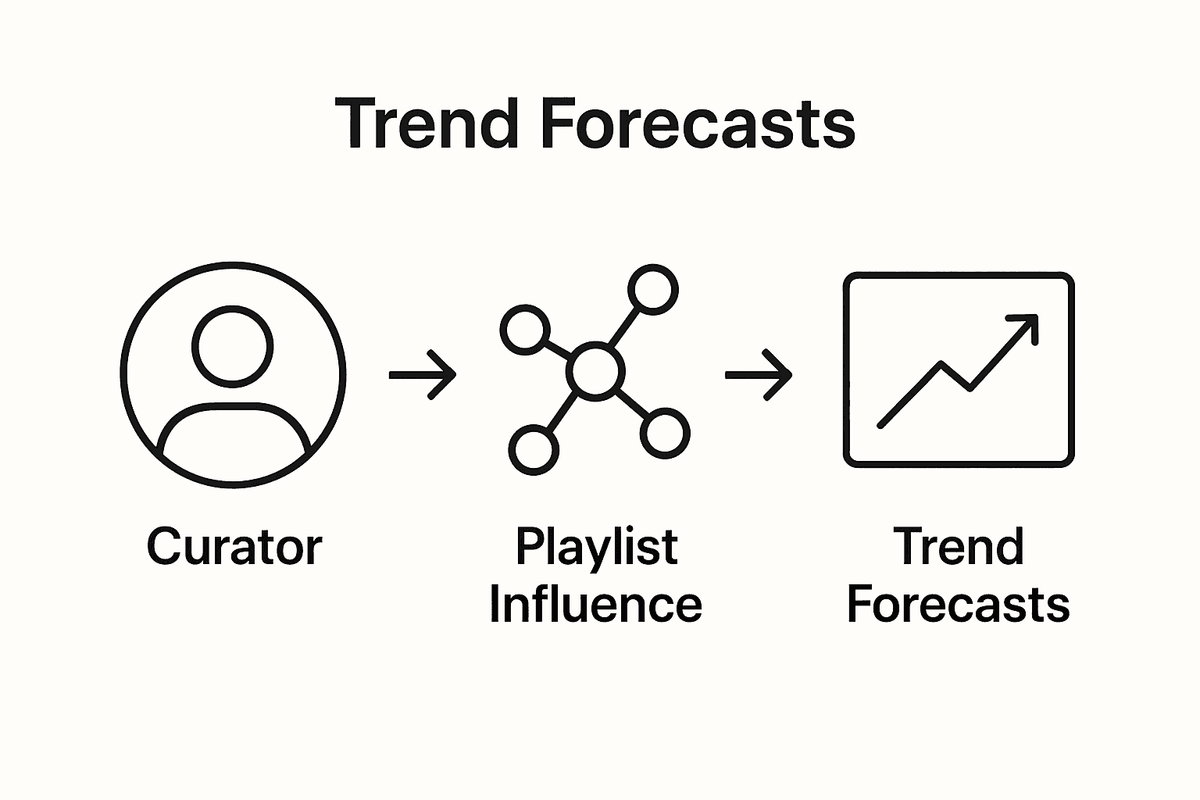
Pro Tip: Create a dynamic scoring system that weights curator influence based on their historical accuracy in identifying breakthrough artists, allowing you to quantify and prioritize the most forward thinking music tastemakers.
Below is a comparison of key metrics for identifying influential curators versus early adopters:
| Metric | Influential Curators | Early Adopters |
|---|---|---|
| Artist Introduction Speed | Regularly ahead of mainstream | Extremely early, often first |
| Playlist Engagement | High follower interaction rates | Rising engagement with new finds |
| Genre Diversity | Broad, innovative genre mixes | Niche or experimental focus |
| Historical Accuracy | Proven record of trend prediction | Record for discovering future hits |
Step 5: Validate Forecasts with Predictive Metrics
Validating music trend forecasts requires sophisticated predictive analytics approaches that go beyond traditional data analysis techniques. Using ensemble forecasting methods to discover evolving trends provides a robust framework for understanding how musical trends emerge and transform over time.
To effectively validate your music trend predictions, you must develop a comprehensive metrics validation strategy that combines multiple analytical approaches. This involves creating a multidimensional scoring system that tracks key performance indicators such as playlist inclusion rates, listener engagement metrics, artist momentum tracking, and cross platform popularity signals. Pay special attention to early signal detection techniques that can help you distinguish between temporary fluctuations and genuine emerging trends.
Successful forecast validation demands advanced statistical modeling that can integrate diverse data streams and identify complex predictive patterns. Analyzing song features and listener preferences enables you to build predictive models that can anticipate music trend trajectories with increasing accuracy. Develop dynamic scoring algorithms that weight different metrics based on their historical predictive power, allowing you to continuously refine and improve your forecasting methodology.
Pro Tip: Create a retrospective validation process where you regularly compare your past predictions against actual market outcomes to systematically improve your predictive metrics and forecasting accuracy.
Where Music24 fits
Music24 reads millions of public playlists and charts every day. Its public data shows which playlists add songs like the ones you work with, which tracks and artists are gaining playlists fastest in a genre, and the countries where that genre grows. Follow the artists, tracks and playlists you care about and get an email when they move.
Start free with Music24: 7 days of the Pro plan, no card, then a Free plan for as long as you like.
Frequently Asked Questions
How can I set up access to private playlist analytics?
To set up access, identify a comprehensive music analytics platform specializing in private playlist data. Create an account, choose a subscription tier, and configure your research parameters to start analyzing trends.
What are the key features to look for in a music analytics platform?
Look for features like API access, real-time updates, predictive analytics, and data visualization tools. These features can help streamline data retrieval and provide clear insights into music trends.
How do I identify authentic music discovery patterns?
To identify authentic discovery patterns, analyze raw playlist data to uncover genuine listener preferences. Focus on metrics like genre transitions and unexpected artist combinations within user playlists to understand how music is discovered.
What methods can I use to analyze genre and geographic micro-trends?
Use advanced big data analytics techniques to map complex listening behaviors. Examine granular data points such as playlist compositions and song transition frequencies to detect shifts in music preferences across different demographics.
How can I spot influential curators and early adopters in the music industry?
Develop a tracking strategy that examines playlist creation patterns and follower engagement rates. Identify individuals who frequently introduce new artists and demonstrate a strong influence on listener behaviors to find key music tastemakers.
What steps should I take to validate music trend forecasts?
Implement a comprehensive metrics validation strategy that combines multiple analytical approaches. Create a scoring system to track key performance indicators like listener engagement and artist momentum to improve your forecasting accuracy.
Recommended
Get your music heard. Skip the content grind.
Add a song. Music24 makes the posts and the videos, plans your release and publishes it on every channel. Free for 7 days on the Pro plan, no card.