
Music promotion has shifted from guesswork to laser-focused precision with the rise of playlist analytics. Forget old-school radio spins and billboard charts because playlist inclusion can increase track visibility by up to 400 percent compared to traditional methods. The real surprise is that the smartest labels and artists now spot trends and hit potential before a song ever goes viral or mainstream radio catches on.
Table of Contents
- Defining Playlist Analytics Strategy: What It Is
- The Importance Of Playlist Analytics In Music Promotion
- Key Components Of An Effective Playlist Analytics Strategy
- How Playlist Analytics Influences Artist And Label Decisions
- Real-World Applications Of Playlist Analytics In The Industry
Quick Summary
| Takeaway | Explanation |
|---|---|
| Leverage playlist analytics for strategic targeting | Use data to identify niche listener segments for tailored marketing strategies. |
| Track engagement metrics for optimization | Analyze retention, skip rates, and engagement to refine promotional efforts effectively. |
| Utilize demographic insights for decision-making | Understand audience demographics to guide artist positioning and marketing resources. |
| Employ advanced analytics for predictive insights | Use machine learning and data aggregation to forecast trends and artist potential. |
| Integrate data from multiple platforms | Aggregate insights from various streaming services for comprehensive listener behavior analysis. |
Defining Playlist Analytics Strategy: What It Is
Playlist analytics strategy represents a sophisticated data-driven approach for understanding music consumption patterns through systematic playlist tracking and evaluation. This comprehensive methodology enables music industry professionals to uncover deep insights about listener preferences, track performance, and emerging trends across digital streaming platforms.
Core Components of Playlist Analytics
At its foundation, playlist analytics strategy involves collecting and analyzing data from multiple playlist sources to generate actionable intelligence. Music professionals utilize these strategies to decode complex listener behaviors and make informed decisions about artist promotion, marketing initiatives, and genre positioning.
The primary components typically include:
- Tracking playlist inclusion rates for specific tracks
- Monitoring listener engagement metrics
- Analyzing playlist creator demographics and influence
- Measuring playlist retention and skip rates
Understanding Data Collection Mechanisms
Playlist analytics strategies leverage advanced technological frameworks to capture granular data points. Advanced music analytics platforms enable professionals to extract meaningful insights from millions of anonymized playlist collections, providing unprecedented visibility into music discovery patterns.
According to Nielsen Music Research, playlist data represents one of the most reliable predictors of emerging artist potential. By systematically analyzing playlist performance, record labels and artist managers can identify breakthrough opportunities before traditional metrics reflect significant momentum.
Through meticulous data aggregation and intelligent analysis, playlist analytics strategy transforms raw streaming information into strategic roadmaps for music industry professionals seeking competitive advantages in an increasingly dynamic digital landscape.
Below is a table summarizing the core components of playlist analytics strategy, clarifying each feature for readers seeking a quick reference guide.
| Component | Description |
|---|---|
| Playlist Inclusion Tracking | Measures how often specific tracks get added to playlists across platforms. |
| Listener Engagement Monitoring | Analyzes play-through rates, skips, and user interactions to gauge audience interest and retention. |
| Playlist Creator Demographics | Identifies key demographics and influence level of users who create impactful playlists. |
| Playlist Retention & Skip Rates | Reveals how long tracks remain on playlists and how frequently listeners skip them. |
| Data Aggregation from Multiple Sources | Compiles data from diverse streaming services for a holistic view of music consumption patterns. |
The Importance of Playlist Analytics in Music Promotion
Playlist analytics have transformed music promotion from a traditional guesswork approach to a precise, data-driven strategy that empowers artists and record labels to make strategic decisions. By providing granular insights into listener behavior and track performance, these analytics offer unprecedented opportunities for targeted music marketing.
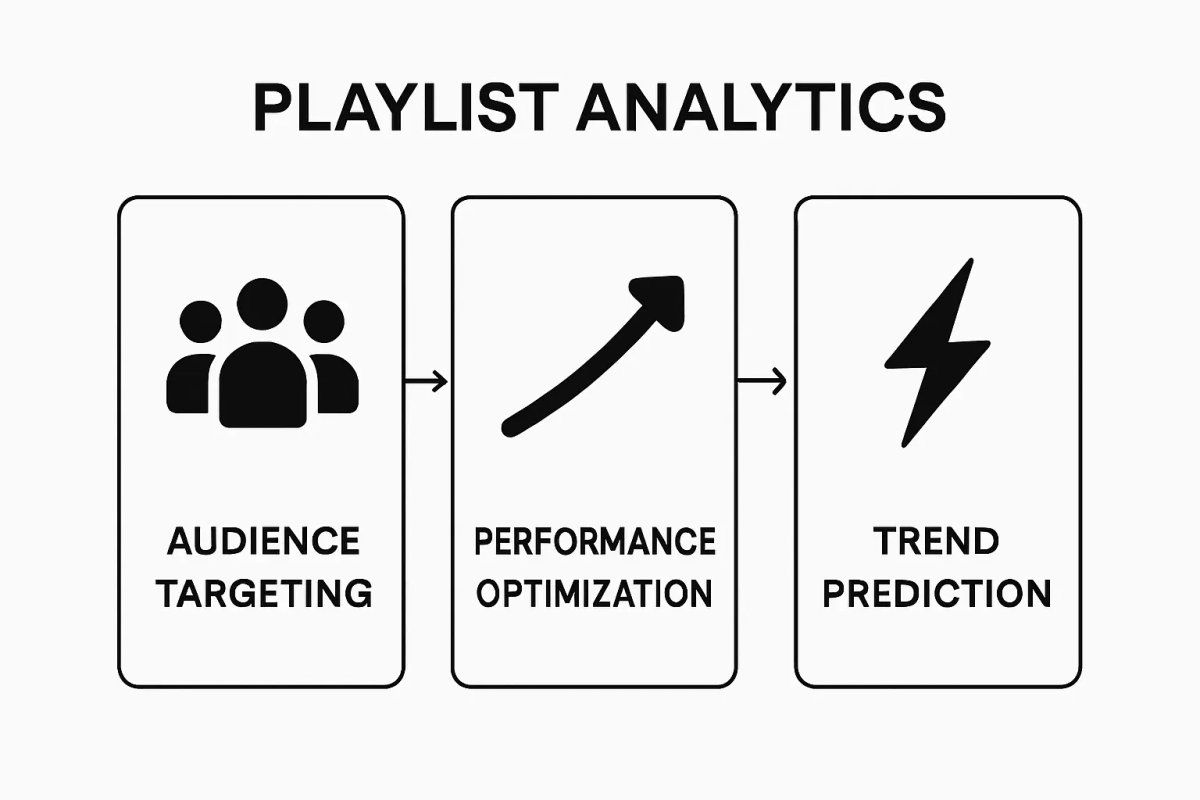
Strategic Audience Targeting
Music promotion is no longer about broad marketing campaigns, but rather about understanding specific audience segments and their unique listening preferences. Playlist analytics enable music professionals to identify niche listener groups, understand their musical tastes, and develop highly targeted promotional strategies.
Key strategic advantages include:
- Identifying precise demographic listener segments
- Understanding cross-genre music consumption patterns
- Mapping listener discovery and engagement journeys
- Predicting potential viral track opportunities
Performance Measurement and Optimization
Advanced analytics platforms provide real-time tracking of playlist performance, allowing artists and labels to measure the immediate impact of their promotional efforts. According to Music Week research, playlist inclusion can increase track visibility by up to 400% compared to traditional promotional methods.
These analytics tools help professionals understand critical metrics such as playlist retention rates, listener skip frequencies, and the specific moments within tracks that maintain or lose audience engagement. By analyzing these granular data points, music industry professionals can refine their promotional strategies with unprecedented precision, ultimately maximizing artist exposure and streaming revenue.
This table compares traditional music promotion methods with playlist analytics-driven strategies, highlighting key differences in approach and benefits for industry professionals.
| Aspect | Traditional Promotion | Playlist Analytics Strategy |
|---|---|---|
| Main Focus | Radio spins, billboard charts | Playlist inclusion, listener data |
| Audience Targeting | Broad, generalized audience | Niche, data-driven audience segments |
| Trend Prediction | Based on historical charts | Predictive analytics and early trend spotting |
| Performance Metrics | Sales numbers, airplay counts | Retention, skips, playlist engagement |
| Decision-Making | Intuition and industry experience | Data-driven, granular insights |
| Impact Potential | Limited and delayed effect | Up to 400% visibility increase, real-time impact |
Key Components of an Effective Playlist Analytics Strategy
Developing a comprehensive playlist analytics strategy requires a sophisticated approach that combines technological capabilities, data interpretation skills, and strategic insights. Music industry professionals must orchestrate multiple interconnected components to generate meaningful and actionable intelligence.
Data Collection and Integration
Successful playlist analytics strategies begin with robust data collection mechanisms that capture diverse and complex streaming ecosystem information. Leveraging private playlist data becomes crucial in understanding nuanced listener behaviors that public metrics often fail to reveal.
Key data collection principles include:
- Aggregating information from multiple streaming platforms
- Capturing anonymized listener interaction data
- Tracking playlist creation and evolution patterns
- Monitoring cross-genre listener migration trends
Advanced Analytical Frameworks
Transforming raw playlist data into strategic insights requires sophisticated analytical frameworks. According to Spotify for Artists Research, effective strategies must go beyond surface-level metrics to understand deeper listener engagement patterns.
Professional playlist analytics strategies typically incorporate:
- Machine learning algorithms for predictive trend analysis
- Demographic segmentation techniques
- Real-time performance tracking mechanisms
- Comprehensive listener behavior modeling
By synthesizing these complex data points, music industry professionals can develop nuanced strategies that anticipate listener preferences, identify emerging artists, and create targeted promotional approaches that resonate with specific audience segments.
How Playlist Analytics Influences Artist and Label Decisions
Playlist analytics have revolutionized decision-making processes in the music industry, transforming intuition-based strategies into data-driven approaches that provide unprecedented insights into listener behavior and market dynamics. The ability to make informed choices based on granular data has become a critical competitive advantage for modern music professionals.
Strategic Artist Development
Playlist analytics enable artists and labels to make nuanced decisions about artist positioning, genre exploration, and potential collaboration opportunities. Understanding playlist data allows professionals to identify emerging trends and listener preferences with remarkable precision.
Key strategic considerations include:
- Identifying optimal timing for single and album releases
- Determining most receptive audience demographics
- Evaluating potential cross-genre collaboration opportunities
- Tracking artist growth and audience expansion potential
Resource Allocation and Marketing Strategies
According to Billboard's Music Analytics Report, playlist analytics provide critical insights that directly impact marketing budget allocation and promotional strategies. By understanding precise listener engagement metrics, labels can optimize their investment in artist development and promotional campaigns.

Professional music strategists leverage playlist analytics to:
- Prioritize marketing spend across different platforms
- Target specific listener segments with precision
- Develop personalized artist promotional campaigns
- Predict and anticipate emerging music consumption trends
Through sophisticated data analysis, playlist analytics transform raw streaming information into strategic intelligence, enabling music industry professionals to make calculated decisions that maximize artist potential and market impact.
Real-World Applications of Playlist Analytics in the Industry
Playlist analytics have transcended theoretical concepts to become powerful operational tools that drive strategic decision-making across multiple music industry sectors. Professional organizations now rely on data-driven insights to navigate increasingly complex and competitive music landscapes.
Record Label Strategy Optimization
Modern record labels leverage playlist analytics to make sophisticated talent acquisition and development decisions. Advanced playlist analytics techniques enable comprehensive artist evaluation beyond traditional metrics like total streams or social media followers.
Key application areas include:
- Identifying emerging artists with genuine listener momentum
- Assessing potential genre crossover opportunities
- Evaluating artist compatibility for collaborative projects
- Predicting long-term career sustainability for new talent
A&R Discovery and Talent Scouting
According to Music Business Worldwide, playlist analytics have revolutionized talent scouting by providing unprecedented visibility into listener preferences and emerging music trends. By analyzing granular playlist data, A&R professionals can discover artists with authentic audience connections before they become mainstream.
Playlist analytics applications in talent discovery encompass:
- Tracking listener engagement across multiple platforms
- Identifying geographic music trend variations
- Measuring audience retention and track skip rates
- Understanding cross-genre listener migration patterns
Through sophisticated data interpretation, playlist analytics transform raw streaming information into strategic intelligence, enabling music industry professionals to make precise, forward-looking decisions that anticipate market dynamics and listener preferences.
Take Control of Music Discovery with Predictive Playlist Analytics
Relying on outdated charts or guessing what listeners want can leave your music promotion strategy a step behind. As highlighted in this article, identifying real trends and breakthrough artists now depends on deep access to private playlist data, not just public streaming numbers. When every decision counts, waiting for traditional metrics means missed opportunities and wasted promotional spend.
Ready to track rising artists and trends before the competition does? Unlock the insights hidden in millions of anonymized private playlists with Music24.com. Visit Music24.com today to experience data-driven artist discovery and targeted marketing that goes far beyond surface-level analytics. Gain the competitive edge you need—start leveraging authentic playlist analytics for your next big move!
Frequently Asked Questions
What is playlist analytics strategy in the music industry?
Playlist analytics strategy involves a data-driven approach to understanding music consumption through systematic tracking and analysis of playlists, enabling music professionals to gain insights into listener preferences and track performance.
How does playlist analytics impact music promotion?
Playlist analytics transform music promotion by providing granular insights into listener behavior, allowing artists and record labels to develop targeted marketing strategies based on specific audience segments and their unique listening preferences.
What are the key components of an effective playlist analytics strategy?
An effective playlist analytics strategy includes robust data collection and integration, advanced analytical frameworks, and the ability to track listener engagement metrics, playlist retention rates, and demographic segmentation.
How can playlist analytics influence decisions for artists and record labels?
Playlist analytics help artists and labels make informed decisions about artist development, marketing strategies, and resource allocation by providing critical insights into listener engagement metrics and emerging music trends.

