How to Monetize Your Music in 2026: 15 Revenue Streams for Independent Artists
Independent artists earned over $6 billion from streaming in 2025. This guide breaks down 15 proven revenue streams for 2026 with practical steps to diversify your music income.
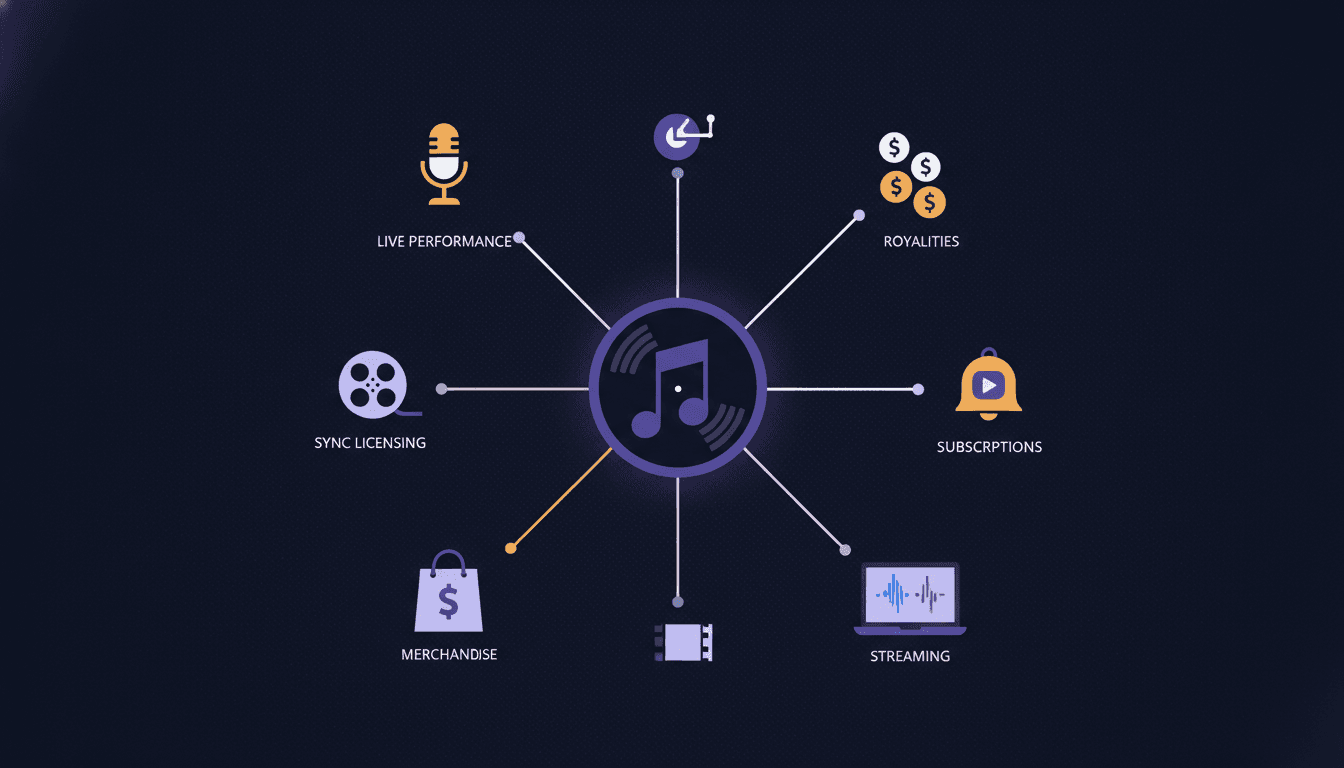
Independent artists earned over $6 billion from streaming alone in 2025, and the number keeps climbing. The real opportunity is not in chasing a single revenue source. Artists who build five or more income streams consistently out-earn those relying on streaming royalties alone. This guide breaks down 15 proven revenue streams for 2026, with practical steps to start each one.
What Does It Mean to Monetize Your Music?
Monetizing your music means converting your creative output into consistent, trackable income across multiple channels. It goes beyond streaming plays. A monetized artist treats every song, performance, and fan interaction as a potential revenue event, then measures which channels deliver the best return on time invested.
The strongest independent careers in 2026 run on diversified income. A single sync placement can match a year of streaming royalties. A merch drop timed to a tour can double your gross for the quarter. The key is stacking revenue streams so no single platform controls your livelihood. When you track where your money actually comes from (and where fans engage most), you make sharper decisions about where to invest your next hour.
15 Revenue Streams Every Independent Artist Should Know
Each of these streams has a different effort-to-income ratio, startup cost, and timeline. Some pay monthly; others deliver lump sums. The best strategy combines fast-return streams (like streaming and live performance) with slow-burn assets (like publishing and sync licensing) that compound over years.
Streaming royalties
Streaming remains the baseline income stream for most independent artists. Platforms pay per-stream rates ranging from $0.003 to $0.008, depending on the service and listener's subscription tier. At those rates, you need volume. An artist averaging 500,000 monthly streams across platforms can expect roughly $1,500 to $4,000 per month before distributor fees.
The real leverage is in playlist placement. Tracks added to high-engagement playlists see 3x to 10x their organic stream count. Understanding how music discovery works helps you target the right playlists at the right time. Focus on editorial and independent curator playlists where listener save rates are high: saves signal genuine interest, not passive background listening.
Pro tip: release singles consistently (every 4 to 6 weeks) rather than dropping full albums with long gaps. Algorithms reward recency, and each release is a new entry point for playlist consideration.
Sync licensing for TV, film, and ads
Sync licensing places your music in visual media: TV shows, films, commercials, video games, and trailers. A single sync placement in a major TV series can pay $5,000 to $50,000 upfront, plus backend royalties every time the episode airs. Advertising placements often pay more, with national campaigns reaching six figures.
To get started, register with sync licensing agencies and music libraries that actively pitch to music supervisors. Make sure your tracks are properly cleared: you need to own or control both the master recording and the publishing rights. Instrumental versions and stems increase your chances, since supervisors frequently need music they can edit under dialogue.
Build a catalog with emotional range. Music supervisors search by mood, tempo, and energy level, not by genre labels. A tense electronic track, a warm acoustic ballad, and an upbeat pop anthem each serve different placement needs.
Live performance and touring
Live shows remain one of the highest-earning channels for independent artists. A headlining club show grossing $2,000 to $10,000 per night is realistic once you have a regional following. Festival slots, support tours, and private events add more opportunities.
The economics improve when you own the full revenue stack: ticket sales, merch at the venue, and VIP experiences. Artists who sell $15 to $30 in merch per attendee effectively double their per-show income. Private events (corporate shows, weddings, brand activations) often pay 2x to 5x standard venue rates because the client values exclusivity.
Start local, build regionally, then expand. Use streaming data to identify cities where you have concentrated listener clusters, and book shows there first. Tracking listener behavior through private playlist data reveals where your most engaged fans actually are, not just where casual listeners skip through.
Merchandise and direct-to-fan sales
Merch is one of the few revenue streams where you keep 60% to 90% of the retail price. T-shirts, hoodies, vinyl pressings, posters, and limited-edition items create physical touchpoints with fans who want more than a stream.
Direct-to-fan platforms let you sell without a middleman. Set up your own store using services like Shopify or Bandcamp, where you control pricing, branding, and customer data. Limited runs create urgency. A 200-unit vinyl pressing that sells out in 48 hours generates more revenue and buzz than 2,000 units sitting in a warehouse.
Bundle merch with music releases. A "deluxe package" that includes a signed vinyl, a t-shirt, and early access to a new track converts superfans at $40 to $75 per order. These bundles also count toward chart tracking in many markets.
Music publishing and mechanical royalties
Publishing royalties are generated every time your song is reproduced, performed publicly, or streamed. There are two main types: performance royalties (collected by PROs like ASCAP, BMI, or SESAC) and mechanical royalties (collected by organizations like the MLC in the US or MCPS in the UK).
Many independent artists leave money on the table by not registering their works properly. Every song you release should be registered with your PRO, your mechanical rights organization, and your distributor's publishing administration service. Failing to register means royalties go uncollected, sometimes permanently.
Publishing is a compounding asset. A catalog of 50 well-registered songs generates passive income from radio play, streaming mechanicals, cover versions, and public performances. The longer your songs stay active, the more they earn. Artists who started registering properly five years ago are now seeing meaningful quarterly checks from catalog revenue alone.
Playlist placement revenue
Beyond organic streaming income, strategic playlist placement drives measurable revenue spikes. Getting added to a playlist with 100,000+ followers can generate 50,000 to 200,000 streams in a single week. The key is targeting playlists where listeners actively save and add tracks to their own collections, not passive background playlists with high skip rates.
Music24 reads millions of public playlists and charts every day, so you can see which playlists add songs like yours, who curates them and how fast they grow. Understanding curator influence helps you pitch the right curators and measure the downstream impact on your revenue.
Build relationships with independent curators. Personalized pitches that reference the curator's playlist theme and recent adds outperform mass submissions. Track which placements convert to saves, follows, and merch purchases to calculate your true ROI per curator.
Teaching and workshops
If you have production skills, vocal technique, or songwriting expertise, teaching is a high-margin revenue stream. Online courses on platforms like Skillshare or Teachable charge $20 to $200 per student, and the content scales infinitely once created. A well-structured course on music production basics can generate $1,000 to $5,000 per month in passive income.
One-on-one lessons (in person or via video call) typically command $50 to $150 per hour. Workshops at music conferences, schools, or community centers pay $500 to $2,000 per session. These also build your reputation as an expert, which feeds back into your artist brand.
Create a curriculum around what you actually know. Authenticity matters more than breadth. An artist known for lo-fi production teaching a "bedroom producer" masterclass will outperform a generic "music production 101" course every time.
Session work and production
Session musicians and producers earn $200 to $2,000+ per track, depending on the project scope and client budget. If you play an instrument well or produce beats, offering session and production services diversifies your income while keeping you in the studio.
Remote collaboration has expanded this market dramatically. Artists and labels worldwide hire session players and producers through platforms, social media, and referral networks. A guitarist in Nashville can cut parts for a pop session in London without leaving home. Build a portfolio of your best work, set clear rates, and deliver on deadline. Repeat clients become your most reliable income source.
Production credits also generate backend royalties. Negotiating a production royalty (typically 2% to 4% of net receipts) on top of your upfront fee creates long-term income from tracks that perform well.
Patreon and fan subscriptions
Subscription platforms let fans pay $3 to $25 per month for exclusive content, early access, behind-the-scenes material, and direct interaction. An artist with 500 subscribers at an average of $7 per month earns $3,500 monthly, a reliable baseline that smooths out the volatility of streaming and touring income.
The content does not need to be elaborate. Demos, voice memos, studio vlogs, early lyrics, and monthly livestreams keep subscribers engaged. The value is access and intimacy, not production quality. Fans who subscribe want to feel closer to the creative process.
Promote subscriptions during album cycles and tours, when fan engagement peaks. A well-timed pitch ("join my subscriber community to hear the album two weeks early") converts casual listeners into paying supporters.
YouTube and social media ad revenue
YouTube pays creators $2 to $7 per 1,000 views through its Partner Program (once you hit 1,000 subscribers and 4,000 watch hours). An artist averaging 200,000 monthly views earns $400 to $1,400 per month from ads alone. Music videos, lyric videos, behind-the-scenes content, and vlogs all qualify.
Short-form platforms like TikTok and Instagram Reels offer creator funds and bonuses, though payouts vary. The real value of social content is indirect: a viral TikTok driving 500,000 streams to your catalog generates far more revenue through streaming royalties than the platform's creator fund pays directly.
Consistency matters more than virality. Post 3 to 5 times per week across platforms, repurposing content (a studio session becomes a TikTok, a YouTube short, and an Instagram Reel). Track which content types drive the most profile visits and streaming conversions.
Sample packs and beat sales
Producers and beatmakers can sell sample packs ($10 to $50 each) and individual beats ($20 to $500+ depending on license type). Platforms like BeatStars, Splice, and Airbit handle distribution, licensing, and payment processing.
The economics are compelling. A sample pack costs time to create but sells unlimited copies. A pack that sells 500 units at $25 generates $12,500 from a single production session. Beat leases (non-exclusive licenses) let you sell the same beat to multiple artists, while exclusive rights command premium prices.
Focus on a specific sound or niche. "Dark trap beats" or "lo-fi jazz samples" attract buyers who know exactly what they want. Generic packs get lost in the noise. Build an email list of repeat buyers and notify them on every new release.
NFTs and digital collectibles
The NFT market for music has matured past the 2021 hype cycle. In 2026, music NFTs function more like limited-edition digital merchandise: collectible album art, exclusive track bundles, concert ticket upgrades, and fan club memberships with token-gated access.
Platforms like Sound.xyz and Catalog focus specifically on music NFTs, attracting collectors who value supporting artists directly. Successful drops in 2026 typically price between $10 and $100 per item, targeting genuine fans rather than speculators. Revenue comes from primary sales and secondary market royalties (typically 5% to 10% of each resale).
Start small. A 100-edition collectible tied to your next single release tests demand without overcommitting. If it sells, scale up. If it does not, you have lost minimal time and zero money.
Brand partnerships and sponsorships
Brands pay artists $1,000 to $50,000+ per partnership, depending on audience size, engagement rates, and brand alignment. These deals range from social media posts featuring a product to co-branded merchandise lines and sponsored tours.
Micro-influencer rates (10,000 to 100,000 followers) typically run $1,000 to $5,000 per campaign. Artists with larger followings or niche audiences that match a brand's target demographic command higher rates. Gear companies, fashion brands, beverage companies, and tech firms all actively seek music partnerships.
Authenticity drives ROI for both sides. Partner with brands you actually use and believe in. Forced endorsements erode fan trust. A genuine partnership where you co-design a product or curate a playlist for a brand campaign creates content that feels natural, not transactional.
Music licensing libraries
Production music libraries (also called stock music or library music) license tracks for corporate videos, podcasts, social media content, and small-scale media projects. Libraries pay either upfront fees ($50 to $500 per track accepted) or revenue shares on each license sold.
The volume play works here. An artist with 200 tracks in a well-distributed library can earn $500 to $3,000 per month from accumulated micro-licenses. Each track earns small amounts, but the catalog compounds. Libraries favor versatile, well-produced tracks with clean mixes and no vocal samples that might create clearance issues.
Submit to multiple libraries, but read exclusivity terms carefully. Non-exclusive agreements let you place the same track across several libraries, maximizing exposure. Exclusive deals sometimes offer higher per-license rates but limit your distribution.
Crowdfunding campaigns
Crowdfunding platforms like Kickstarter and Indiegogo let artists fund specific projects: albums, music videos, tours, and vinyl pressings. Campaigns that succeed typically raise $5,000 to $50,000, with some hitting six figures.
The key to a successful campaign is pre-launch momentum. Build your supporter base before you launch. Email lists, social media engagement, and direct fan communication in the weeks before launch day determine whether you hit your goal. Campaigns that reach 30% of their target in the first 48 hours have an 80%+ success rate.
Offer tiered rewards that scale from $10 (digital download) to $500+ (private concert, songwriting session, executive producer credit). The top 10% of backers typically contribute 50% of total funding, so design premium tiers that appeal to superfans.
How to Track Your Music Revenue with Analytics
Earning from 15 different sources means nothing if you cannot see which streams are growing, which are stalling, and where to invest your next effort. Revenue tracking separates professional artists from hobbyists.
Start with a simple spreadsheet that logs monthly income by source. After three months, patterns emerge: maybe sync licensing brings in 40% of your income from 5% of your effort, while social media ad revenue barely covers the time you spend creating content. Those numbers tell you where to double down and where to cut back.
For streaming-specific analytics, track beyond raw play counts. Listener retention, save-to-stream ratios, and playlist conversion rates reveal the quality of your streams, not just the quantity. Music industry analytics platforms show you which tracks drive the most engaged listeners and which playlists deliver fans who stick around.
| Metric | What It Tells You | Action |
|---|---|---|
| Monthly streams by platform | Which platforms drive volume | Prioritize marketing spend on high-performing platforms |
| Save-to-stream ratio | Listener quality and engagement | Target playlists with high save rates |
| Revenue per stream by distributor | Distributor efficiency | Compare distributor rates annually |
| Merch revenue per show attendee | Live show monetization efficiency | Optimize merch pricing and product mix |
| Subscriber churn rate | Fan loyalty and content value | Adjust subscription content strategy |
| Sync placement conversion rate | Pitch effectiveness | Refine catalog and pitch targeting |
Music24 reads millions of public playlists and charts every day and shows which playlists add songs like yours, which tracks and artists are gaining playlists fastest in a genre, and the countries where that genre grows.
Start free with Music24: 7 days of the Pro plan, no card.
Building a Sustainable Music Income Strategy
A sustainable music income is not about maximizing every stream. It is about building a portfolio of revenue sources that balance short-term cash flow with long-term asset growth.
Start with three to four streams that match your current skills and audience size. A solo artist with 10,000 monthly listeners might focus on streaming royalties, a Patreon community, merch sales, and teaching. A producer with strong technical skills might lead with beat sales, session work, sample packs, and sync licensing.
Add one new revenue stream every six months. Rushing into all 15 at once spreads your time too thin and delivers mediocre results across the board. Each new stream needs 60 to 90 days of focused effort before it generates meaningful income. Give each one time to prove its value before adding the next.
Reinvest 20% to 30% of your music income back into growth: better recordings, targeted ads for high-performing tracks, equipment upgrades, or hiring help for tasks outside your skillset. The artists who scale fastest treat their music career like a business, tracking ROI on every dollar spent.
Review your revenue mix quarterly. Step-by-step emerging artist discovery shows how data-driven decisions separate breakout artists from the mid-tier plateau. Apply the same rigor to your own career: measure, adjust, and compound.
FAQ
How much money can an independent artist realistically make in 2026?
Income varies widely based on audience size, number of active revenue streams, and consistency. An independent artist with 50,000 monthly listeners, an active merch store, a small subscriber base, and occasional sync placements can realistically earn $30,000 to $80,000 annually. Artists with larger audiences and five or more active revenue streams regularly exceed six figures. The ceiling depends on execution, not talent alone.
What is the fastest revenue stream to set up?
Streaming distribution through a digital distributor (DistroKid, TuneCore, CD Baby) takes minutes to set up and gets your music earning within days of release. Beat sales on platforms like BeatStars are similarly fast for producers. Teaching (private lessons via video call) requires zero setup cost and can start generating income within a week if you already have skills to share.
Do I need to quit my day job to monetize my music?
No. Most independent artists build their revenue streams while working another job. The key is time allocation: dedicate specific blocks to music business tasks (registration, pitching, content creation) separate from creative time. Many artists reach $2,000 to $3,000 per month in music income before transitioning to full-time, which typically takes 12 to 24 months of consistent effort.
How do I choose which revenue streams to focus on first?
Start with the streams closest to what you already do. If you perform live, add merch sales and fan subscriptions. If you produce music, add beat sales and sample packs. If you write songs, prioritize publishing registration and sync licensing. Pick three to four streams that align with your existing skills and audience, generate initial income, then expand from there.
What tools do I need to track music revenue across multiple streams?
Start with a simple spreadsheet that logs monthly income by source. After three months, the numbers tell you where to double down and where to cut back. Review your revenue mix quarterly.
How important is playlist placement for independent artist revenue?
Playlist placement is one of the highest-impact activities for streaming revenue. A single placement on a playlist with 50,000+ followers can generate more streams in a week than months of organic growth. But quality matters more than quantity. Playlists where listeners save tracks and explore the artist's catalog drive 5x more long-term value than passive background playlists. Learn how music discovery works to identify which placements are worth pursuing.
Releasing music soon? Start free with Music24: 7 days of the Pro plan, no card, then a Free plan for as long as you like.
Get your music heard. Grow the fans who stay.
Add a song. music24 makes the posts and the videos, plans your release and publishes it on every channel. Free for 7 days on the Pro plan, no card.