What Is Playlist Curation and Its Impact on Music Discovery
Playlist curation explained: uncover types, how it shapes music discovery, role of private data, influencer impact, and avoid industry pitfalls.

More than 60 percent of American music listeners rely on curated playlists for fresh discoveries every week. With endless tracks to choose from, even the most passionate music fan can feel overwhelmed finding the perfect mix. Understanding how playlist curation drives listening habits and opens doors for new artists puts you ahead in today’s crowded streaming world, offering a smarter perspective on music analytics and the real power of carefully crafted playlists.
Table of Contents
- Defining Playlist Curation In Music Analytics
- Types Of Playlist Curators And Playlists
- How Playlist Curation Influences Artist Discovery
- Role Of Private Vs Public Playlist Data
- Influencer Curators And Industry Impact
- Common Pitfalls In Playlist Curation Strategy
Key Takeaways
| Point | Details |
|---|---|
| Playlist Curation Importance | Effective playlist curation strategically combines data analytics with human creativity to enhance listener satisfaction and engagement. |
| Types of Playlists | Understanding editorial, algorithmic, and third-party playlists can optimize music discovery and artist promotion strategies. |
| Influencer Role | Influencer curators are crucial in shaping listener preferences and artist success through targeted recommendations and audience engagement. |
| Avoiding Common Pitfalls | Successful curation requires a dynamic, emotional approach, avoiding oversimplified algorithms and static playlist constructions. |
Defining Playlist Curation in Music Analytics
Playlist curation represents a sophisticated process of selecting, organizing, and sequencing music tracks to create meaningful listening experiences. In the context of music analytics, playlist curation goes beyond simple track compilation - it involves understanding user preferences, genre interactions, and the nuanced art of musical storytelling. Scalable frameworks for playlist continuation have emerged as critical tools for music streaming platforms seeking to enhance user engagement and satisfaction.
At its core, playlist curation involves several strategic elements. Music analysts examine how individual tracks interact, considering factors like tempo, mood, genre compatibility, and listener psychology. The goal transcends mere song selection - it's about crafting a cohesive musical journey that resonates with specific audience segments. Conversational item set curation techniques have revealed that understanding collective preferences matters more than evaluating tracks in isolation.
Modern playlist curation leverages advanced music analytics technologies that can predict listener preferences with remarkable precision. These systems analyze complex data points including listening history, emotional response patterns, contextual metadata, and cross-genre musical relationships. By integrating machine learning algorithms with human creative intuition, music professionals can develop playlists that feel both algorithmically intelligent and emotionally authentic.
Pro Tip: Data-Driven Approach: Always combine quantitative music analytics with qualitative listener insights when developing playlists, ensuring your curation strategy balances technological precision with genuine musical creativity.
Types of Playlist Curators and Playlists
Playlist curation encompasses multiple distinct approaches, each with unique characteristics and strategic purposes. Detailed analysis of playlist types reveals three primary categories: editorial, algorithmic, and third-party curated playlists, each playing a critical role in music discovery and listener engagement. Understanding these categories helps music industry professionals develop more targeted and effective playlist strategies.
Editorial playlists represent professionally curated collections typically managed by streaming platforms like Spotify or Apple Music. Music industry experts carefully select tracks based on genre, mood, cultural trends, and emerging artist potential. These playlists often serve as critical discovery mechanisms for new music, featuring carefully balanced selections that introduce listeners to both established and emerging artists. Algorithmic playlists, by contrast, leverage complex machine learning models to generate personalized track selections based on individual listener behavior, historical streaming patterns, and sophisticated recommendation engines.

Third-party curators represent another significant playlist category, including independent music bloggers, genre enthusiasts, record label representatives, and passionate music fans who create playlists reflecting their unique musical perspectives. These curators often specialize in specific genres or niche musical communities, offering more personalized and authentically crafted listening experiences. Their playlists frequently showcase underground artists, regional music scenes, and emerging talent that might not receive mainstream platform recognition.
Pro Tip: Curator Diversity Strategy: Develop a comprehensive playlist approach that integrates editorial, algorithmic, and third-party curated playlists to maximize music discovery potential and listener engagement.
Here's a side-by-side overview of the three main playlist curator types and their unique impacts:
| Playlist Curator Type | Curation Approach | Typical Impact on Discovery |
|---|---|---|
| Editorial Curators | Expert, trend-driven selection | Promote new genres and artists widely |
| Algorithmic Curators | Data-driven, personalized choices | Match music to individual preferences |
| Third-Party Curators | Niche, community-inspired choices | Highlight underground and local talent |
How Playlist Curation Influences Artist Discovery
Playlist curation has emerged as a transformative mechanism for artist discovery, fundamentally reshaping how musicians gain exposure in an increasingly digital music ecosystem. Research on playlist characteristics reveals that playlist length, editing frequency, and composition significantly impact an artist's potential for breakthrough. These curated collections serve as powerful gatekeeping mechanisms that can elevate unknown talents from obscurity to mainstream recognition.
Music discovery platforms increasingly rely on sophisticated playlist curation strategies to introduce listeners to emerging artists. Algorithmic and human-curated playlists work in tandem to create complex pathways for musical exploration. Independent artists can now bypass traditional radio and record label gatekeepers, gaining exposure through carefully crafted playlists that match their unique sonic signatures with receptive audience segments. This democratization of music distribution has fundamentally altered the artist discovery landscape, enabling talented musicians to reach global audiences without conventional industry infrastructure.
The strategic placement of an artist within a playlist can trigger significant listener engagement cascades. When a track is positioned alongside complementary music that shares similar emotional resonance or genre characteristics, it increases the likelihood of audience retention and potential fan conversion. Playlist curators essentially function as musical taste makers, using their expertise to create narrative arcs within their collections that guide listeners through sonic journeys while simultaneously introducing them to new musical talents.
Pro Tip: Strategic Playlist Positioning: Analyze playlist composition and track sequencing to understand how curators strategically introduce and highlight emerging artists, using playlist placement as a sophisticated discovery mechanism.
Role of Private vs. Public Playlist Data
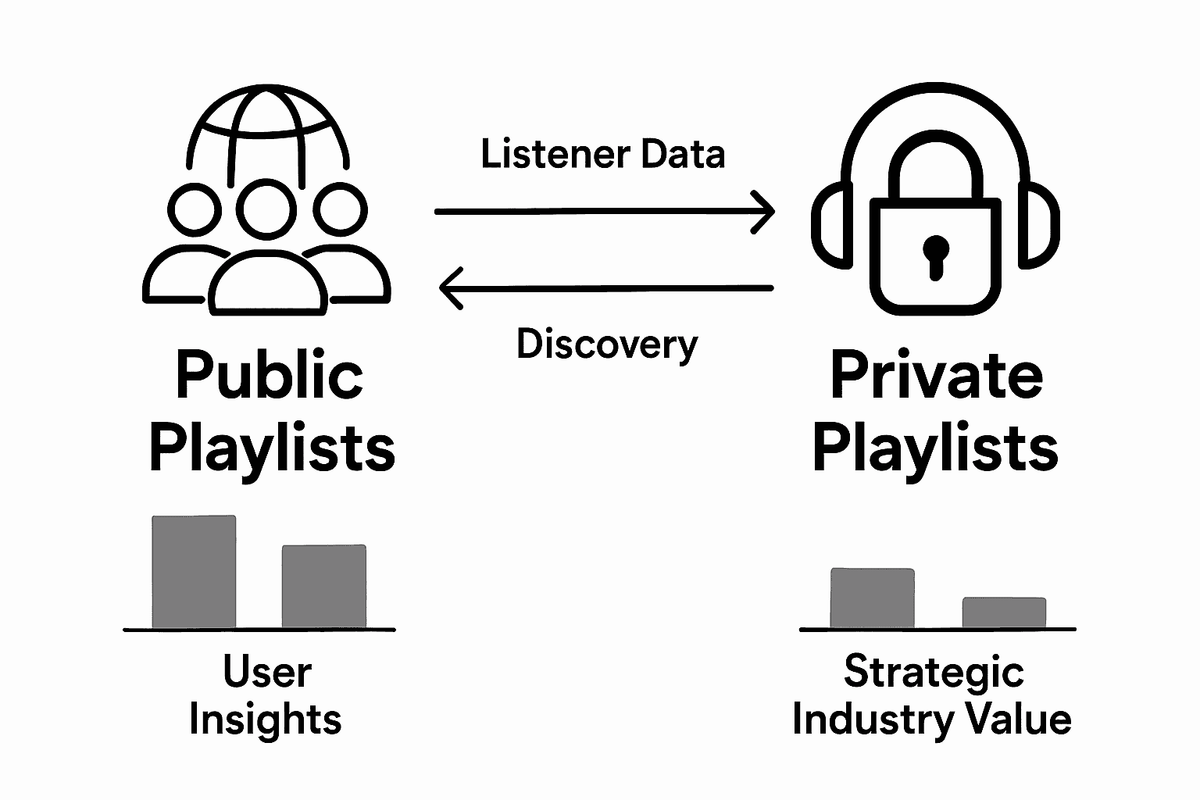
Playlist data represents a critical frontier in music analytics, with private and public collections offering distinct yet complementary insights into listener behavior. Comprehensive streaming platform datasets reveal the nuanced differences between public and private playlist interactions, highlighting how these data sources provide unique windows into music consumption patterns. Public playlists represent curated collections visible to broader audiences, while private playlists capture more intimate, personal listening experiences.
Private playlist data offers unprecedented opportunities for music industry professionals to understand authentic listener preferences. Unlike public playlists, which might be curated for social perception or trending topics, private playlists reflect genuine musical tastes unfiltered by external influences. Scalable playlist continuation frameworks demonstrate how analyzing both public and private playlist data can generate more accurate predictive models for music discovery, user engagement, and emerging artist identification. These private collections provide raw, unmediated insights into listener behavior that traditional public metrics cannot capture.
The strategic value of private playlist data extends beyond simple track recommendations. Music analysts can leverage these collections to identify emerging genre blends, detect early fan community formations, and understand subtle shifts in musical preferences before they become apparent in mainstream charts. By comparing private and public playlist compositions, industry professionals can develop more nuanced understanding of how music trends develop, evolve, and propagate across different listener segments. This granular approach allows for more targeted artist development, marketing strategies, and audience engagement techniques.
Pro Tip: Data Comparative Analysis: Develop a systematic approach to analyzing both private and public playlist data, using the unique insights from each to create a comprehensive understanding of listener behavior and musical trends.
To better understand the value of playlist data, consider how public and private collections offer differing insights:
| Playlist Data Type | Key User Insight | Strategic Industry Value |
|---|---|---|
| Public Playlists | Social listening trends | Identify mass-market music movements |
| Private Playlists | Genuine personal preferences | Detect early shifts and niche communities |
Influencer Curators and Industry Impact
Influencer curators have emerged as pivotal intermediaries in the contemporary music discovery ecosystem, wielding significant power in shaping listener preferences and artist trajectories. Role of Music Curators: Complete Industry Guide highlights how these tastemakers leverage their cultural capital and extensive networks to transform emerging musical talents into mainstream sensations. Unlike traditional industry gatekeepers, influencer curators operate across digital platforms, combining authentic musical expertise with expansive social media reach.
The strategic impact of influencer curators extends far beyond simple playlist creation. These professionals function as hybrid entities bridging artist development, audience engagement, and music trend identification. By carefully selecting and promoting tracks, they create narrative arcs that introduce listeners to nuanced musical experiences. Their curatorial approach involves understanding complex listener psychology, genre dynamics, and emerging sonic landscapes. Influential curators can propel unknown artists from obscurity to viral recognition through strategic playlist placements and targeted audience introductions.
Digital platforms have democratized the curator's role, enabling individuals with deep musical knowledge to become powerful industry change agents. Music influencers now represent a sophisticated ecosystem of tastemakers who combine data analytics, cultural intuition, and storytelling skills. Their ability to detect emerging talent before traditional industry metrics can identify trends makes them invaluable assets for record labels, artist managers, and music marketing professionals. By cultivating dedicated listener communities and demonstrating consistent taste integrity, these curators build trust that transforms musical recommendations into cultural movements.
Pro Tip: Network Cultivation Strategy: Develop authentic relationships with diverse influencer curators across multiple platforms, focusing on those who demonstrate genuine musical expertise and consistent audience engagement.
Common Pitfalls in Playlist Curation Strategy
Playlist curation strategies often falter due to oversimplified approaches that fail to capture the nuanced complexity of listener preferences. Conversational item set curation research reveals significant challenges in understanding user preferences beyond individual track selection. Many music professionals mistakenly treat playlist creation as a mechanical process, overlooking the intricate emotional and contextual dynamics that drive meaningful musical experiences.
Common strategic errors in playlist curation include over-reliance on algorithmic recommendations, neglecting genre diversity, and failing to understand the narrative arc of a playlist. Music curators frequently make the mistake of prioritizing algorithmic similarity over emotional resonance, creating playlists that sound technically coherent but lack genuine musical storytelling. This approach leads to sterile, predictable collections that fail to engage listeners on a deeper emotional level. Successful playlist curation requires a delicate balance between data-driven insights and human creative intuition.
Another critical pitfall involves static playlist construction that fails to evolve with changing listener preferences and emerging musical trends. Effective curators must develop dynamic strategies that continuously adapt to shifts in musical landscapes, audience behaviors, and cross-genre interactions. This requires ongoing analysis of listener engagement metrics, willingness to experiment with unconventional track combinations, and a deep understanding of how musical context shapes listener experience. Playlists should be living, breathing entities that reflect the complex, ever-changing nature of musical taste.
Pro Tip: Adaptive Curation Approach: Regularly audit and refresh your playlist strategy by analyzing listener engagement data, experimenting with unexpected track combinations, and maintaining a flexible mindset toward musical discovery.
Where Music24 fits
Music24 reads millions of public playlists and charts every day. Its public data shows which playlists add songs like the ones you work with, which tracks and artists are gaining playlists fastest in a genre, and the countries where that genre grows. Follow the artists, tracks and playlists you care about and get an email when they move.
Start free with Music24: 7 days of the Pro plan, no card, then a Free plan for as long as you like.
Frequently Asked Questions
What is playlist curation in music analytics?
Playlist curation is the process of selecting, organizing, and sequencing music tracks to create meaningful listening experiences. It involves understanding user preferences, genre interactions, and the art of musical storytelling.
How does playlist curation influence artist discovery?
Playlist curation serves as a transformative mechanism for artist discovery by elevating unknown talents through strategically crafted playlists that align with audience preferences, thus facilitating exposure and engagement with new music.
What are the main types of playlist curators?
The three primary types of playlist curators are editorial curators, who are industry experts managing playlists; algorithmic curators, which use machine learning models for personalized selections; and third-party curators, who are independent creators offering unique musical perspectives.
How can I improve my playlist curation strategy?
To enhance your playlist curation strategy, combine quantitative music analytics with qualitative listener insights, regularly refresh your playlists based on listener engagement data, and maintain a dynamic approach to adapt to changes in musical trends.
Recommended
Get your music heard. Skip the content grind.
Add a song. Music24 makes the posts and the videos, plans your release and publishes it on every channel. Free for 7 days on the Pro plan, no card.