
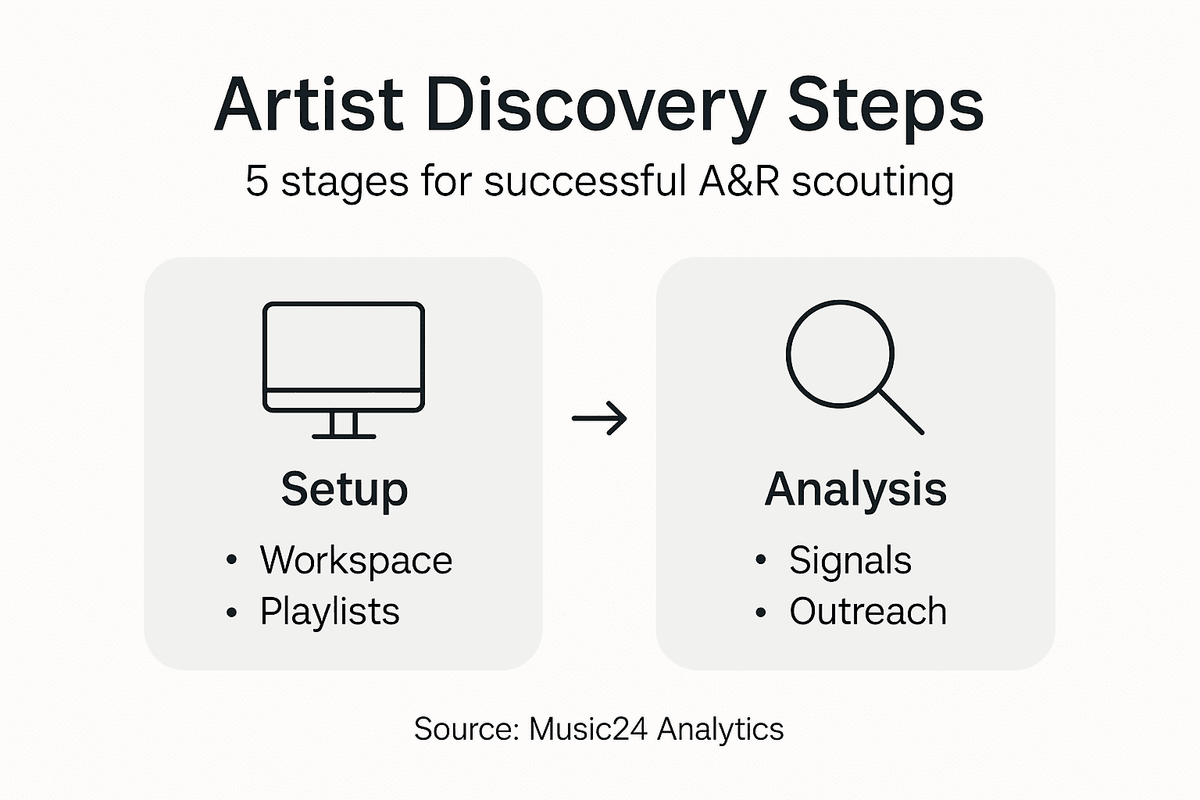
Every indie label struggles with the challenge of catching artist momentum before the mainstream takes notice. Private playlist data has become a goldmine for finding hidden talent, but knowing how to turn this raw information into real discovery remains tricky. This guide lays out smart, actionable steps for using Music24 analytics to mine private playlists, so A&R teams can spot breakthrough voices and build stronger rosters rooted in authentic listener trends.
Table of Contents
- Step 1: Set Up Your Music24 Analytics Workspace
- Step 2: Select Key Private Playlist Segments
- Step 3: Analyze Emerging Artist Signals
- Step 4: Validate Trends with Predictive Insights
- Step 5: Initiate Targeted Artist Outreach
Quick Summary
| Key Insight | Explanation |
|---|---|
| 1. Customize Your Workspace | Tailor your Music24 analytics workspace by selecting genres and regions for better artist discovery. |
| 2. Focus on Private Playlists | Analyze unique private playlist segments to uncover emerging trends and authentic listener behavior. |
| 3. Use Multiple Signal Types | Track various performance metrics to identify promising artists before they hit mainstream popularity. |
| 4. Validate Trends Effectively | Implement predictive analytics to assess genuine artist potential and monitor sustained growth. |
| 5. Personalize Artist Outreach | Engage promising artists with tailored communication and insights reflecting your understanding of their work. |
Step 1: Set Up Your Music24 Analytics Workspace
Setting up your Music24 analytics workspace is your foundational first move for uncovering breakthrough artist discoveries. This critical process transforms raw playlist data into actionable intelligence for A&R professionals seeking emerging musical talent.
Begin by logging into your Music24 account and navigating to the main analytics dashboard. Here, you will customize your workspace by selecting specific parameters that align with your artist discovery goals. Understanding the music analytics workflow provides crucial context for this setup process. Select genre filters, geographic regions, and playlist type categories that match your specific A&R objectives. Consider targeting underground music scenes or niche genre intersections where breakthrough artists frequently emerge.
Pay special attention to the dashboard's customization options. Music24 allows you to create multiple saved workspace configurations tailored to different research approaches. This means you can rapidly switch between searching for indie rock talent in the Pacific Northwest versus exploring electronic music trends in European markets.
Pro Tip: Create at least three distinct workspace configurations to maximize your discovery potential and maintain flexibility in your artist research strategy.
Here’s a structured summary of workspace configuration strategies for different A&R objectives:
| Workspace Focus | Parameter Selection Example | Usage Scenario |
|---|---|---|
| Indie Genre Search | Pacific Northwest, Indie Rock | Discover local emerging bands |
| Electronic Music | European regions, Techno, EDM | Track electronic trend hotspots |
| Microniche Mapping | Underground scenes, Genre mix | Reveal fresh talent intersections |
Step 2: Select Key Private Playlist Segments
Selecting the right private playlist segments is a strategic process that transforms raw data into meaningful artist discovery insights. Your goal is to identify playlist collections that reveal authentic listener behavior and emerging musical trends before they become mainstream.
Start by examining playlist segments that demonstrate unique listening patterns. Why private playlists matter illuminates the critical nature of this selection process. Focus on playlist segments with consistent genre crossover, frequent updates, and diverse listener demographics. Look for collections that showcase underground artists or represent niche musical communities where innovative sounds often originate. Pay particular attention to playlists with a high percentage of independent or unsigned artists as these frequently signal emerging talent trends.
Consider creating segmentation strategies that go beyond traditional genre boundaries. Analyze playlist collections that blend musical styles or represent specific cultural microniches. These segments can reveal artist connections and listener preferences that standard public metrics might miss entirely. Cross reference playlist segment data with geographic and demographic information to uncover nuanced discovery opportunities.
Pro Tip: Always maintain at least three different playlist segment approaches to ensure comprehensive and dynamic artist research strategies.
Step 3: Analyze Emerging Artist Signals
Analyzing emerging artist signals requires a sophisticated approach that goes beyond traditional metrics. Your objective is to uncover subtle indicators of potential breakthrough talent before they become widely recognized.

Emerging artist spotting tips reveal the nuanced strategies for identifying promising musical talent. Track multiple performance signals simultaneously including playlist inclusion rates, listener engagement velocity, cross genre streaming patterns, and geographic expansion. Look for artists showing consistent growth in niche playlist segments rather than sudden viral spikes. Pay special attention to artists who demonstrate organic listener momentum across different playlist ecosystems and demonstrate unique musical cross pollination.
Machine learning techniques now enable unprecedented depth in artist signal analysis. Examine granular data points such as listener retention rates, playlist addition frequencies, and collaborative network expansions. Artists who maintain steady listener engagement and show increasing complexity in their musical connections often represent the most promising discovery opportunities. Cross reference these signals with demographic listener data to understand the true potential of emerging musical talents.
Pro Tip: Develop a scoring system that weights multiple signal types to create a comprehensive emerging artist potential index.
Compare key signal types and impact when analyzing emerging artists:
| Signal Type | Analytical Approach | Potential Discovery Benefit |
|---|---|---|
| Playlist Inclusion Rate | Track across ecosystems | Spot steady artist momentum |
| Engagement Velocity | Monitor listener retention | Identify organic growth patterns |
| Cross-Genre Streaming | Analyze style connections | Find innovative musical blends |
Step 4: Validate Trends with Predictive Insights
Validating emerging music trends requires a sophisticated approach that combines multiple data signals and predictive analytical techniques. Your goal is to transform raw data into actionable insights that reveal genuine artist potential before mainstream recognition.
Predictive analytics in music trends provide critical frameworks for understanding complex listener behaviors. Develop a comprehensive validation strategy that examines multiple performance indicators simultaneously. This includes tracking listener engagement metrics, playlist progression rates, geographic streaming patterns, and cross genre momentum. Look beyond surface level viral moments to identify artists demonstrating sustained growth and authentic listener connection.
Create a multi dimensional scoring system that weights different signal types with nuanced precision. Analyze not just streaming numbers but listener retention rates, playlist addition frequencies, and the complexity of an artist's musical network. Machine learning algorithms can help identify subtle patterns that traditional analysis might miss. Prioritize artists showing organic growth trajectories and unique musical positioning that suggest long term potential rather than short term hype.
Pro Tip: Integrate both quantitative metrics and qualitative musical innovation assessments to develop a more holistic artist potential evaluation.
Step 5: Initiate Targeted Artist Outreach
Targeted artist outreach transforms your data driven discoveries into meaningful professional connections. Your strategic goal is to establish initial contact with promising artists in a manner that demonstrates genuine interest and professional credibility.
Data-driven artist discovery tips underscore the importance of personalized approach strategies. Craft communication that demonstrates your deep understanding of the artist's unique musical journey and potential. Research each artist thoroughly using your analytics insights understanding their musical trajectory, genre innovations, and listener engagement patterns. Personalize your initial communication by referencing specific data points that highlight why you believe they represent an exceptional talent.
Prepare a comprehensive yet concise outreach package that includes your professional credentials, specific observations about their musical potential, and potential collaboration opportunities. Avoid generic messaging typical of mass communications. Instead focus on creating a narrative that shows you have carefully analyzed their musical ecosystem. Highlight how your professional network and industry insights could provide meaningful career advancement opportunities for their specific artistic profile.
Pro Tip: Create a templated yet customizable outreach framework that allows rapid personalization while maintaining a consistent professional communication standard.
Unlock Breakthrough Artist Discoveries with Music24 Analytics
The challenge in artist discovery lies in sifting through overwhelming data to find genuine emerging talent before they hit mainstream charts. This article highlights key pain points such as setting up customized analytics workspaces, selecting the right private playlist segments, and validating emerging artist signals through predictive insights. Music24 addresses these needs by providing exclusive access to millions of anonymized private playlists, offering unmatched insights into genre blending, geographic micro-trends, and listener engagement velocity. Our platform empowers A&R professionals to spot organic growth patterns and develop targeted outreach strategies with confidence.
Discover how integrating data-driven artist discovery tips with Music24’s proprietary analytics transforms your ability to identify breakout artists early. With customizable dashboards that mirror the step-by-step workspace configurations outlined in the article, you gain a powerful edge in navigating underground scenes and niche musical intersections.
Ready to transform your artist discovery process?
Explore the future of music analytics today at Music24 and start uncovering emerging talent ahead of the competition. Visit Step by Step Artist Discovery for A&R Success to deepen your expertise and use our platform to make your next breakthrough find now.
Frequently Asked Questions
How do I set up my Music24 analytics workspace for artist discovery?
To set up your Music24 analytics workspace, log into your account and navigate to the main analytics dashboard. Customize your workspace by selecting genre filters, geographic regions, and playlist type categories that align with your artist discovery goals.
What parameters should I consider when selecting private playlist segments?
When selecting private playlist segments, focus on collections that demonstrate unique listening patterns, genre crossover, and frequent updates. Aim to analyze segments showcasing underground artists or niche communities to capture emerging musical trends effectively.
How can I analyze emerging artist signals effectively?
To analyze emerging artist signals, track multiple performance indicators simultaneously, including playlist inclusion rates and listener engagement velocity. Cross-reference these metrics for artists demonstrating steady growth in niche playlist segments rather than sudden spikes to identify potential breakthrough talent.
What strategies can I use to validate trends with predictive insights?
To validate trends with predictive insights, create a comprehensive validation strategy examining various performance indicators such as listener engagement metrics and geographic streaming patterns. Prioritize artists showing sustained growth and organic listener connections, moving beyond surface-level viral moments.
How should I approach targeted artist outreach after my discovery?
When initiating targeted artist outreach, craft personalized communication that demonstrates your understanding of the artist's unique journey and potential. Research each artist thoroughly and reference specific data points to create a narrative that enhances your professional credibility and interest in their music.

