
What sets leading A&R professionals apart is not just instinct but the ability to act on signals before the rest of the industry sees them. Predictive music analytics is redefining artist discovery by focusing on patterns from private playlist curation that reveal emerging talent weeks before public metrics shift. As listeners across North America make personal, unscripted music choices, these early signals give labels a decisive edge in spotting and developing the next breakout act.
Table of Contents
- Defining Predictive Music Analytics Today
- How Private Playlist Analysis Unlocks Trends
- Key Benefits For A&R And Label Teams
- Spotting Breakout Artists Ahead Of Charts
- Risks And Limitations Of Predictive Approaches
Key Takeaways
| Point | Details |
|---|---|
| Predictive Music Analytics | Uses machine learning to forecast song success by analyzing private playlist data rather than past trends. |
| Early Identification Advantage | Allows A&R teams to discover emerging artists weeks before they trend, providing a competitive edge in signing decisions. |
| Data Integrity Risks | Relies on accurate analysis of private playlists; misinterpretation can lead to signing artists without sustainable momentum. |
| Model Bias Awareness | Acknowledges the risk of biases in predictive models that may overlook diverse talents not fitting historical winners. |
Defining Predictive Music Analytics Today
Predictive music analytics is fundamentally different from the metrics you've relied on for decades. You're no longer looking at what already happened on Spotify charts or social media. Instead, you're analyzing patterns that reveal what will happen next, before the market catches up. At its core, predictive music analytics uses machine learning and statistical algorithms to forecast song ratings and popularity by examining audio features, social media engagement, and emotional responses. For A&R professionals like yourself, this means you can identify emerging artists weeks or months before they trend publicly.
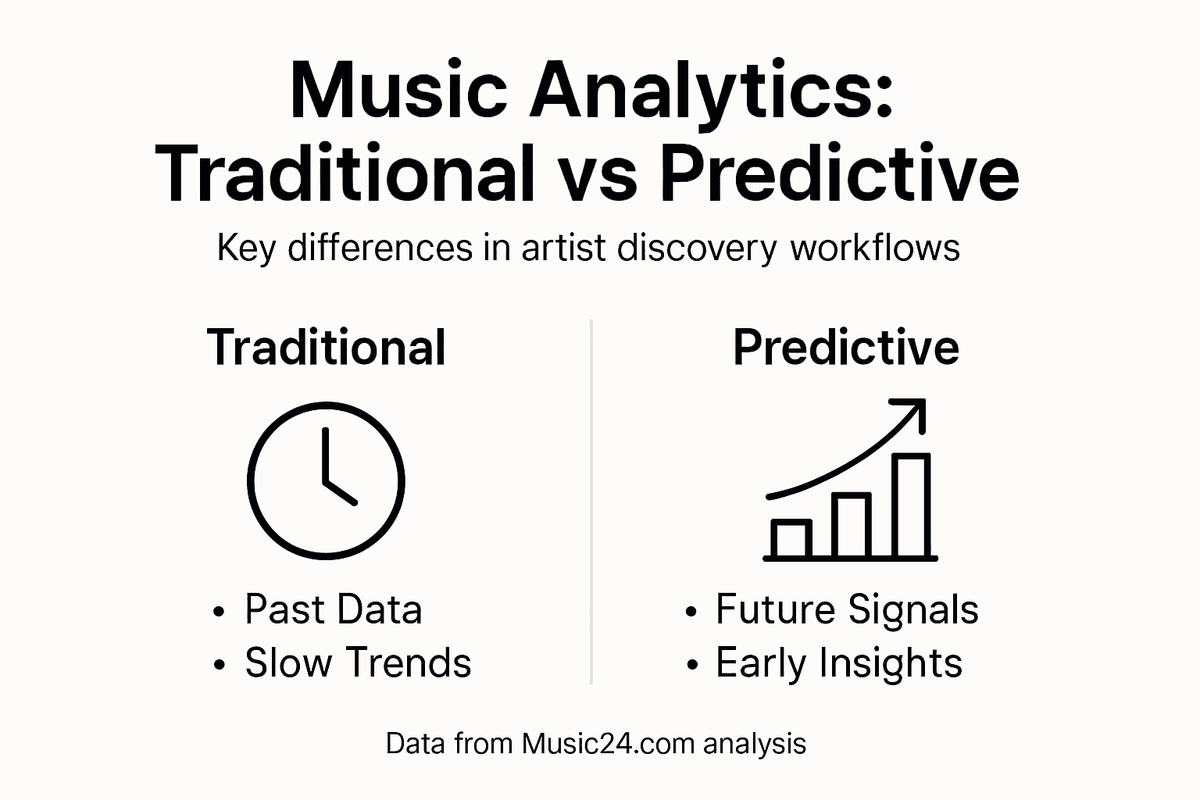
The shift from reactive to predictive is profound. Traditional discovery methods respond to what listeners are already consuming at scale. You see a song climb the charts and make a decision. By then, three competitors have already signed similar artists. Predictive analytics works differently. It analyzes audio feature patterns and listener behavior across millions of private playlists that never appear in public rankings. When you examine characteristics like danceability, energy levels, and emotional positivity, you're tapping into something far more valuable: authentic curation signals from real listeners before these preferences consolidate into mainstream trends.
Here's what makes this relevant to your A&R decisions right now. Predictive models don't just guess which songs become hits. They work by isolating which combinations of audio elements, when paired with specific listener behavior patterns, predict sustained audience growth. A track might have a unique blend of genre elements or production choices that doesn't fit existing categories. In the private playlist data where real music enthusiasts organize their collections, these songs cluster together in ways that precede public recognition by 60 to 90 days. Your team can capitalize on this timing advantage through strategic marketing, artist development, or acquisition.
The data itself comes from a source traditional discovery tools ignore. Music listening choices reveal emotional states and population-wide preferences across different regions and demographics. When someone curates a private playlist, they're making genuinely personal decisions without algorithm suggestions pushing them toward mainstream content. This creates a clean signal. A rapper from Austin getting added to curated hip-hop playlists across North America, paired with specific production choices that match emerging preferences, indicates something different than algorithmic playlist placement. The predictive model recognizes these patterns and flags the artist before streaming numbers spike.
Here's a comparison of traditional and predictive music analytics approaches:
| Aspect | Traditional Analytics | Predictive Analytics |
|---|---|---|
| Timing | Reacts to past trends | Forecasts future movements |
| Data Source | Public streaming metrics | Private playlist patterns |
| Decision Speed | Months behind trends | Weeks ahead of market |
| Scouting Focus | Chart-topping artists | Emerging, unproven talent |
| Risk Level | High, based on guesswork | Reduced, driven by forecasts |
Pro tip: Start by examining which private playlist curators in your target regions are adding emerging artists early, then track whether those artists show predictive signals for growth in your genre focus areas.
How Private Playlist Analysis Unlocks Trends
Private playlists operate as early warning systems for music trends, but only if you know how to read them. When someone creates a curated playlist on Spotify or Apple Music and keeps it private, they're making authentic choices without algorithm interference. This matters enormously for your A&R decisions. Unlike public playlists that get algorithmic recommendations and viral effects, private playlists reflect genuine listener preferences and curation decisions. A&R professionals who tap into this data find emerging patterns months before they surface in streaming charts. The key insight: private playlist curation reveals which artists, sounds, and genre combinations are resonating with real music enthusiasts before mainstream visibility.

The predictive power comes from playlist structure itself. When you analyze how playlist coherence and track selection patterns develop over time, you're observing something fascinating. A curator who adds a new indie artist alongside established names in their collection is essentially voting on that artist's quality and fit. When thousands of curators across North America make similar decisions independently, without algorithm suggestions pushing them toward the same tracks, you're witnessing authentic trend formation. Playlist length, track popularity distribution, and how smoothly songs transition into one another all provide data points that predict sustained listener interest.
Here's where this gets practical for your team. Suppose you're evaluating a Brooklyn-based alternative rock artist. You could check their Spotify streams, see mediocre numbers, and pass. Or you could examine private playlists across major North American markets. If that artist appears in 400 carefully curated alternative rock and indie playlists owned by active music fans, with their songs placed strategically between track selections rather than added sporadically, the data tells a different story. The playlist coherence indicates these curators genuinely believe the artist belongs in their collection. This clustering pattern, when combined with geographic density and curation patterns, predicts which artists will break through. You're identifying the moment right before the market catches up.
The advantage compounds over time. Most A&R teams react to what's already happening. You're analyzing what's about to happen by examining millions of private decisions made by music lovers who have no incentive to signal false interest. When an artist appears in private playlists with specific demographic and geographic clustering, and when those playlists show high coherence and consistent curation quality, you can forecast trend momentum with confidence. This isn't guessing based on social media followers or TikTok virality. This is measuring genuine artist appreciation in communities that discovered them independently. By the time playlist clustering appears in your analytics, you have weeks of runway to develop relationships with the artist, plan your approach, or make acquisition decisions ahead of competitors still watching public charts.
Pro tip: Filter for private playlists with high curator engagement and specific geographic clustering in your target regions, then cross-reference the artist appearances with playlist coherence metrics to identify high probability breakout candidates before they trend publicly.
Key Benefits for A&R and Label Teams
Predictive music analytics delivers concrete advantages that directly impact your bottom line. You're no longer making signing decisions based on intuition, regional reputation, or social media buzz. Instead, you're working with scalable analysis tools that identify artist growth patterns across streaming data at scale. This shift eliminates guesswork. When your A&R team has measurable performance indicators before committing resources to an artist, your hit rate improves dramatically. Labels using data-driven discovery reduce signing risks because they can see which artists show authentic momentum before the market crowds in. You're making informed decisions earlier than competitors, which means better contract terms, stronger negotiating positions, and higher probability of developing breakout artists.
The competitive advantage comes from timing. Early identification creates a window of opportunity. When you discover an emerging artist three months before their private playlist clustering suggests mainstream breakthrough, you have time to develop a relationship, understand their vision, and structure a deal that works for both parties. Competitors still watching public charts won't even know the artist exists until streaming numbers spike. By then, multiple labels are bidding, prices escalate, and negotiating power shifts away from you. Predictive analytics compresses that discovery timeline dramatically. Your scouting team can focus on artists showing high-probability growth signals rather than wasting time on talent that lacks fundamental momentum. This focus means more time spent building artist relationships and less time chasing leads that won't materialize.
Risk reduction stands as perhaps the most valuable benefit for label leadership. When you sign an artist, you're betting against substantial odds. Most artist investments lose money. Predictive analytics doesn't eliminate risk, but it shifts probability in your favor. You can analyze which artists show geographic clustering, playlist coherence, and demographic reach before signing. An artist with strong private playlist presence across three major North American markets, showing consistent curator adoption and cross-genre appeal, presents different risk profile than an artist with mediocre Spotify streams and weak playlist integration. The data reveals which artists have foundation for sustainable growth. This doesn't guarantee success, but it means your A&R decisions rest on measurable indicators rather than hunches. For finance teams approving artist budgets, this translates to accountability and clearer ROI projections.
Scalability represents another critical advantage. Traditional scouting is labor intensive. Your A&R professionals spend countless hours listening to submissions, attending shows, networking with managers. That work remains essential for relationship building and final decision making. But predictive analytics handles the initial filtering at scale. Instead of your team manually evaluating thousands of potential artists each year, the platform surfaces the top 200 candidates showing strongest growth indicators. Your team then focuses energy on evaluating these high probability prospects deeply. This efficiency means you evaluate more artists without expanding headcount. You catch emerging talent earlier because you're not constrained by human capacity limitations. One analyst equipped with predictive insights can cover ground that previously required three people.
Pro tip: Build a tiered evaluation system where predictive analytics identifies tier one prospects, your team conducts deeper artist research for tier two candidates, and internal creative sessions finalize tier three signing recommendations based on combined data and intuition.
Spotting Breakout Artists Ahead of Charts
The moment an artist trends on major streaming charts, you've already lost the early-mover advantage. By the time playlist data aggregates into visible chart movement, multiple labels have identified the same talent. What separates successful A&R teams from the rest is the ability to spot breakout potential before public metrics validate the artist. Predictive analytics changes this equation entirely. Instead of waiting for chart confirmation, you're analyzing real-time signals that precede chart placement by weeks or months. The key is recognizing which artists show trajectory indicators that predict sustained momentum. When an artist accumulates private playlist adds at accelerating rates, appears in curator collections across multiple geographic regions simultaneously, and demonstrates consistent demographic reach, the data reveals something charts cannot yet display: authentic market validation before the general public discovers the artist.
Traditional methods force you to choose between speed and accuracy. You can scout aggressively and sign artists early, but risk backing talent without proven demand. Or you can wait for chart confirmation and miss the window where you can negotiate favorable terms and build early artist relationships. Predictive analytics collapses this false choice. Multi-dimensional data integration combining streaming history, social engagement, and career trajectory creates a comprehensive portrait of artist momentum. You're not betting on a single data point or gut instinct. You're evaluating hundreds of signals simultaneously. An artist showing rapid private playlist growth might have weak social media numbers, but if private playlist clustering is strong and geographic distribution is expanding, that combination predicts breakout potential more accurately than TikTok followers alone.
Here's how this plays out in practice. You're monitoring your predictive analytics dashboard and notice a Toronto-based R&B artist showing strong private playlist adoption across Northeast markets. Simultaneously, her tracks appear in carefully curated playlists owned by influential music enthusiasts across Boston, New York, and Philadelphia. The audio characteristics match emerging production trends you identified last month. Her demographic reach skews toward audiences aged 18 to 28 with high streaming engagement. None of this data exists on public charts yet. Her Spotify streams remain modest at 50,000 weekly listeners. But your predictive model flags her as high probability breakout candidate within 120 days. This is your moment. Your team reaches out to her management with specific data points about playlist momentum and geographic expansion. You're credible because your analysis is specific and forward looking. You offer development resources and marketing support based on what the data suggests. Within four months, she breaks onto mainstream playlists. You've already signed her, built the relationship, and structured a deal that reflects pre-breakout valuations rather than post-validation pricing.
The competitive advantage compounds because you're working with proprietary analysis others lack. Most A&R teams rely on public streaming metrics, social media following, and word of mouth. Those signals arrive late. You're analyzing private playlist data that reflects genuine curator decisions before algorithms amplify them into mainstream visibility. This isn't predicting the future with certainty. It's identifying probability signals that most competitors ignore entirely. When you combine early identification with authentic relationship building and strategic artist development, you're stacking the deck in your favor. You're not signing more artists randomly. You're signing higher probability candidates earlier, with stronger negotiating positions, and more runway to develop them before market saturation.
Pro tip: Create alerts for artists showing simultaneous signals: accelerating private playlist adds, cross-regional curator adoption, and audio characteristics matching your label's identified micro-trends, then verify geographic clustering before reaching out to management.
Risks and Limitations of Predictive Approaches
Predictive analytics isn't magic. It's a tool with genuine constraints you need to understand before betting your label's resources on data-driven decisions. The most critical limitation is model bias. When algorithms train on historical streaming data, they learn patterns from what already succeeded. This creates a self-reinforcing cycle. If your training data skews toward certain genres, demographics, or geographic regions, your model will predict success for artists matching those historical patterns. An artist from an underrepresented genre or demographic might show authentic breakout potential, but the model flags them as low probability because they don't match historical winners. This isn't just an accuracy problem. It's a representation problem. You might systematically overlook talented artists because AI and predictive systems face challenges including bias and limited model explainability that impact fairness. Your data-driven process becomes a mechanism for reinforcing existing market dominance rather than discovering genuinely innovative talent.
Privacy and data integrity present another layer of risk. Predictive models rely on millions of data points extracted from private playlists, streaming behavior, and user engagement. While anonymized data protects individual privacy, the aggregated patterns still reveal sensitive information about listener preferences and behavior. More critically, the data you're analyzing changes constantly. An artist's private playlist adoption might spike due to a viral moment, algorithmic recommendation push, or coordinated marketing campaign rather than organic discovery momentum. Your model trained on historical private playlist patterns might misinterpret this temporary signal as genuine breakout potential. You sign the artist based on data that no longer reflects reality. The playlist spike was artificial. Within months, engagement normalizes and you're holding a contract for an artist without sustainable momentum.
Explainability represents a silent killer in predictive music analytics. You can generate a score saying an artist has 87 percent probability of breaking through in 120 days. But can you actually explain why? Which specific signals drove that prediction? Was it geographic clustering in private playlists, audio feature matching, demographic reach, or some complex interaction between factors your model identified but cannot articulate? When you bring that score to your team for final decision making, you might not be able to defend it beyond "the model says so." This becomes problematic when artists underperform. Was the model wrong about the prediction, or did your execution fail? Without explainability, you cannot learn from failures effectively. You cannot adjust your strategy or improve your process. You just know the prediction was inaccurate.
The most practical limitation is that predictive models cannot account for unforeseeable market shifts, cultural movements, or disruptions. A global pandemic reshapes listener behavior overnight. New social media platforms emerge and change how music spreads. A major artist's endorsement or controversy creates unpredictable market dynamics. Your model trained on pre-pandemic streaming patterns cannot predict pandemic-era listening behavior. It cannot anticipate TikTok's emergence or how short-form video transforms artist discovery. This means predictive analytics works best during stable market conditions and becomes increasingly unreliable during transitions. You need a strategy that treats predictive scores as probability indicators within current market conditions, not certainties.
Below is a summary of risks and limitations associated with predictive music analytics:
| Limitation | Description | Business Impact |
|---|---|---|
| Model Bias | Preferences shaped by training data | May overlook diverse talent |
| Data Integrity | Rapidly changing user behavior | Potential signing errors |
| Explainability | Limited insight into predictions | Hard to justify signings |
| Market Shifts | Cannot forecast disruptions | Unreliable in unstable eras |
Pro tip: Validate predictive signals against qualitative factors: listen to the music yourself, research the artist's community, examine curator motivations behind private playlist adds, and verify that data-driven recommendations align with your label's strategic vision before committing resources.
Gain the Competitive Edge with Predictive Music Analytics
The challenge you face is clear: identifying breakout artists weeks or months before public charts reveal their momentum. Traditional scouting methods react too late, missing the crucial window where informed decisions maximize negotiating power and reduce risk. You need to move beyond surface-level metrics and tap into authentic music discovery patterns hidden within private playlist data. Concepts like geographic clustering, playlist coherence, and emerging genre blends are not just buzzwords — they represent real signals for predicting artist growth ahead of the market.
Music24.com specializes in exactly this predictive analytics approach. By analyzing millions of anonymized private playlists, our platform uncovers rising artists and micro-trends that competitors relying on public streams or social media miss completely. Our detailed insights unlock early indicators like curator influence and regional adoption, giving A&R and labels data-driven confidence to act decisively. If you want to transform your artist discovery process, reduce signing risk, and build stronger artist relationships on your own terms, explore Music24.com today for the tools designed to revolutionize music scouting.
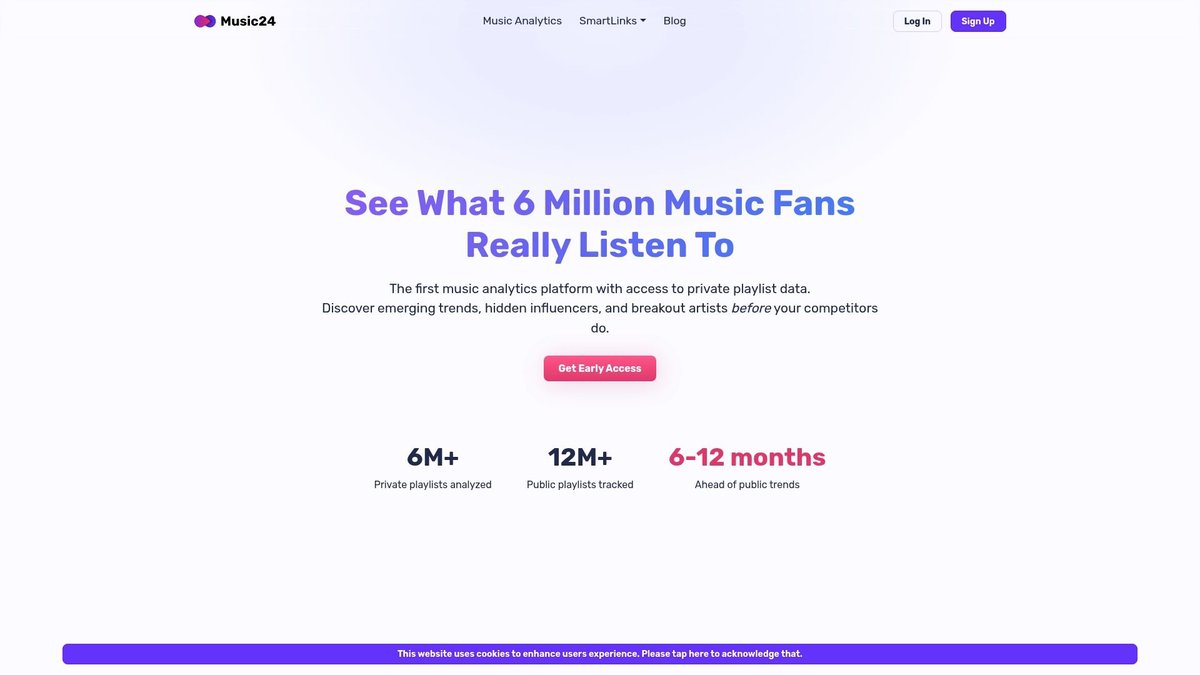
Discover how predictive music analytics can redefine your A&R strategy through real-time private playlist analysis. Visit Music24.com now to start identifying tomorrow’s breakout stars ahead of everyone else. Take control of your talent pipeline and lead the market with insights no one else has access to.
Frequently Asked Questions
What is predictive music analytics?
Predictive music analytics uses machine learning and statistical algorithms to forecast song ratings and popularity by analyzing audio features, social media engagement, and emotional responses. It allows A&R professionals to identify emerging artists before they trend publicly.
How does predictive music analytics differ from traditional music analytics?
Traditional analytics react to past trends, relying on public streaming metrics. In contrast, predictive analytics forecasts future movements by analyzing private playlist patterns and listener behaviors, allowing for quicker and more informed decisions about artist discovery.
What role do private playlists play in predictive music analytics?
Private playlists serve as authentic indicators of listener preferences without algorithmic interference. By analyzing these curated playlists, A&R professionals can identify emerging patterns and artists weeks or months before they gain mainstream visibility.
What are the key benefits of using predictive music analytics for A&R teams?
Using predictive music analytics allows A&R teams to make data-driven decisions, reduce risks in signing artists, improve hit rates, and discover talent earlier than competitors. It enhances efficiency by identifying high-probability growth candidates through scalable analysis.
Recommended
- Predictive Analytics in Music: Shaping Early Breakouts - Blog - Music24.com
- Music Discovery Landscape 2025: Predictive Analytics Advantage - Blog - Music24.com
- Understanding the Benefits of Music Analytics - Blog - Music24.com
- Advanced Analytics in Music: Predicting Talent Breakouts - Blog - Music24.com

