Playlist Analysis Explained: Uncovering Music Discovery Trends
Comprehensive guide to playlist analysis, exploring private data insights, emerging music trends, curator influence, and predictive tools for industry pros.

Over 60 million playlists are created every day, turning simple song lists into critical data sources for the music industry. With so many tracks and listeners interacting in unique ways, understanding these musical patterns has become a powerful tool for predicting trends and shaping listener experiences. Playlist analysis does more than count songs, it uncovers hidden behaviors, fuels smarter marketing, and reveals what truly drives music discovery today.
Table of Contents
- Defining Playlist Analysis And Core Concepts
- Types Of Playlists And Data Sources
- How Playlist Analysis Detects Trends
- Role Of Curators And Influencer Impact
- Practical Uses For The Music Industry
- Risks, Limitations, And Data Ethics
Key Takeaways
| Point | Details |
|---|---|
| Playlist Analysis | A method that decodes music consumption patterns through track interactions and listener behaviors, providing actionable insights into preferences and trends. |
| Types of Playlists | Six primary playlist classifications exist, each offering unique data sources that can inform targeted marketing and artist discovery strategies. |
| Influencer Impact | Curators and influencers shape music discovery by crafting playlists that create emotional connections and promote new artists, highlighting the importance of strategic curation. |
| Ethical Considerations | The risks associated with playlist analysis necessitate a focus on privacy, algorithmic bias, and responsible data governance to balance innovation with ethical standards. |
Defining Playlist Analysis and Core Concepts
Playlist analysis represents a sophisticated method of understanding music consumption patterns by examining the complex interactions between tracks, listeners, and emerging trends. At its core, playlist analysis transforms seemingly random song collections into strategic datasets that reveal intricate listener behaviors and musical preferences.
Researchers have developed advanced methodologies to decode these musical ecosystems. According to ArXiv, cutting-edge approaches now combine multiple information types through cross-modal contrastive learning, enabling the alignment of latent representations from playlist-track interactions, genre metadata, and audio features. This sophisticated technique allows music professionals to move beyond surface-level observations and uncover deeper insights into listener dynamics.
The fundamental components of playlist analysis include several critical elements:
- Track Interaction Patterns: Examining how specific songs are sequenced and connected
- Listener Demographic Insights: Understanding who creates and consumes specific playlist types
- Genre Blending Detection: Identifying emerging musical crossovers and fusion trends
- Temporal Trend Mapping: Tracking how playlist compositions evolve over time
Understanding these core concepts allows music industry professionals to predict emerging artist trends, optimize marketing strategies, and develop more targeted listener experiences. EmergentMind highlights that a comprehensive approach to playlist datasets is essential for improving recommendation algorithms and understanding complex listener behaviors.
By treating playlists as living, dynamic entities rather than static collections, music professionals can unlock unprecedented insights into audience preferences and emerging musical landscapes.
Types of Playlists and Data Sources
Playlist classification has evolved dramatically, transforming from simple song collections into complex data ecosystems that reveal intricate listener behaviors. NBER research highlights the multifaceted nature of playlists, demonstrating they are far more than random song compilations.
According to Web IST, playlists can be comprehensively categorized into six primary types, each representing a unique relationship between creator and audience:
- Broadcast Radio Playlists: Professionally curated selections by radio stations
- Personalized Radio Playlists: Algorithmically generated based on individual listener preferences
- Amateur Playlists: User-created collections reflecting personal taste
- Club Playlists: Specialized selections designed for specific social environments
- Album Tracklists: Sequential song arrangements within a single artist's album
- Compilation Tracklists: Thematic collections spanning multiple artists
Each playlist type generates distinct data sources that offer nuanced insights into music consumption patterns.
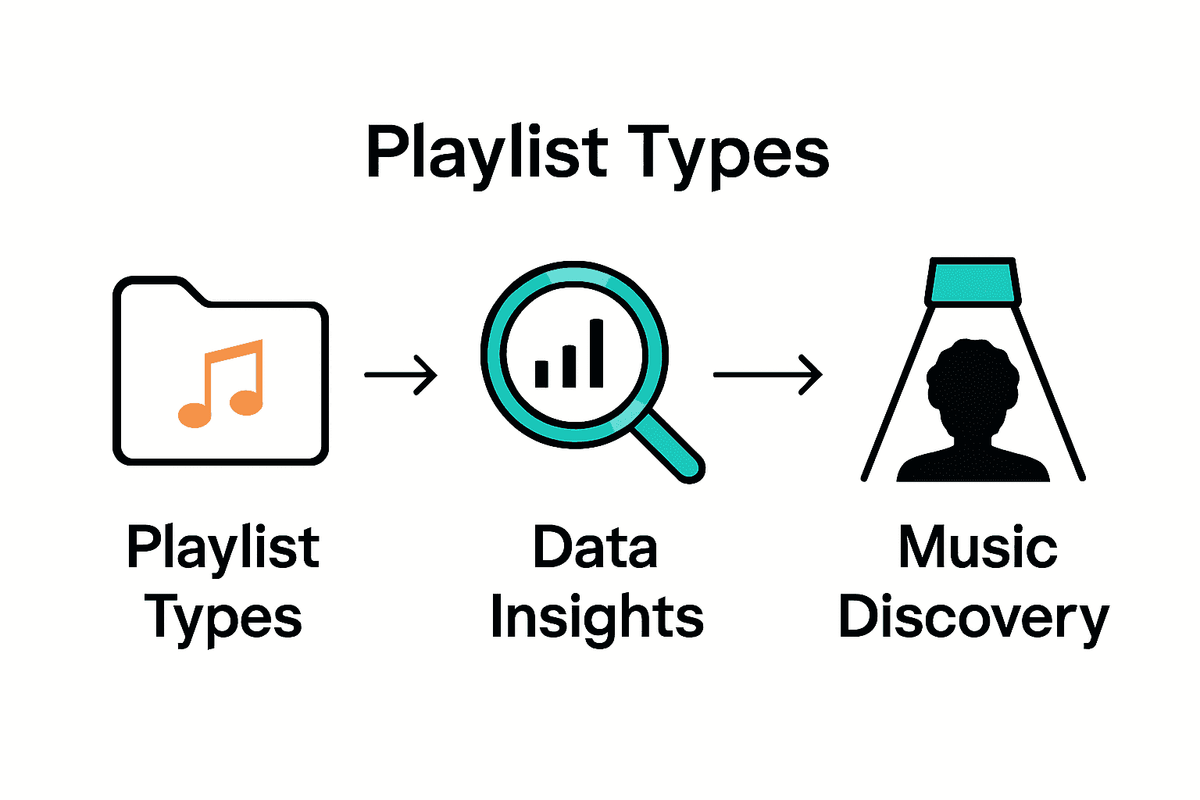 The data sources typically include:
- Streaming platform interaction metrics
- User engagement statistics
- Track sequence and transition analysis
- Listener demographic information
- Temporal listening trends
By understanding these diverse playlist types and their corresponding data sources, music industry professionals can develop more sophisticated strategies for artist discovery, audience targeting, and trend prediction. For deeper insights into playlist data exploration, check out our guide on understanding playlist data types.
The complexity of modern playlist analysis goes far beyond simple track listings, representing a sophisticated method of decoding musical preferences and listener behaviors.

How Playlist Analysis Detects Trends
Playlist analysis has emerged as a sophisticated method for uncovering emerging music trends, transforming raw data into actionable insights that can predict listener behaviors and genre shifts. ArXiv research reveals that understanding song context and sequence is critical in detecting these nuanced musical patterns.
Researchers have developed advanced techniques to decode trend detection, with ArXiv highlighting an innovative approach that treats playlist generation as a complex language modeling problem. This methodology leverages deep learning and reinforcement learning algorithms to identify subtle shifts in musical preferences and emerging genre crossovers.
Key strategies for detecting trends through playlist analysis include:
- Sequence Analysis: Examining how songs are arranged and transition
- Contextual Correlation: Understanding relationships between tracks
- Temporal Trend Mapping: Tracking changes in playlist compositions over time
- Genre Blending Detection: Identifying emerging musical fusion patterns
- Listener Behavior Profiling: Analyzing collective and individual playlist creation habits
The trend detection process involves multiple sophisticated techniques:
- Machine Learning Pattern Recognition: Identifying recurring musical motifs
- Cross-Genre Correlation: Mapping unexpected musical connections
- Listener Demographic Segmentation: Understanding trend origins
- Predictive Algorithmic Modeling: Forecasting potential future trends
By integrating these advanced analytical approaches, music professionals can gain unprecedented insights into listener preferences. For a comprehensive exploration of trend detection methodologies, check out our guide on analyzing playlist data trends.
Modern playlist analysis transforms raw musical data into a dynamic, predictive landscape, offering a window into the ever-evolving world of music consumption and creativity.
Role of Curators and Influencer Impact
Curators and influencers have become pivotal architects of music discovery, transforming how listeners encounter and engage with new music. CultureUnbound research reveals that these cultural intermediaries play a critical role in creating meaningful connections between music producers and consumers, bridging the gap between algorithmic recommendations and authentic musical experiences.
OUCI research highlights the nuanced ways curators influence music discovery, particularly through strategic genre selection and playlist composition. These influencers don't just compile songs—they craft narratives, emotional journeys, and cultural experiences that resonate deeply with listeners.
Different curator types significantly impact music discovery:
- Professional Curators: Industry experts from record labels and streaming platforms
- DJ Curators: Music professionals who blend tracks with technical expertise
- Algorithmic Curators: AI-driven playlist generators
- Social Media Influencers: Tastemakers with dedicated follower bases
- Niche Genre Specialists: Experts in specific musical subgenres
- Community Playlist Creators: Passionate music fans building collaborative collections
The influencer impact can be quantified through several key metrics:
- Listener Engagement Rates: Measuring how audiences interact with curated content
- Genre Cross-Pollination: Tracking how curators introduce listeners to new musical styles
- Discovery Velocity: Calculating the speed at which new artists gain visibility
- Emotional Resonance: Assessing the depth of connection created through playlist curation
By understanding the sophisticated ecosystem of playlist curation, music professionals can develop more targeted strategies for artist promotion and audience engagement. For deeper insights into curator dynamics, explore our guide on understanding playlist creator types.
Ultimately, curators are the storytellers of the musical world—transforming algorithms and individual tracks into compelling narratives that shape listener experiences and drive music discovery.
Practical Uses for the Music Industry
Playlist analysis has transformed from a passive observation tool to a strategic resource with profound implications across the music industry. ArXiv research reveals how granular playlist data can unlock unprecedented insights into user demographics, listening habits, and even personality traits, enabling music professionals to develop highly targeted marketing strategies.
The practical applications of playlist analysis extend far beyond traditional marketing approaches. Springer demonstrates that these analytical techniques can be applied across diverse domains, from understanding learning environments to predicting cultural trends, highlighting the versatility of playlist data as a strategic intelligence tool.
Practical uses for music industry professionals include:
- Artist Development: Identifying emerging talent and tracking their growth trajectory
- Marketing Optimization: Creating targeted promotional campaigns based on listener preferences
- A&R Strategy: Discovering potential signings through data-driven insights
- Genre Trend Prediction: Mapping evolving musical landscape shifts
- Audience Segmentation: Understanding nuanced listener demographics
- Royalty and Compensation Tracking: Monitoring song performance across platforms
The strategic implementation of playlist analysis offers multiple competitive advantages:
- Predictive Talent Scouting: Identifying artists before they become mainstream
- Personalized Listener Experiences: Crafting more engaging music recommendations
- Cross-Genre Marketing: Developing innovative promotional strategies
- Revenue Optimization: Maximizing artist and label income streams
By integrating sophisticated playlist analysis techniques, music industry professionals can transform raw data into actionable intelligence. For comprehensive insights into music industry data strategies, explore our guide on understanding music industry data types.
Ultimately, playlist analysis represents more than a technological tool—it's a strategic compass guiding music professionals through the complex, ever-evolving landscape of music consumption and cultural trends.
Risks, Limitations, and Data Ethics
Playlist analysis, while powerful, navigates a complex landscape of ethical considerations and potential risks that music industry professionals must carefully address. ArXiv research underscores the critical need for rigorous privacy protections when mining user attributes from public playlists, highlighting the delicate balance between data insights and individual privacy.
CultureUnbound further illuminates the ethical challenges surrounding algorithmically generated content, revealing potential risks to the fundamental artist-fan relationship and the potential for diminishing direct artistic engagement through automated curation.
Key ethical risks and limitations in playlist analysis include:
- Privacy Invasion: Potential unauthorized use of personal listening data
- Algorithmic Bias: Unintentional discrimination in recommendation systems
- Data Consent: Unclear user permissions for data collection
- Artist Compensation: Potential inequities in streaming representation
- Cultural Homogenization: Risk of narrowing musical diversity
- Psychological Manipulation: Potential for creating echo chambers
Critical ethical considerations demand a comprehensive approach:
- Transparent Data Collection: Clear user consent mechanisms
- Anonymization Protocols: Protecting individual user identities
- Algorithmic Accountability: Regular bias and fairness audits
- Diverse Representation: Ensuring inclusive recommendation strategies
Music industry professionals must proactively develop robust ethical frameworks that balance technological innovation with respect for individual rights and artistic integrity. For deeper insights into navigating these complex data landscapes, explore our guide on understanding music industry data types.
Ultimately, responsible playlist analysis requires a nuanced approach that prioritizes human creativity, individual privacy, and the fundamental value of musical expression over pure technological efficiency.
Where Music24 fits
Music24 reads millions of public playlists and charts every day. Its public data shows which playlists add songs like the ones you work with, which tracks and artists are gaining playlists fastest in a genre, and the countries where that genre grows. Follow the artists, tracks and playlists you care about and get an email when they move.
Start free with Music24: 7 days of the Pro plan, no card, then a Free plan for as long as you like.
Frequently Asked Questions
What is playlist analysis?
Playlist analysis is a method of understanding music consumption patterns by examining the interactions between tracks, listeners, and trends. It helps music professionals uncover deeper insights into listener behaviors and preferences.
How can playlist analysis help in music trend detection?
Playlist analysis can detect trends by examining song sequences, relationships between tracks, and tracking changes in playlist compositions over time. It uses advanced techniques like machine learning to predict shifts in musical preferences and emerging genres.
What are the different types of playlists analyzed in the music industry?
The six primary types of playlists include Broadcast Radio Playlists, Personalized Radio Playlists, Amateur Playlists, Club Playlists, Album Tracklists, and Compilation Tracklists. Each type offers unique insights into listener behaviors and preferences.
What ethical considerations should be taken into account in playlist analysis?
Key ethical considerations include ensuring user privacy, avoiding algorithmic bias, obtaining clear data consent, and ensuring fair artist compensation. It's essential to balance technological advancements with respect for individual rights and artistic integrity.
Recommended
Get your music heard. Grow the fans who stay.
Add a song. music24 makes the posts and the videos, plans your release and publishes it on every channel. Free for 7 days on the Pro plan, no card.