
Over 80 percent of top-charting tracks now gain momentum on private playlists before hitting mainstream american radio. This shift reveals how behind-the-scenes data is shaping the next wave of music discovery. Understanding private playlist analytics and trendspotting strategies has become critical for anyone looking to predict or influence the sound that reaches listeners across the United States. This guide uncovers actionable methods for tracking and analyzing emerging music patterns before they catch fire.
Table of Contents
- Step 1: Set Up Access to Private Playlist Analytics
- Step 2: Identify Early Pattern Shifts in Genre and Region
- Step 3: Spot Influential Curators and Tastemaker Playlists
- Step 4: Evaluate Rising Artists for Breakout Potential
- Step 5: Validate Trends Against Public Metrics and Industry Data
Quick Summary
| Important Insight | Explanation |
|---|---|
| 1. Choose the Right Analytics Platform | Selecting a comprehensive music analytics service is crucial for detailed insights on private playlist behavior. |
| 2. Focus on Genre and Regional Trends | Analyzing nuanced shifts in genres and regional preferences helps anticipate emerging music trends early. |
| 3. Identify Influential Curators | Pinpointing tastemakers can enhance music discovery strategies and highlight future breakout artists. |
| 4. Assess Artists Beyond Streaming Numbers | Evaluating rising artists requires a holistic view of their engagement, innovation, and potential for growth. |
| 5. Validate Trends Against Broader Data | Cross-referencing private insights with public metrics solidifies the reliability of emerging trend observations. |
Step 1: Set Up Access to Private Playlist Analytics
Accessing private playlist analytics requires strategic navigation through specialized music data platforms. You will need to establish connections with services that offer comprehensive insights into user playlist behavior beyond public streaming metrics.
Start by researching music analytics platforms that specialize in private playlist data collection. Platforms like music analytics tools offer comprehensive systems for tracking emerging trends through anonymized playlist information. Your goal is to find a service that provides granular data about playlist creation, genre mixing, and listener discovery patterns.
During setup, pay close attention to the data permissions and access levels. Some platforms require organizational credentials or professional music industry verification. Professional music managers and A&R teams will need to provide company documentation to unlock full analytical capabilities. Verify your credentials thoroughly and ensure your account matches your professional role.
One critical warning: Not all playlist analytics services are created equal. Some offer surface level metrics while others provide deep insights into playlist ecosystem dynamics. Research thoroughly and select a platform that offers predictive analytics and authentic discovery patterns rather than superficial streaming numbers.
Once your access is established, you will be ready to explore the next phase of music trend identification strategies.
Step 2: Identify Early Pattern Shifts in Genre and Region
Tracking emerging music trends requires a sophisticated approach that goes beyond surface level streaming data. Your goal is to uncover nuanced shifts in genre dynamics and regional music preferences before they become mainstream.
Start by analyzing music micro-trends with a focus on genre blending and cross regional collaborations. Recent research highlights fascinating developments like high BPM rave sounds resurging and unexpected genre crossovers between country, pop, hip hop, and R&B artists. Pay special attention to how digital platforms are transforming music creation and discovery across different geographic contexts.

Understanding regional music dynamics demands more than traditional analytics. Digital technologies have dramatically reshaped how musicians create and audiences consume music, making geographic boundaries increasingly fluid. Look for emerging artists who are challenging traditional genre constraints and creating innovative sound fusions that transcend regional expectations.
Warning: Trend identification is not about following the crowd but anticipating shifts before they become obvious. Your analytical approach should prioritize depth over breadth, focusing on granular data points that reveal authentic emerging patterns rather than superficial popularity metrics.
With these insights, you are now prepared to dig deeper into the complex landscape of music trend evolution.
Step 3: Spot Influential Curators and Tastemaker Playlists
Identifying the right playlist curators can transform your music discovery strategy from reactive to predictive. Your mission is to pinpoint the tastemakers who consistently influence music trends before they become mainstream.
Begin by exploring playlist creator types that have significant impact on music discovery. Modern digital platforms offer sophisticated analytics tools that help track curator influence beyond traditional metrics. Digital marketing platforms like Labelcamp provide comprehensive data analysis capabilities that enable precise identification of influential playlist creators who consistently shape listener preferences.
The most effective curator identification goes beyond follower counts. Look for curators who demonstrate consistent genre innovation, early artist discovery, and cross genre experimentation. Pay attention to playlist creators who blend unexpected musical styles and showcase emerging artists before they gain widespread recognition. Their playlists represent early warning systems for musical trends.
Warning: Not all playlist followers translate to genuine influence. Some curators accumulate followers through algorithmic tricks or purchased engagement. Focus on curators whose playlists show organic listener interaction, consistent playlist updates, and genuine musical exploration.
With these insights, you are now equipped to navigate the complex ecosystem of music tastemakers and discover the next wave of breakthrough artists.
Step 4: Evaluate Rising Artists for Breakout Potential
Identifying artists with genuine breakout potential requires a nuanced approach that goes far beyond basic streaming metrics. Your objective is to uncover emerging talent that demonstrates exceptional growth potential and unique artistic capabilities.
Start by utilizing music trend analysis techniques that leverage comprehensive data analytics platforms. Digital marketing tools like Labelcamp provide sophisticated data analysis capabilities that help you evaluate artists through multiple performance indicators. Look beyond raw listener numbers and focus on metrics that demonstrate artist momentum such as playlist inclusion rates, engagement velocity, and cross genre appeal.
The most promising rising artists often exhibit distinctive characteristics that set them apart from typical performers. Analyze their musical innovation, social media interaction quality, collaborative potential, and ability to create authentic connections with listeners. Pay special attention to artists who demonstrate consistent creative evolution and the capacity to generate organic listener interest across different audience segments.
Warning: Do not rely exclusively on quantitative data. Some breakthrough artists might have unconventional metrics that traditional analytics fail to capture. Trust your industry expertise and listen critically to understand an artists true potential beyond numerical indicators.
With these insights, you are now prepared to make strategic decisions about emerging musical talent that could define the next wave of industry success.
Step 5: Validate Trends Against Public Metrics and Industry Data
Validating emerging music trends requires a methodical cross referencing approach that combines private playlist insights with broader industry data. Your goal is to transform initial pattern observations into robust, defensible trend predictions.
Begin by analyzing music analytics metrics that provide comprehensive trend verification. Digital platforms like Labelcamp offer sophisticated data analysis tools that enable strategic comparisons between private playlist behaviors and public streaming metrics. Look for consistent signals across multiple data sources such as listener engagement rates, geographic streaming patterns, playlist inclusion frequency, and cross platform performance.
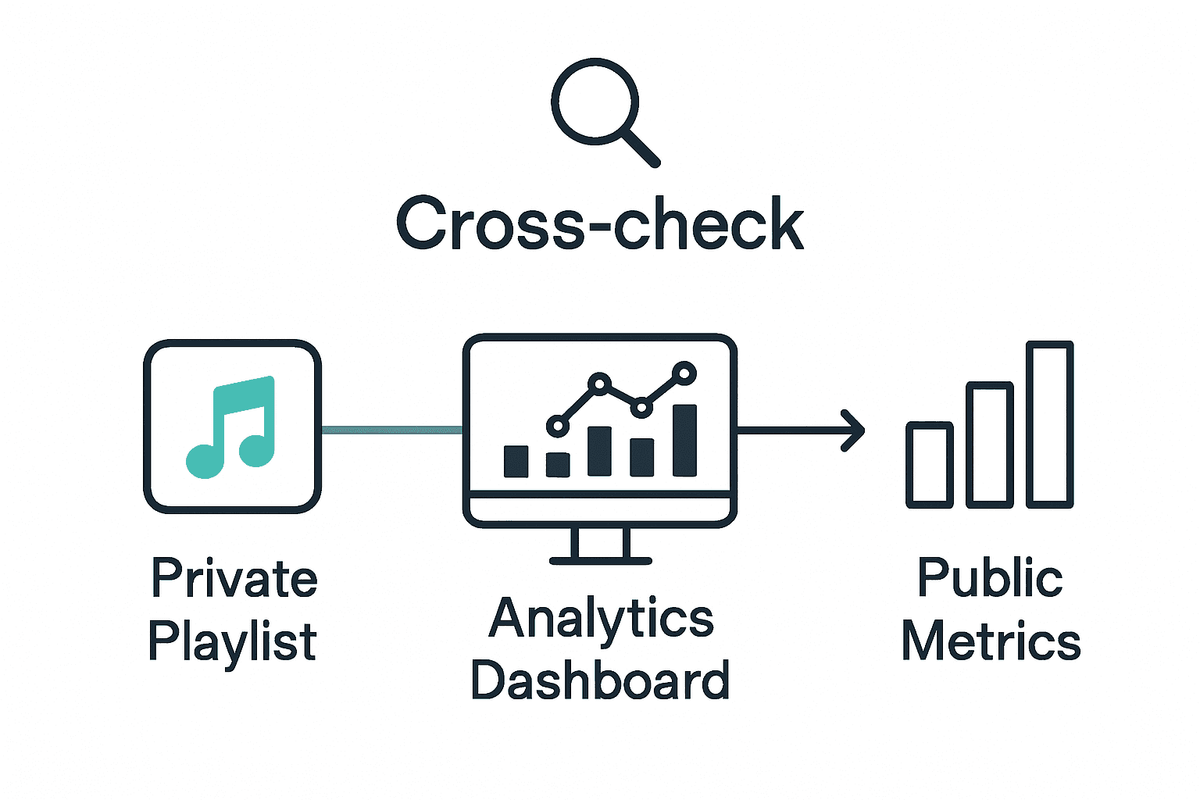
The most reliable trend validation emerges from understanding contextual nuances beyond raw numbers. Examine how emerging trends intersect with broader cultural movements, social media conversations, and regional music consumption behaviors. Pay special attention to anomalies that suggest authentic emerging patterns rather than algorithmic or promotional manipulation.
Warning: Public metrics can be misleading. Viral moments and algorithmic boosts can create temporary illusions of trend significance. Always triangulate your findings across multiple independent data sources to ensure genuine trend momentum.
With these validation strategies, you are now equipped to confidently assess and communicate emerging music industry trends.
Unlock the Power of Private Playlist Analytics to Spot Music Trends Early
The challenge for industry professionals highlighted in the article "Music Trend Spotting Checklist for Industry Pros" lies in accessing deep, authentic insights hidden within private playlists. Surface-level streaming numbers and public metrics do not reveal the emerging genre shifts, influential tastemakers, or rising artists before they break out. You need analysis that uncovers early pattern shifts, authentic curator influence, and breakout potential with predictive clarity. This means moving beyond basic public data to leverage granular, anonymized playlist behaviors that signal true music trend evolution.
Discover how Music24.com solves this challenge by providing exclusive access to millions of private playlists. Our specialized platform offers detailed insights into genre blending, regional micro-trends, and curator impact that empower record labels, artist managers, and A&R teams to confidently identify the next wave of talent. Start your strategic transformation today by exploring how our predictive analytics tools can sharpen your music trend spotting and talent discovery processes. Visit Music24.com now to gain the competitive edge you need to lead the music industry’s future.
Frequently Asked Questions
How can I set up access to private playlist analytics?
To set up access to private playlist analytics, begin by researching music analytics platforms that specialize in gathering data on user playlists. Establish your account and ensure you have the necessary organizational credentials; this may involve providing documentation that verifies your role in the music industry.
What should I look for when identifying emerging genre trends?
When identifying emerging genre trends, focus on analyzing genre blending and collaborations between different musical styles. Watch for shifts in listener preferences and the rise of artists who defy traditional genre classifications, keeping a lookout for innovative sound fusions.
How can I identify influential playlist curators in the music industry?
To identify influential playlist curators, examine the impact of different types of playlist creators beyond just their follower counts. Look for curators who consistently introduce new artists, showcase diverse genres, and maintain active audience engagement, as they are often the ones shaping trends.
What metrics should I use to evaluate rising artists' breakout potential?
To evaluate rising artists, focus on multiple performance indicators rather than just streaming numbers. Assess metrics like playlist inclusion rates and audience engagement, while also considering an artist's musical innovation and ability to connect authentically with listeners.
How do I validate emerging music trends against public metrics?
You can validate emerging music trends by cross-referencing private playlist data with broader industry metrics. Analyze listener engagement rates and geographic patterns, and look for consistent signals across multiple data sources to ensure the trends are genuine and not the result of temporary spikes.
Recommended
- How to Detect Music Trends Early and Stay Ahead in 2025 - Blog - Music24.com
- Step by Step Music Trend Analysis for Industry Pros - Blog - Music24.com
- Step by Step Music Trend Tracking for Industry Pros - Blog - Music24.com
- Music Trend Analysis Step by Step to Spot Breakout Artists - Blog - Music24.com

