Demystifying Playlist Algorithms: Uncovering Hidden Music Trends
Demystifying playlist algorithms for music professionals – learn how private playlist data, curator influence, and predictive analytics reveal emerging artists.

The evolution of playlist algorithms is shattering old assumptions about how new music is discovered. For professionals tracking emerging artists, understanding the real mechanics behind algorithmic playlists like Discover Weekly means gaining insight into how listener interaction and smart data blending shape musical trends. This article breaks down the complexities of playlist coherence, algorithm types, and private playlist data, helping analysts and A&R teams harness these systems for sharper artist discovery and smarter marketing worldwide.
Table of Contents
- Playlist Algorithms And Common Myths
- Types Of Playlist Algorithms In The Industry
- How Private Playlist Data Reveals Authentic Trends
- Curator Influence And Geographic Micro-Trends
- Risks, Ethical Concerns, And Algorithmic Bias
- Improving Artist Discovery With Predictive Analytics
Key Takeaways
| Point | Details |
|---|---|
| Complexity of Algorithms | Playlist algorithms are intricate systems that go beyond simple recommendations, blending data analysis and musical insights. |
| Types of Algorithms | There are various types of playlist algorithms, including Collaborative Filtering and Content-Based Filtering, each with unique strengths for music discovery. |
| Value of Private Data | Private playlist data offers authentic insights into listener preferences, revealing trends before they reach mainstream channels. |
| Addressing Bias | Continuous auditing of algorithms for fairness and diversity is essential to ensure equitable opportunities for all artists in music discovery. |
Playlist algorithms and common myths
Playlist algorithms have become increasingly sophisticated, transforming how music discovery happens. Unlike popular assumptions, these systems are far more complex than simple recommendation engines. Algorithmic playlists like Discover Weekly represent an intricate blend of data science and musical intuition.
Most music industry professionals harbor several misconceptions about how playlist algorithms actually function. These myths often stem from oversimplified understandings of recommendation technologies. Key myths include:
- Algorithms only recommend popular tracks
- Playlist generation is completely random
- User listening history has minimal impact on recommendations
- Algorithmic playlists cannot discover truly new music
Playlist coherence emerges as a critical factor in algorithmic design. Formal frameworks for measuring playlist smoothness reveal fascinating insights into track transitions and musical flow. Longer playlists tend to demonstrate greater coherence, while frequently editing tracks or inserting highly popular songs can paradoxically disrupt the listening experience.
Understanding playlist algorithms requires recognizing their nuanced approach to musical recommendation. These systems analyze multiple data points: listening history, track metadata, user interaction patterns, and even subtle genre-blending preferences. The goal isn't just to play music, but to create a personalized listening journey that feels both familiar and slightly adventurous.
Pro tip: Approach playlist algorithms with curiosity, understanding they're complex adaptive systems designed to balance familiarity with musical exploration.
Types of playlist algorithms in the industry
The music industry relies on sophisticated playlist generation algorithms that transform how listeners discover and consume music. These complex systems go far beyond simple track recommendations, employing multiple sophisticated approaches to create personalized musical experiences.
Primary types of playlist algorithms include:
- Collaborative Filtering: Recommends tracks based on listener similarities
- Content-Based Filtering: Suggests music with similar musical characteristics
- Context-Based Systems: Considers time, mood, activity, and environmental factors
- Hybrid Methods: Combines multiple algorithmic approaches for more nuanced recommendations
Each algorithm type brings unique strengths to playlist generation. Probabilistic music recommendation models like Markov chains analyze song relationships, creating seamless transitions and maintaining musical coherence. These systems carefully balance global song similarity with the intricate dynamics of track sequencing.
Streaming platforms increasingly blend algorithmic recommendations with editorial and user-generated playlists. This approach allows for a more dynamic and adaptive music discovery experience, where machine learning constantly refines understanding of individual listener preferences while maintaining the creative spark of human curation.
Here's a comparison of the primary playlist algorithm types and their strengths:
| Algorithm Type | Data Leveraged | Personalization Method | Strength in Discovery |
|---|---|---|---|
| Collaborative Filtering | Listener similarity data | Group-based recommendations | Reveals hidden music connections |
| Content-Based Filtering | Track attributes | Matches song characteristics | Introduces similar musical styles |
| Context-Based Systems | User environment context | Adjusts to activity or mood | Adapts playlists to situations |
| Hybrid Methods | Combined data sources | Multi-layered analysis | Delivers broad genre diversity |
Pro tip: Explore multiple playlist algorithms to understand how different recommendation strategies can reveal unexpected musical connections.
How private playlist data reveals authentic trends
Private playlist data represents a goldmine of unfiltered musical preferences that goes far beyond traditional public metrics. Private playlist insights offer unprecedented access to authentic listener behavior, revealing trends long before they emerge in mainstream charts or social media platforms.
Key characteristics that make private playlist data uniquely valuable include:
- Raw Authenticity: No performance pressure or external validation
- Genuine Preferences: Listeners curate without public scrutiny
- Early Discovery: Capturing emerging artist momentum
- Granular Segmentation: Detecting micro-trends across different listener groups
- Unfiltered Emotional Connection: True musical taste without algorithmic interference
The power of private playlist analysis lies in its ability to capture nuanced musical journeys that public platforms often miss. These personal collections represent intimate soundtracks reflecting individual emotional landscapes, musical explorations, and evolving taste profiles. By examining these private collections, music industry professionals can identify emerging artists, understand genre-blending trends, and predict future musical directions with remarkable precision.
Streamlining this analysis requires advanced data processing techniques that respect user privacy while extracting meaningful insights. The most sophisticated approaches anonymize individual data, focusing on aggregate trends and pattern recognition that illuminate the complex ecosystem of musical discovery and consumption.
Pro tip: Treat private playlist data as a window into listener psychology, not just a collection of tracks.
Curator influence and geographic micro-trends
The contemporary music landscape is experiencing a profound transformation driven by emerging geographic music production centers that challenge traditional metropolitan dominance. Modern music discovery now emerges from interconnected local scenes where regional curators play increasingly pivotal roles in shaping global musical narratives.
Key dimensions of curator influence across geographic micro-trends include:
- Local Sound Authenticity: Preserving regional musical identity
- Cross-Cultural Hybridization: Blending musical styles across borders
- Underground Network Amplification: Elevating local talent beyond traditional channels
- Algorithmic Diversity: Breaking algorithmic echo chambers
- Cultural Narrative Preservation: Documenting evolving musical expressions
Curators serve as critical cultural translators, interpreting complex musical landscapes that transcend traditional geographical boundaries. Their influence extends beyond simple playlist creation, functioning as sophisticated cultural intermediaries who decode and disseminate emerging musical movements. These tastemakers leverage deep local knowledge, understanding nuanced contextual elements that global algorithms might overlook.

By analyzing these micro-trends, music industry professionals can uncover intricate patterns of musical evolution that reflect deeper sociocultural transformations. The most sophisticated approaches view curator influence not as a linear transmission of musical taste, but as a dynamic, multidirectional conversation between local creativity and global musical ecosystems.
Pro tip: Track curator networks across different regions to identify emerging musical innovations before they become mainstream trends.
Risks, ethical concerns, and algorithmic bias
Music streaming platforms are increasingly grappling with significant algorithmic fairness challenges that threaten the diversity and accessibility of musical discovery. These complex systems can unintentionally create significant barriers for independent and emerging artists, particularly those from underrepresented regions or genres.
Key ethical concerns in playlist algorithms include:
- Homogenization of Musical Taste: Narrowing listener exposure
- Systemic Artist Disadvantage: Favoring established musicians
- Geographic Representation Bias: Marginalizing non-mainstream regions
- Economic Inequity: Creating unequal promotional opportunities
- Cultural Suppression: Limiting musical diversity
The most sophisticated approaches to addressing algorithmic bias require multi-dimensional interventions. AI-driven recommendation systems must be continuously audited for fairness, transparency, and genuine musical diversity. This involves developing more nuanced recommendation models that prioritize artistic merit, cultural representation, and listener exploration over simple play count metrics.
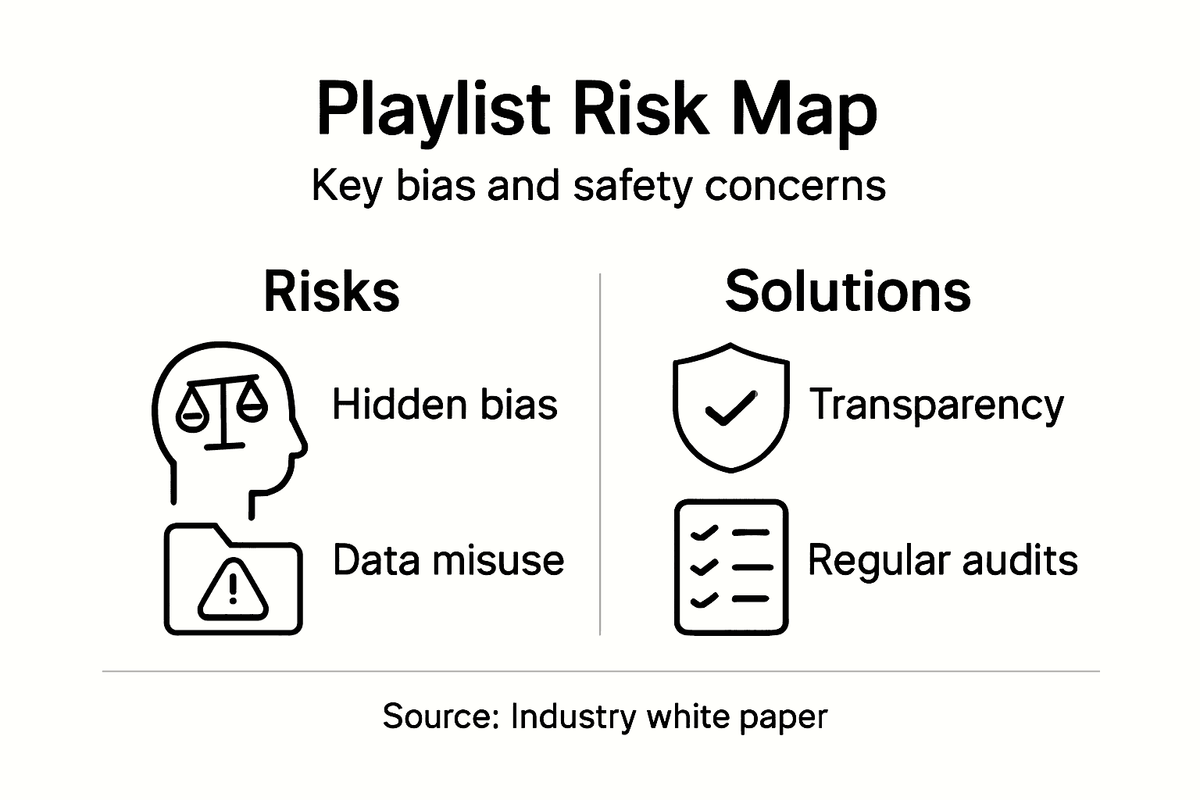
Transparency becomes crucial in mitigating these risks. Music platforms must develop robust mechanisms that allow artists, listeners, and industry professionals to understand and potentially challenge algorithmic decision-making processes. The goal is creating recommendation systems that serve as genuine discovery platforms rather than echo chambers that reinforce existing musical hierarchies.
Pro tip: Regularly audit your recommendation algorithms for potential hidden biases that might limit musical diversity.
Improving artist discovery with predictive analytics
Predictive analytics are revolutionizing the music industry's approach to discovering emerging musical talent, transforming how record labels, streaming platforms, and music professionals identify and nurture new artists. These sophisticated technologies go beyond traditional metrics, analyzing complex datasets to uncover hidden potential before mainstream recognition.
Key capabilities of predictive analytics in artist discovery include:
- Behavioral Pattern Recognition: Tracking listener engagement signals
- Audio Feature Analysis: Identifying unique musical characteristics
- Trend Forecasting: Predicting genre and style evolution
- Cross-Platform Performance Tracking: Measuring artist momentum
- Contextual Recommendation Mapping: Understanding listener preferences
The most advanced predictive models integrate multiple data streams, combining quantitative metrics with nuanced contextual insights. These systems analyze not just play counts, but intricate listener interactions, genre-blending tendencies, and emerging cultural signals that traditional analytics might miss. By processing vast amounts of data across streaming platforms, social media, and music consumption platforms, predictive analytics create a holistic view of an artist's potential trajectory.
Successful implementation requires a delicate balance between algorithmic insight and human curation. The most effective approaches view predictive analytics as a collaborative tool that augments human expertise, providing music industry professionals with unprecedented insights into emerging talent and listener behavior.
Here’s a summary of how predictive analytics accelerate artist discovery in the music industry:
| Predictive Technique | Main Application | Impact on Artist Discovery |
|---|---|---|
| Behavioral Pattern Analysis | Tracks listener engagement | Spotlights rising artists early |
| Audio Feature Recognition | Identifies unique sound traits | Highlights distinctive musical talent |
| Trend Forecasting | Predicts future genres | Anticipates emerging music movements |
| Cross-Platform Tracking | Monitors artist performance | Evaluates potential across networks |
Pro tip: Combine machine learning insights with human intuition to identify truly innovative musical talents.
Where Music24 fits
Music24 reads millions of public playlists and charts every day. Its public data shows which playlists add songs like the ones you work with, which tracks and artists are gaining playlists fastest in a genre, and the countries where that genre grows. Follow the artists, tracks and playlists you care about and get an email when they move.
Start free with Music24: 7 days of the Pro plan, no card, then a Free plan for as long as you like.
Frequently Asked Questions
What are playlist algorithms, and how do they work?
Playlist algorithms are sophisticated systems used by music streaming platforms to recommend tracks to listeners. They analyze various data points, including user listening history, track metadata, and interaction patterns, to create personalized playlists that blend familiarity with musical exploration.
What are the main types of playlist algorithms used in the music industry?
The primary types of playlist algorithms include Collaborative Filtering, Content-Based Filtering, Context-Based Systems, and Hybrid Methods. Each type leverages different data to enhance music recommendations and improve the discovery process for listeners.
How does private playlist data contribute to music discovery?
Private playlist data offers insights into authentic listener preferences without the influence of public validation. It captures genuine musical tastes, emerging trends, and emotional connections, allowing the music industry to identify rising artists and new genres before they hit mainstream platforms.
What are the ethical concerns associated with playlist algorithms?
Ethical concerns include the homogenization of musical taste, systemic disadvantages for independent artists, geographic representation bias, and economic inequities. These issues can limit musical diversity and opportunity for emergent talent, necessitating regular audits and transparent practices to promote fairness.
Recommended
Get your music heard. Grow the fans who stay.
Add a song. music24 makes the posts and the videos, plans your release and publishes it on every channel. Free for 7 days on the Pro plan, no card.