Best Places to Promote Your Music Online in 2026
The best place to promote your music in 2026 depends on your budget, genre, and goals. This guide covers the top free platforms, paid advertising options, playlist submission strategies, and measurement tools so you can pick the right channels, avoid common mistakes, and turn every promotion dollar into real fans.
Making great music is only half the job. Getting it in front of the right listeners determines whether a release gains traction or disappears into the void. The good news: there are more good sites to promote music today than at any point in music history. The challenge is picking the right mix of free platforms, paid channels, and data tools so every dollar and hour you invest actually moves the needle.
This guide breaks down the best places to promote your music online in 2026, with a comparison table, cost breakdowns, and actionable tips you can use starting today.
Quick Answer: Where Should You Promote Your Music?
The best place to promote your music depends on your budget, genre, and goals. For most independent artists, a combination of free social media platforms (TikTok, Instagram, YouTube), playlist submission sites, and targeted paid ads on Meta or TikTok delivers the strongest return. Focus on two or three channels first, measure what works, then expand. The artists who grow fastest in 2026 are the ones who track their results and double down on what converts.
Free Platforms to Promote Your Music
Free promotion channels cost nothing but your time. They build an organic foundation that pays off long after the initial effort. Here are the best free options available right now.
Social Media Platforms
Social media remains the single most accessible way to reach new listeners. Each platform attracts a different audience and rewards different content styles.
TikTok still dominates music discovery in 2026. Short clips of 15 to 60 seconds, behind-the-scenes studio content, and song snippet previews drive the most engagement. The algorithm rewards consistency: posting three to five times per week gives you the best shot at reaching new fans. Use trending sounds strategically and pair them with your original tracks for maximum reach. For help choosing the right tags, check out our guide on music hashtags for artists.
Instagram works best for building a loyal community around your brand. Reels mirror TikTok's short-form format, while Stories keep your existing audience engaged daily. The key is mixing promotional content (release announcements, music videos) with personal content (studio sessions, day-in-the-life) at roughly a 30/70 ratio.
YouTube offers two distinct promotion paths. YouTube Shorts competes directly with TikTok for discovery. Long-form content (music videos, lyric videos, live sessions) builds deeper engagement and generates ad revenue over time. A lyric video for a new single costs almost nothing to produce and can rank in search results for years.
X (formerly Twitter) works for networking with other artists, producers, and industry contacts rather than direct fan acquisition. Join conversations around your genre, share quick updates, and engage with your community.
Facebook still matters for event promotion, local scenes, and genre-specific groups. If you play live shows, a Facebook Events strategy reaches an older demographic that buys tickets.
Music Communities and Forums
Niche communities offer something social media cannot: a focused audience that actively seeks new music.
Reddit has dozens of active music subreddits organized by genre. Subreddits like r/listentothis, r/WeAreTheMusicMakers, and genre-specific communities (r/hiphopheads, r/electronicmusic) drive meaningful engagement when you contribute genuinely. The rule: participate in discussions first, promote second. Artists who only drop links get banned fast.
SoundCloud remains a hub for electronic, hip-hop, and experimental music. Its repost feature creates a built-in sharing network. Upload demos, remixes, and tracks that might not fit your main release strategy.
Bandcamp appeals to fans who want to support artists directly. It works especially well for indie, punk, metal, and experimental genres where the audience values physical merch and direct purchases.
Discord servers dedicated to specific genres or music scenes are growing rapidly. Running your own server creates a direct line to your most engaged fans. Many artists use Discord for exclusive previews, Q&A sessions, and building street teams.
Playlist Submission Sites
Getting placed on curated playlists remains one of the most effective ways to reach new listeners in 2026. There are two main approaches.
Spotify for Artists lets you pitch unreleased tracks directly to Spotify's editorial team. Submit at least seven days before your release date. Include genre tags, mood descriptors, and a compelling description of the track's story.
Independent playlist submission platforms connect you with independent curators who run playlists across Spotify, Apple Music, and other DSPs. These curators collectively reach millions of listeners. The best platforms vet curators to filter out fake playlists with bot followers. For a deeper understanding of how curators shape discovery, read our guide on the role of music curators.
SubmitHub offers both free and premium submission options. Premium credits increase your response rate significantly. The platform's transparency (curators must explain why they decline a track) makes it a useful feedback tool even when you do not land a placement.
Paid Advertising Options for Musicians
Paid promotion accelerates what organic efforts start. Even small budgets of $50 to $200 per campaign can produce measurable results when targeted correctly.
Social Ads
Meta Ads (Instagram and Facebook) offer the most granular targeting for musicians. You can target by musical interest, location, age, and behavior. A common high-performing strategy: run a Reels ad featuring a 15-second clip of your best track, targeting fans of similar artists in your genre. Cost per click typically runs $0.30 to $1.50 depending on your targeting.
TikTok Ads work well for songs with strong hooks. Spark Ads (boosting organic posts that already perform well) deliver better results than traditional in-feed ads. Start with $20 to $50 per day, measure for three days, then scale what works.
YouTube Ads are underrated for music promotion. Pre-roll ads on music videos from similar artists put your music in front of an already-engaged audience. The cost per view runs $0.01 to $0.05, making it one of the cheapest paid channels available.
Playlist Pitching Services
Paid playlist pitching services handle outreach to curators on your behalf. Quality varies enormously in this space.
What to look for: services that pitch to real, human-curated playlists with genuine listener engagement. Ask for placement reports showing which playlists accepted your track and how many real listeners those playlists reach.
What to avoid: any service that guarantees a specific number of streams or placements. Guaranteed streams almost always involve bot activity, which violates platform terms of service and can get your music removed entirely.
Budget expectations: legitimate pitching campaigns typically cost $100 to $500 per single. The return depends on your genre, track quality, and release timing.
Understanding which playlists actually influence listener behavior is critical before spending money on pitching. Music24 shows which playlists add songs like yours, who curates them and how fast they grow. This data helps you target pitching efforts toward playlists that actually convert casual listeners into fans. Start a free trial and see the curator landscape for yourself before your next campaign.
Best Places to Promote Your Music: Comparison Table
| Platform / Channel | Cost | Best For | Audience Reach | Time Investment | Difficulty |
|---|---|---|---|---|---|
| TikTok | Free | Discovery, viral potential | Very High | Medium | Low |
| Free | Community building, branding | High | Medium | Medium | |
| YouTube | Free | Long-term discovery, SEO | Very High | High | Medium |
| Free | Niche genre audiences | Medium | Low | Low | |
| SoundCloud | Free | Electronic, hip-hop, demos | Medium | Low | Low |
| Spotify for Artists (editorial pitch) | Free | Playlist placement | Very High | Low | Medium |
| SubmitHub | Free / $1-2 per submission | Independent playlist placement | Medium | Low | Low |
| Meta Ads | $5-50/day | Targeted reach, conversions | High | Medium | Medium |
| TikTok Ads | $20-50/day | Song discovery, hooks | Very High | Medium | Medium |
| YouTube Ads | $10-30/day | Pre-roll music discovery | High | Medium | High |
| Paid playlist pitching | $100-500/campaign | Curated playlist placement | Medium-High | Low | Low |
| Discord | Free | Superfan engagement | Low-Medium | Medium | Low |
| Bandcamp | Free (platform takes %) | Direct sales, merch | Low-Medium | Low | Low |
How to Measure Your Music Promotion Results
Promotion without measurement is guesswork. Here are the metrics that actually matter and how to track them.
Streaming metrics go beyond play counts. Track save rates (the percentage of listeners who save your track after hearing it), skip rates, and completion rates. A track with a 30% save rate on 1,000 streams is outperforming a track with a 5% save rate on 10,000 streams. The first track has real fans; the second has passive exposure.
Social engagement should be measured by actions, not impressions. Comments, shares, saves, and profile visits tell you more than views alone. Track which content types drive the most profile visits, then make more of that content.
Music24 reads millions of public playlists and charts every day and shows which playlists add songs like yours, which tracks and artists are gaining playlists fastest in a genre, and the countries where that genre grows.
Conversion tracking connects promotion to outcomes. Use UTM parameters on every link you share so you can trace which platform, post, or ad drove each new follower, stream, or sale. Smart link services make this easier by consolidating analytics across platforms.
Monthly review cadence: set aside 30 minutes each month to review your numbers. Compare month-over-month growth, identify your top-performing channel, and reallocate time and budget accordingly. For a structured approach, check out our guide on music trend analysis.
Common Promotion Mistakes to Avoid
Most artists waste time and money on promotion by repeating the same avoidable errors. Here are the ones that cost the most.
Spreading too thin across platforms. Posting inconsistently on seven platforms produces worse results than posting consistently on two. Pick two or three channels that match your genre and audience, then commit to a regular posting schedule for at least 90 days before judging results.
Ignoring analytics. "I posted and nothing happened" usually means "I posted and did not check what happened." Every platform provides free analytics. Use them. The data tells you what is working, so you can stop guessing.
Buying fake streams or followers. This destroys your algorithmic profile. Streaming platforms detect artificial engagement and penalize it. Your music gets deprioritized in recommendations, editorial consideration, and search results. The short-term vanity metrics are not worth the long-term damage.
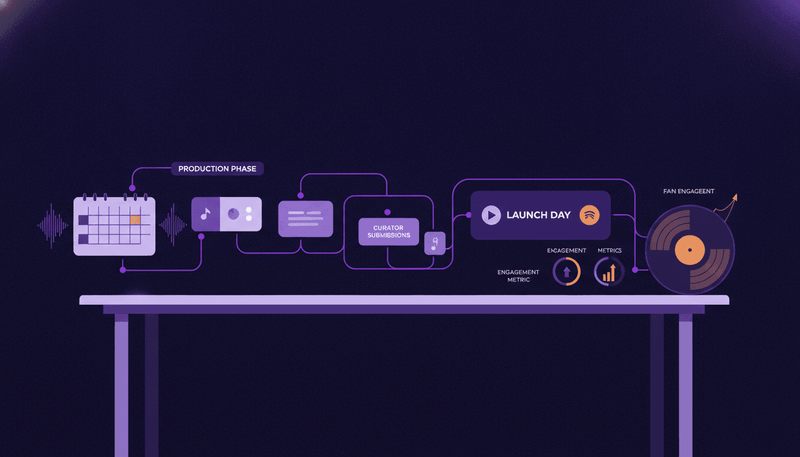
Promoting only release day. A single announcement post on release day reaches a fraction of your audience. Build anticipation for two to four weeks before the release with teasers, behind-the-scenes content, and countdowns. Continue promoting for four to six weeks after with remixes, live versions, user-generated content, and playlist pitching.
Skipping the warmup. Dropping a track cold (without pre-save campaigns, teaser content, or playlist pitching) means the algorithm has zero engagement signals to work with. Warm up your audience before every release.
Not building an email list. Social media algorithms change constantly. An email list is the only audience you fully own. Even 200 engaged email subscribers can generate more first-week streams than 5,000 passive Instagram followers.
FAQ
What are the best free sites to promote music in 2026?
TikTok, Instagram, YouTube, SoundCloud, Reddit, and Bandcamp are the strongest free platforms for music promotion. TikTok leads for discovery, YouTube provides long-term search visibility, and SoundCloud and Bandcamp serve niche genres. Combine at least two of these with Spotify for Artists editorial pitching for the best free promotion strategy.
How much should I spend on music advertising?
Start with $50 to $200 per single campaign. Test small budgets ($5 to $10 per day) across Meta Ads and TikTok Ads for three to five days, then scale the best-performing ad. Most independent artists see strong returns at $200 to $500 per release cycle once they know which creative and targeting combinations work.
How do I get my music on Spotify playlists?
Use Spotify for Artists to pitch unreleased tracks to editorial playlists at least seven days before release. For independent playlists, use platforms like SubmitHub or hire a reputable playlist pitching service. Focus on playlists with genuine engagement rather than high follower counts. Analyzing which curators actually drive saves and repeat listens gives you the biggest advantage; Music24's curator data helps you identify those high-impact placements.
Is TikTok still effective for music promotion?
Yes. TikTok remains the top discovery platform for music in 2026. The algorithm rewards consistent posting (three to five times per week), short clips with strong hooks, and authentic behind-the-scenes content. Songs that trend on TikTok still regularly cross over to streaming platforms, radio, and sync placements.
How long does it take to see results from music promotion?
Paid campaigns show measurable results within three to seven days. Organic promotion (social media, playlist submissions, community building) typically takes 60 to 90 days of consistent effort before producing reliable growth. Building a sustainable fanbase usually takes 12 to 18 months of combined organic and paid promotion.
Should I promote my music on every platform?
No. Focus on two or three platforms where your target audience is most active. An artist making lo-fi beats will find better results on SoundCloud and TikTok than on Facebook. A country singer-songwriter might get more traction on YouTube and Instagram. Match your platforms to your genre and audience demographics, then expand once you have a consistent presence.
How do I know if a playlist pitching service is legitimate?
Legitimate services provide transparent reporting on which playlists accepted your track, the curators behind those playlists, and real engagement metrics (not just stream counts). They never guarantee a specific number of streams. Ask for case studies and verify that the playlists they pitch to have real, engaged followers.
Releasing music soon? Start free with Music24: 7 days of the Pro plan, no card, then a Free plan for as long as you like.
Get your music heard. Grow the fans who stay.
Add a song. Music24 makes the posts and the videos, plans your release and publishes it on every channel. Free for 7 days on the Pro plan, no card.