Why Analyze Music Sharing Trends for A&R Success
Learn why analyzing music sharing trends gives A&Rs an edge—explore private playlist analytics, early artist discovery, and predictive marketing strategies.

Spotting tomorrow’s musical stars before they break into the mainstream is never simple, especially as digital music habits become more complex and private. Record label A&R teams know that aggregate streaming counts barely scratch the surface of genuine listener engagement. By focusing on private playlist analysis, executives gain an inside view into authentic taste, uncovering what public charts often overlook. This approach gives decision-makers the nuanced intelligence needed to nurture rising talent and create laser-focused marketing strategies.
Table of Contents
- Defining Music Sharing Trends And Analytics
- Types Of Music Sharing Data Sources Today
- How Private Playlist Analysis Uncovers Talent
- Strategic Benefits For Labels And A&R Teams
- Risks, Biases, And Common Data Pitfalls
Key Takeaways
| Point | Details |
|---|---|
| Understanding Music Sharing Analytics | Music sharing trends involve analyzing user behavior across platforms to reveal deeper insights into music consumption beyond streaming numbers. |
| Diverse Data Sources | Multiple data streams, including streaming metrics and social media interactions, provide a richer understanding of listener preferences and emerging trends. |
| Private Playlist Insights | Analyzing private playlists offers A&R professionals authentic listener preferences and can identify emerging artists before they gain mainstream recognition. |
| Navigating Risks in Data Analysis | A&R teams should be aware of biases and risks inherent in data-driven approaches, ensuring a balance between commercial insights and artistic value. |
Defining Music Sharing Trends and Analytics
Music sharing trends represent a complex ecosystem of digital interactions where user behavior, platform dynamics, and artistic expression converge to create intricate patterns of music consumption and discovery. In the modern digital landscape, understanding these trends goes far beyond simple streaming numbers - it's about decoding the nuanced ways listeners engage with music across diverse platforms and contexts.
At its core, music sharing analytics involves systematically tracking, analyzing, and interpreting how music moves through digital networks. Digital platforms have transformed music distribution by enabling unprecedented levels of audience interaction and data collection. This transformation allows music industry professionals to gain insights that were previously impossible to obtain.
Key components of music sharing trend analysis include:
- User Behavior Tracking: Monitoring how listeners create, share, and interact with playlists
- Genre Hybridization Patterns: Understanding emerging musical fusion and cross-genre influences
- Geographical Micro-Trends: Identifying localized music preferences and emerging artist scenes
- Platform-Specific Engagement Metrics: Analyzing listener interactions across streaming services
The significance of these analytics extends beyond mere statistical observation. By leveraging advanced music data techniques, A&R professionals can predict emerging artist potential, understand evolving listener preferences, and make data-driven decisions about talent development and marketing strategies.
Pro tip: Focus on granular data points that reveal listener intent, not just aggregate streaming numbers, to uncover truly meaningful music sharing insights.
Types of Music Sharing Data Sources Today
Modern music sharing data sources have evolved far beyond traditional streaming metrics, creating a complex ecosystem of digital insights that power music industry analytics. Multimodal datasets now combine sophisticated information from audio recordings, symbolic music scores, user interactions, and platform-specific metadata, providing unprecedented depth of musical understanding.
The primary categories of music sharing data sources include:
- Streaming Platform Metrics: Raw listening data from Spotify, Apple Music, YouTube Music
- Social Media Interactions: Engagement metrics from platforms like TikTok, Instagram, Twitter
- User-Generated Content: Playlist creation, sharing patterns, and musical preferences
- Audio Signal Processing Data: Technical analysis of musical characteristics and compositions
- Geographical Trend Indicators: Regional listening behaviors and cultural music preferences
Big data technologies have transformed how the music industry interprets sharing trends. Global music discovery platforms now track millions of interactions, enabling researchers and A&R professionals to understand complex listener behaviors with unprecedented granularity.
These diverse data sources allow music industry professionals to move beyond surface-level analytics, creating nuanced portraits of musical consumption, artist potential, and emerging cultural trends. By integrating multiple data streams, experts can develop more sophisticated predictive models and strategic insights.
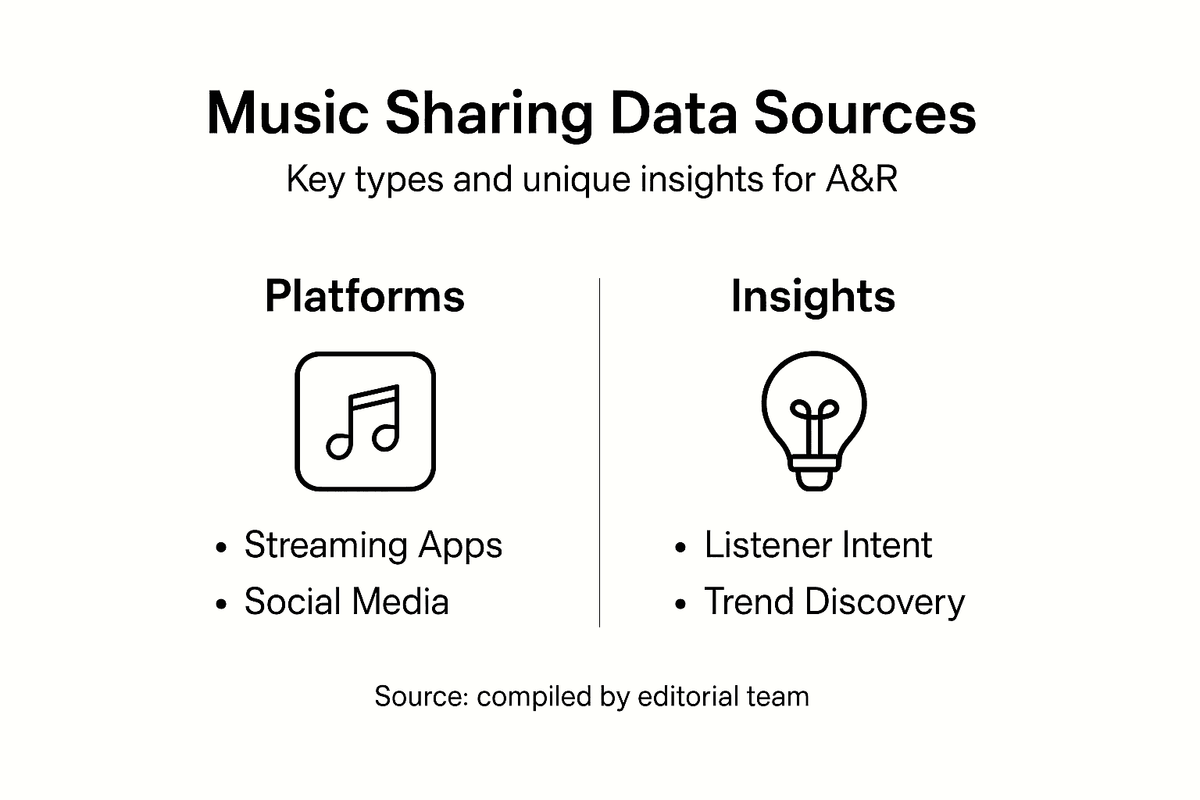
Here's a summary of how different music sharing data sources contribute to industry insights:
| Data Source Type | Unique Insight Provided | Typical Use Case |
|---|---|---|
| Streaming Metrics | Measures real-time listening trends | Gauging overall song popularity |
| Social Media Engagement | Identifies viral tracks and influencer impact | Tracking grassroots promotion |
| Private Playlist Analysis | Reveals genuine user taste and discovery | Spotting emerging talent early |
| Audio Signal Processing | Detects musical structure and innovation | Evaluating creative originality |
| Geographical Indicators | Maps regional and cultural music shifts | Targeted market expansion planning |
Pro tip: Combine multiple data sources to create comprehensive music sharing trend analyses, avoiding over-reliance on any single metric or platform.
How Private Playlist Analysis Uncovers Talent
Private playlist analysis represents a revolutionary approach for A&R professionals to discover emerging musical talent before traditional metrics catch up. Unique listener preferences emerge through contextual playlist data, revealing nuanced musical consumption patterns that public streaming statistics often miss entirely.
Key insights from private playlist analysis include:
- Authentic Listener Preferences: Uncovering genuine musical tastes outside mainstream recommendations
- Micro-Genre Identification: Detecting emerging musical fusion and niche genre developments
- Early Trend Detection: Spotting artist potential before they hit public charts
- Contextual Music Consumption: Understanding how listeners engage with music during specific activities
- Demographic Listening Patterns: Mapping musical preferences across different user segments
The power of private playlist analysis lies in its ability to capture unfiltered musical discovery. Unlike public playlists, which often reflect social performativity, private collections represent raw, unmediated listener choices. These collections provide a more authentic window into genuine musical exploration and personal taste.

By leveraging advanced data analytics, A&R professionals can transform these private playlist insights into strategic talent identification tools. The granular understanding of listener behavior allows for more precise artist development, targeted marketing strategies, and early investment in promising musical talent.
Pro tip: Cross-reference private playlist data with multiple contextual indicators to validate emerging artist potential and minimize false positives.
Strategic Benefits for Labels and A&R Teams
Music trend analysis represents a transformative approach for record labels seeking competitive advantages in an increasingly complex digital landscape. Strategic data-driven insights enable precise artist development by providing unprecedented visibility into emerging musical talent and audience preferences.
Key strategic benefits for labels and A&R teams include:
- Predictive Talent Identification: Discovering promising artists before mainstream recognition
- Resource Optimization: Allocating marketing and development budgets more efficiently
- Risk Mitigation: Reducing financial uncertainty in artist investments
- Global Market Understanding: Tracking regional and demographic listening patterns
- Competitive Intelligence: Monitoring industry trends and emerging musical innovations
Unlike traditional talent scouting methods, data-driven approaches allow A&R professionals to make informed decisions based on comprehensive listener behavior analysis. These insights extend beyond simple streaming numbers, offering nuanced understanding of audience engagement, genre evolution, and potential breakout artists.
Compare how traditional and data-driven A&R strategies differ in talent scouting:
| Approach | Data-Driven A&R | Traditional A&R |
|---|---|---|
| Talent Discovery | Uses predictive analytics | Relies on in-person scouting |
| Artist Selection | Data validates potential | Subjective expert judgment |
| Marketing | Targeted digital campaigns | Broad media-based strategies |
| Risk Management | Deploys statistical models | Depends on intuition and experience |
Modern record labels are increasingly becoming sophisticated technology platforms that leverage advanced analytics to connect artists with global audiences. By transforming raw data into strategic insights, A&R teams can create more targeted artist development programs, develop precise marketing strategies, and identify unique opportunities in the rapidly evolving music ecosystem.
Pro tip: Develop a holistic data integration strategy that combines multiple analytics sources to create a comprehensive artist evaluation framework.
Risks, Biases, and Common Data Pitfalls
Data-driven music analytics, while powerful, come with inherent risks that A&R professionals must carefully navigate. Algorithmically driven recommendation systems can inadvertently introduce significant biases that potentially marginalize emerging and independent artists.
Primary risks and biases in music data analytics include:
- Algorithmic Favoritism: Systematic preference for commercially successful artists
- Market Concentration: Overemphasis on dominant global music markets
- Genre Homogenization: Reducing musical diversity through data-driven recommendations
- Privacy Concerns: Potential misuse of user listening data
- Representation Gaps: Underrepresentation of niche and local music scenes
Commercial pressures can distort data interpretation, leading A&R teams to prioritize short-term metrics over long-term artistic potential. This approach risks creating a self-reinforcing cycle where only artists who already demonstrate commercial success receive meaningful support and visibility.
Ethical data analysis requires balancing commercial insights with artistic creativity, acknowledging that not all musical value can be quantified through streaming numbers or algorithmic predictions. Successful A&R teams must develop nuanced approaches that combine data-driven insights with human expertise and creative intuition.
Pro tip: Implement a deliberate diversity check in your data analysis process to counteract algorithmic biases and ensure fair representation of emerging artists.
Unlock True A&R Success by Analyzing Private Music Sharing Trends
The article highlights the challenge of relying solely on public streaming metrics that miss authentic listener behavior and emerging artist potential. Pain points include overcoming algorithmic biases, identifying micro-genres, and spotting breakout talent early through nuanced private playlist data. Understanding concepts like private playlist analysis and geographical micro-trends is key for making confident, data-driven A&R decisions.
Music24.com tackles these exact challenges with a game-changing solution. Our platform analyzes millions of anonymized private playlists to discover real music discovery patterns before they surface on public charts or social platforms. Gain detailed insights into genre blending, influential curators, and regional shifts that traditional tools overlook. Stop guessing and start predicting artist potential with precision utilizing advanced private playlist analytics.
Ready to transform your talent scouting and marketing strategies?
Discover how you can get ahead of industry trends today.
Explore Music24’s predictive analytics platform and see how to make data-driven artist development your competitive edge.
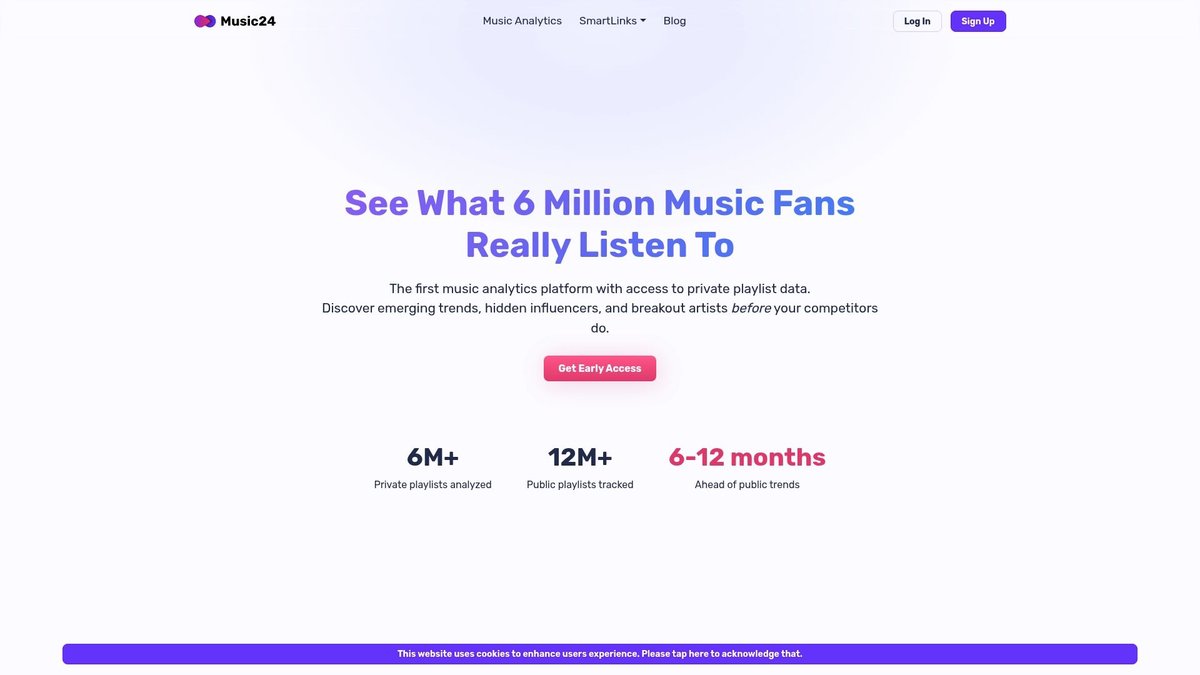
Elevate your A&R game by accessing real listener behaviors and emerging trends hidden in private playlists. Visit Music24.com now and start identifying tomorrow’s breakout stars before anyone else does.
Frequently Asked Questions
What is music sharing trend analysis?
Music sharing trend analysis involves tracking and interpreting how music is shared and consumed across digital platforms, analyzing user behavior, genre influences, and engagement metrics to understand listening habits and preferences.
How can private playlist analysis help in talent discovery?
Private playlist analysis reveals authentic listener preferences and micro-genres, allowing A&R professionals to identify emerging artists before they gain mainstream recognition, based on genuine musical tastes and contextual consumption patterns.
What types of data sources are used for music sharing analytics?
Key data sources for music sharing analytics include streaming platform metrics, social media interactions, user-generated content, audio signal processing data, and geographical trend indicators that provide a comprehensive view of listener behavior.
What are the risks associated with data-driven music analytics?
Risks include algorithmic favoritism towards commercially successful artists, market concentration, genre homogenization, privacy concerns regarding user data, and underrepresentation of niche music scenes, which can skew insights and decision-making.
Recommended
- 7 Micro-Trend Examples in Music Every A&R Should Know - Blog - Music24.com
- Music Insights Best Practices for Early Artist Discovery - Blog - Music24.com
- Why Real-Time Music Trends Matter for A&R Pros - Blog - Music24.com
- Industry Terms in Music Analytics: What Drives A&R Success - Blog - Music24.com
Get your music heard. Skip the content grind.
Add a song. Music24 makes the posts and the videos, plans your release and publishes it on every channel. Free for 7 days on the Pro plan, no card.