Why Real-Time Music Trends Matter for A&R Pros
Real-time music trends from private playlists reveal emerging artists, genre shifts, and curator influence before public charts—ideal for A&R and marketers.

More than 80 percent of American record labels now rely on real-time data to scout emerging artists faster than ever before. With private playlist insights revealing genuine listener preferences, music industry professionals gain an edge in predicting shifting genres and breakthrough talent. This guide unpacks practical strategies for leveraging analytics from private playlists, helping A&R teams and marketing analysts forecast tomorrow’s artists based on authentic audience trends.
Table of Contents
- Understanding Real-Time Music Trends Analytics
- Types of Playlists and Their Impact on Trends
- How Private Playlist Data Reveals Genuine Discovery
- Predicting Breakout Artists and Genre Blends Early
- Ethical Considerations and Data Privacy Challenges
- Integrating Real-Time Trends into A&R Strategy
Key Takeaways
| Point | Details |
|---|---|
| Real-Time Analytics Impact | Real-time music trends analytics enhance A&R decision-making by providing data-driven insights into emerging artists and genres. |
| Playlist Types Influence Discovery | Understanding different playlist types helps A&R professionals identify new talents and track listener engagement patterns. |
| Private Data Insights | Analyzing private playlist data reveals genuine listener preferences and can uncover hidden musical trends. |
| Ethical Data Practices | Balancing data analytics with privacy rights is crucial for maintaining trust in the music industry. |
Understanding Real-Time Music Trends Analytics
Real-time music trends analytics represent a sophisticated approach to decoding the complex dynamics of musical preferences and listener behaviors. By leveraging advanced data science techniques, A&R professionals can now access unprecedented insights into emerging artist trajectories and genre transformations. Deep neural networks in music analysis have revolutionized how the industry identifies and predicts musical movements with remarkable precision.
The core of real-time music trend analytics involves examining multiple data dimensions simultaneously. This includes analyzing streaming platform metrics, acoustic feature tracking, geographic listening patterns, and demographic engagement rates. Researchers have discovered that quantitative approaches like measuring song attributes such as danceability, energy, and positivity can provide nuanced understanding of global musical shifts. Comprehensive streaming data analysis enables professionals to detect emerging genres and artist potentials before traditional metrics catch up.
For A&R professionals, these analytics tools transform decision-making from intuition-based to data-driven strategies. By monitoring real-time playlist additions, geographic streaming patterns, and listener interaction rates, record labels can identify promising talent significantly faster than conventional scouting methods. The technology allows instant tracking of micro-trends, understanding listener sentiment, and predicting potential breakout artists with unprecedented accuracy.
Pro tip: Develop a systematic approach to tracking real-time music trends by creating custom dashboards that aggregate multiple data sources and prioritize actionable insights over raw statistical information.
Types of Playlists and Their Impact on Trends
Playlist varieties play a critical role in shaping music trends, with each type offering unique mechanisms for artist discovery and listener engagement. Streaming service playlist types range from algorithmic recommendations to carefully curated human selections, each contributing distinctively to the music ecosystem's complex dynamics.
Four primary playlist categories dominate the music discovery landscape. Editorial playlists, curated by platform experts, represent the most prestigious avenue for artist exposure, often serving as launchpads for emerging talent. Global curation playlists capture regional music preferences, highlighting geographic listening trends. Personalized playlists leverage advanced algorithms to create individualized listening experiences, while user-generated playlists reflect grassroots musical communities and authentic listener preferences. Playlist impact on listener retention demonstrates how these different playlist types strategically influence musical consumption and artist visibility.
A&R professionals must understand that each playlist type offers strategic insights. Editorial playlists provide high-visibility opportunities, algorithmic playlists reveal listener behavior patterns, and user-generated playlists offer raw, unfiltered audience sentiment. By analyzing these diverse playlist ecosystems, music industry professionals can identify emerging artists, understand genre shifts, and predict potential breakout trends with unprecedented precision.
Here's a comparison of playlist types and their influence on music discovery:
| Playlist Type | Discovery Mechanism | Impact on Artist Exposure | Typical Listener Engagement |
|---|---|---|---|
| Editorial | Expert human curation | High, boosts visibility | Loyal fans, genre explorers |
| Global Curation | Regional selection | Medium, highlights local acts | Diverse, location-based |
| Personalized | Algorithmic recommendations | Moderate, tailored exposure | Individual taste driven |
| User-Generated | Listener community choices | Variable, grassroots momentum | Highly authentic |
Pro tip: Create a comprehensive tracking system that monitors playlist additions across different playlist types, enabling you to detect emerging artist potential and genre transformation trends in real time.
How Private Playlist Data Reveals Genuine Discovery
Private playlist data represents the most authentic window into genuine music discovery, offering A&R professionals unprecedented insights into listeners' true musical preferences. Music playlist data mining reveals deeper listener behaviors that public metrics often obscure, providing a more nuanced understanding of emerging musical trends and audience engagement.
Unlike public playlists that are curated for external perception, private playlists represent unfiltered personal musical journeys. These collections capture raw listener preferences, showing how individuals truly consume music when they're not performing for an audience. By analyzing these intimate musical landscapes, A&R professionals can identify nascent genre blending, detect early adoption of emerging artists, and understand subtle listener preference shifts that traditional metrics might miss.

The strategic value of private playlist data lies in its ability to uncover authentic musical discovery pathways. Each private playlist acts like a personal musical genome, revealing intricate connections between genres, artists, and listener demographics that are invisible through conventional tracking methods. A&R teams can leverage these insights to predict future musical trends, understand micro-genre developments, and identify potential breakthrough artists before they become mainstream.
Pro tip: Develop sophisticated algorithmic filters that can anonymously analyze private playlist patterns while maintaining strict user privacy and data protection standards.
Predicting Breakout Artists and Genre Blends Early
Predicting breakout artists requires sophisticated data analytics that go far beyond traditional music industry metrics. Data-driven artist prediction strategies reveal complex patterns of audience engagement, streaming momentum, and emerging musical innovations that signal potential mainstream success before they become obvious to traditional talent scouts.
Successful breakout artist identification involves analyzing multiple interconnected data streams. This includes tracking rapid playlist additions, measuring listener retention rates, monitoring social media sentiment, and examining cross-platform engagement metrics. Genre blending becomes particularly interesting when these analytics reveal artists who seamlessly combine musical styles, creating unique sonic experiences that challenge traditional categorization. Emerging artists who demonstrate high engagement across diverse listener demographics often represent the most promising candidates for breakthrough success.
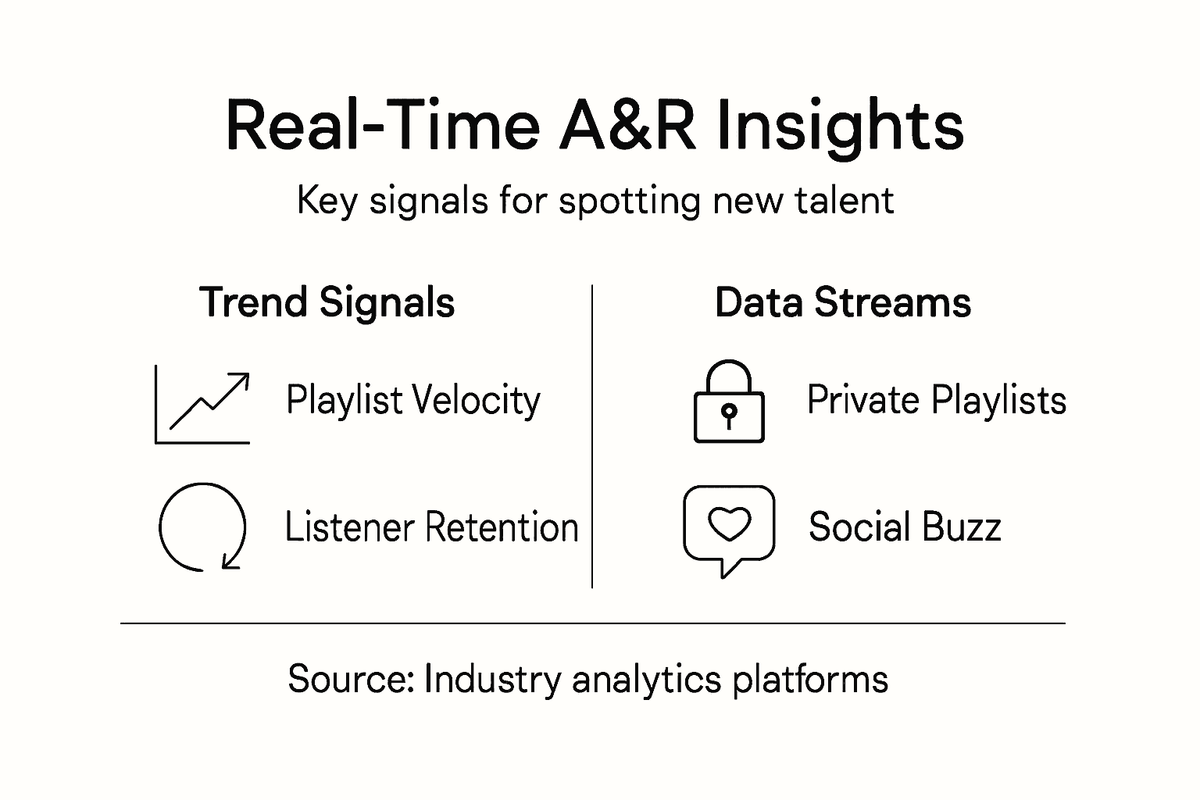
A&R professionals must develop nuanced predictive models that capture the subtle dynamics of musical discovery. This means looking beyond raw streaming numbers to understand the qualitative aspects of listener connection. An artist's ability to generate passionate, repeat listening behavior, create viral moments, and generate organic cross-platform buzz represents a more reliable indicator of potential breakthrough than traditional metrics like total play count or geographic streaming distribution.
This summary shows key factors involved in predicting breakout artists in the digital era:
| Factor | Why It Matters | Typical Data Signal |
|---|---|---|
| Playlist Addition Velocity | Indicates rapid fan interest | Sudden spikes |
| Listener Retention | Measures repeat listen behavior | High replay rates |
| Social Media Sentiment | Captures audience advocacy | Positive mentions |
| Genre Innovation | Reveals unique stylistic blends | Diverse track styles |
Pro tip: Develop a dynamic scoring system that weights multiple data points, including playlist velocity, listener retention, cross-platform engagement, and genre innovation, to create a comprehensive breakout artist potential index.
Ethical Considerations and Data Privacy Challenges
The intersection of music analytics and data privacy represents a critical ethical frontier for A&R professionals navigating increasingly complex regulatory landscapes. Data protection and ethical guidelines demand rigorous approaches to handling listener information, ensuring that the pursuit of musical insights never compromises individual privacy rights.
Ethical music data analytics requires a multifaceted approach that balances technological innovation with fundamental privacy protections. This means implementing robust anonymization techniques that strip personal identifiers while preserving the essential behavioral insights crucial for trend analysis. The most sophisticated A&R teams develop sophisticated data governance frameworks that go beyond minimum compliance, creating transparent processes that respect listener autonomy and build trust with both artists and audiences.
The primary ethical challenges emerge from the tension between deep data insights and individual privacy rights. A&R professionals must constantly navigate complex considerations, such as obtaining meaningful consent, ensuring data security, and preventing potential misuse of personal listening information. This requires developing nuanced data collection strategies that prioritize aggregate insights over individual tracking, using advanced statistical methods that protect personal privacy while still delivering actionable intelligence about musical trends and listener behaviors.
Pro tip: Implement a comprehensive data ethics review process that includes independent privacy audits and requires explicit, granular consent mechanisms for any data collection and analysis efforts.
Integrating Real-Time Trends into A&R Strategy
Integrating real-time music trends into A&R strategy requires a sophisticated approach that leverages advanced technological capabilities. AI-powered A&R analytics tools have transformed traditional talent scouting by enabling professionals to capture nuanced insights about emerging musical landscapes with unprecedented precision and speed.
Successful integration demands a multifaceted approach that combines quantitative data analysis with qualitative understanding. A&R professionals must develop adaptive frameworks that can rapidly interpret streaming metrics, social media engagement, playlist dynamics, and geographic listening patterns. This means creating dynamic dashboards that aggregate diverse data sources, allowing instant visualization of emerging artist potential, genre transformations, and listener sentiment shifts across multiple platforms.
The most effective A&R strategies transform real-time trend data into actionable intelligence. This involves developing predictive models that can forecast potential breakout artists, identifying micro-genre developments before they become mainstream, and understanding the complex ecosystem of musical discovery. By combining machine learning algorithms with human curation, A&R teams can create more targeted, efficient talent acquisition strategies that respond quickly to rapidly changing musical landscapes.
Pro tip: Develop cross-functional teams that include data scientists, music industry veterans, and technology experts to create holistic trend analysis approaches that balance algorithmic insights with human intuition.
Unlock the Power of Real-Time Music Trends with Music24.com
The challenge for A&R professionals today lies in moving beyond intuition and public metrics to uncover authentic music discovery hidden within private playlist data. This article highlights the critical need for data-driven insights into emerging artists, genre blending, and genuine listener preferences. Music24.com responds directly to these pain points by offering a specialized analytics platform that taps into millions of anonymized private playlists. Our technology reveals early micro-trends, influential curators, and breakout artists before they surface on traditional charts or social media.
Experience firsthand how leveraging private playlist insights can transform your talent scouting strategy. Stay ahead of evolving musical landscapes with predictive analytics, real-time playlist tracking, and comprehensive data on geographic and demographic listening patterns.

Ready to revolutionize your A&R approach with data you can trust? Explore how Music24’s unique platform provides an unfiltered look into genuine music discovery. Visit Music24.com today and start making smarter, faster, and more confident decisions in artist development.
Frequently Asked Questions
What are real-time music trends analytics?
Real-time music trends analytics involve using advanced data science techniques to understand musical preferences and listener behaviors, enabling A&R professionals to gain insights into emerging artists and genre transformations.
How do playlists impact music trends?
Playlists play a significant role in shaping music trends by offering different mechanisms for artist discovery and listener engagement, such as editorial playlists, personalized recommendations, and user-generated selections, each affecting artist visibility and genre exploration.
Why is private playlist data important for discovering new artists?
Private playlist data reveals authentic listener preferences and behaviors, offering A&R professionals insights into emerging genres and artist potentials that public metrics often overlook, allowing for more informed decisions in talent scouting.
How can A&R professionals predict breakout artists effectively?
A&R professionals can predict breakout artists by analyzing factors such as playlist addition velocity, listener retention rates, social media sentiment, and genre innovation, allowing them to identify artists who are capturing audience engagement before they hit mainstream recognition.
Recommended
- 7 Music Micro-Trend Examples Every Industry Exec Should Know - Blog - Music24.com
- Industry Terms in Music Analytics: What Drives A&R Success - Blog - Music24.com
- Music Micro-Trends: Unlocking Early Industry Insights - Blog - Music24.com
- Understanding Music Data Trends Explained for Industry Leaders - Blog - Music24.com
Get your music heard. Skip the content grind.
Add a song. Music24 makes the posts and the videos, plans your release and publishes it on every channel. Free for 7 days on the Pro plan, no card.