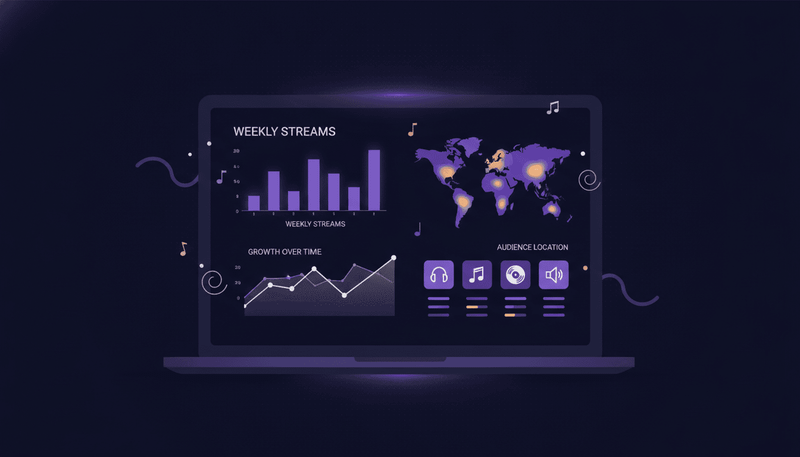
Types of Music Discovery Metrics Impacting A&R Decisions
Types of music discovery metrics explained: private playlist analysis, genre crossover trends, and curator influence for data-driven talent scouting.

Most American music executives would be surprised to learn that over 80 percent of breakout artists are first spotted using unconventional metrics, not raw streaming numbers. With so much riding on discovering the next big act, understanding how data uncovers real talent has never been more important. This guide cuts through the common myths and reveals how modern music discovery metrics transform guesswork into confident decisions, helping you recognize cultural impact and genuine audience connection before the buzz goes mainstream.
Table of Contents
- Music Discovery Metrics: Core Definitions And Myths
- Major Types Of Music Discovery Metrics Today
- Private Playlist Analytics Vs. Public Metrics
- Identifying Genre Blends And Micro-Trends
- Influence Of Playlist Creators In Discovery
- Practical Risks And Missteps In Metric Reliance
Key Takeaways
| Point | Details |
|---|---|
| Understanding Music Discovery Metrics | A&R professionals rely on nuanced music discovery metrics that analyze listener behavior, providing deeper insights than surface-level streaming numbers. |
| Role of Private Playlist Analytics | Private playlist data offers authentic insights into listener engagement, revealing genuine artist potential that public metrics may overlook. |
| Importance of Playlist Creators | Playlist creators serve as critical influencers in music discovery, helping to expose emerging artists and shape listener preferences through curated selections. |
| Risks of Overreliance on Metrics | A&R teams must balance quantitative data with qualitative insights to avoid missing out on artists with unique cultural significance due to metric misinterpretation. |
Music Discovery Metrics: Core Definitions and Myths
Music discovery metrics represent the complex analytical techniques that A&R professionals use to understand emerging artist potential beyond traditional streaming numbers. These metrics transform raw data into actionable insights that predict an artist's trajectory and cultural resonance. Modern music industry professionals recognize that understanding music discovery beyond surface-level social metrics requires a nuanced, multidimensional approach.
At the core of music discovery metrics are several key performance indicators that reveal an artist's authentic engagement and growth potential. Private playlist inclusion, cross-genre streaming rates, and curator network penetration represent critical measurement points that signal genuine audience connection. These metrics go far beyond simple play counts, diving deep into listener behavior patterns that indicate genuine musical interest and potential cultural impact.
Common myths surrounding music discovery metrics often mislead industry professionals. Many incorrectly assume that viral social media moments or massive streaming numbers automatically translate to sustainable artist success. In reality, top music analytics metrics reveal more complex patterns of audience development. Successful A&R teams understand that consistent audience growth, authentic listener retention, and strategic playlist penetration matter significantly more than momentary digital popularity.
The most sophisticated music discovery metrics combine quantitative data with qualitative insights. These advanced approaches analyze not just how many people listen, but how listeners interact with music across different platforms, genres, and cultural contexts. Emerging technologies now enable unprecedented depth of musical trend analysis, allowing industry professionals to identify breakthrough artists with greater precision and confidence than ever before.
Major Types of Music Discovery Metrics Today
Music discovery metrics have evolved dramatically, transforming how A&R professionals identify and evaluate emerging musical talent. Music discovery technology now encompasses multiple sophisticated analytical approaches that go far beyond traditional streaming data analysis. These metrics are strategically designed to capture nuanced audience engagement patterns and predict potential artist breakthrough moments.
The primary categories of music discovery metrics include quantitative streaming indicators, audience interaction metrics, and curator network penetration measurements. Quantitative streaming indicators track raw numerical data like total plays, skip rates, and listener retention. Audience interaction metrics dive deeper, analyzing how listeners engage with music across platforms - measuring factors like playlist additions, share frequencies, and cross-genre listening behaviors. Curator network penetration measurements examine how artists gain traction among influential playlist creators and music tastemakers.
Advanced music discovery metrics increasingly incorporate predictive analytics and behavioral pattern recognition. These approaches analyze complex listener data to forecast potential artist trajectories, identifying not just current popularity but future growth potential. Some cutting-edge metrics now track micro-trends in listener behavior, examining how music spreads through niche communities and underground networks before reaching mainstream recognition.
Interestingly, these metrics mirror broader data analysis techniques used in other fields. Much like alternative measurement approaches in academic research that assess impact through diverse online indicators, music discovery metrics now provide multi-dimensional insights into artistic potential. By combining quantitative data with qualitative behavioral analysis, A&R professionals can make more informed decisions about artist development, marketing strategies, and talent investment.
Private Playlist Analytics vs. Public Metrics
Private playlist analytics represent a revolutionary approach to music discovery that fundamentally challenges traditional public metrics. Comprehensive research on private playlist data reveals critical insights that escape conventional streaming analytics. These private playlist metrics capture authentic listener behavior in ways that public metrics cannot, providing a more nuanced understanding of musical engagement and artist potential.
The key distinctions between private playlist analytics and public metrics lie in their depth and authenticity. Public metrics typically focus on aggregate streaming numbers, total plays, and visible social media interactions. In contrast, private playlist analytics delve into more intimate listener behaviors - examining how individuals curate personal music collections, create thematic playlists, and share music within closed networks. Social interactions profoundly influence music discovery processes, with peer networks playing a crucial role in how listeners explore and adopt new musical content.

Advanced private playlist analytics offer unprecedented granularity in understanding audience behavior. These metrics track listener preferences across multiple dimensions, including genre-crossing tendencies, mood-based playlist construction, and niche musical exploration patterns. By analyzing private playlist data, A&R professionals can identify emerging artists and trends months before they become visible through traditional public metrics. The most sophisticated analytics platforms now use machine learning to predict potential breakout artists by examining intricate playlist inclusion patterns and listener behavior trends.
The paradigm shift from public to private playlist metrics represents a fundamental transformation in music discovery methodologies. Traditional metrics often create a misleading feedback loop, where popularity breeds more popularity. Private playlist analytics cut through this noise, revealing genuine listener connections and authentic musical preferences. This approach allows music industry professionals to identify truly innovative artists and emerging genre-blending trends that might otherwise remain hidden beneath surface-level streaming statistics.
Identifying Genre Blends and Micro-Trends
Identifying genre blends and micro-trends represents a sophisticated challenge for modern music industry professionals. Emerging music trend analysis techniques now leverage advanced computational methods to uncover nuanced musical transformations that traditional metrics might overlook. These approaches go beyond surface-level categorizations, revealing intricate connections between seemingly disparate musical styles.
Music information retrieval has become a critical discipline in understanding these complex musical intersections. Innovative path-based similarity measures now utilize sophisticated knowledge graph techniques to map intricate relationships between musical genres and emerging artistic styles. These advanced analytical approaches allow A&R professionals to identify subtle genre blending patterns, tracking how musical innovations emerge and spread across different listener communities. Micro-trends are no longer random occurrences but can be systematically tracked and predicted through sophisticated data analysis techniques.
The interdisciplinary nature of music information retrieval brings together experts from musicology, psychology, and machine learning to decode complex musical trends. This holistic approach enables a more nuanced understanding of how musical genres evolve and intersect. Advanced algorithms now analyze multiple dimensions of musical data - including rhythmic patterns, instrumental combinations, lyrical themes, and listener behavior - to identify emerging genre blends that might otherwise go unnoticed.
For A&R professionals, understanding genre blends and micro-trends means moving beyond traditional categorization. It requires embracing a dynamic view of musical creativity where genre boundaries become increasingly fluid. The most successful industry professionals now use predictive analytics to identify emerging musical fusion points, tracking how niche sounds gradually influence mainstream musical production. This approach allows for early identification of breakthrough artists who are pushing traditional genre boundaries and creating entirely new musical expressions.
Influence of Playlist Creators in Discovery
Playlist creators have emerged as pivotal gatekeepers in the modern music discovery ecosystem, wielding unprecedented influence over artist exposure and listener preferences. Understanding the nuanced types of playlist curators reveals a complex landscape of musical tastemaking that extends far beyond traditional radio and media channels. These digital curators serve as critical intermediaries between emerging artists and potential audiences.
The profound impact of playlist creators is deeply rooted in social network dynamics. Comprehensive research on music discovery processes demonstrates that social interactions significantly shape how listeners explore and adopt new musical content. Influential playlist creators function as sophisticated music recommendation engines, their carefully curated selections acting as powerful discovery mechanisms that can rapidly elevate an unknown artist to mainstream recognition. Different curator types - ranging from algorithmic platform playlists to niche genre enthusiasts - each contribute unique pathways for musical exploration.
Advanced analytics now enable A&R professionals to map the intricate networks of playlist creators, tracking their influence across different listener demographics and musical genres. Curator influence metrics go beyond simple follower counts, examining complex factors like playlist retention rates, cross-genre propagation, and listener engagement patterns. Some playlist creators specialize in specific microgenres, while others demonstrate remarkable ability to introduce listeners to entirely new musical landscapes, making them invaluable resources for identifying emerging talent.

The strategic importance of playlist creators cannot be overstated. They represent a dynamic, decentralized discovery mechanism that challenges traditional music promotion models. By understanding and cultivating relationships with key playlist creators, A&R teams can gain unprecedented insights into emerging musical trends, identify breakthrough artists before they reach mainstream attention, and develop more targeted, effective artist development strategies.
Practical Risks and Missteps in Metric Reliance
The music industry's increasing dependence on data analytics presents a nuanced challenge for A&R professionals navigating the delicate balance between quantitative insights and creative intuition. Strategic evolution in A&R demands a sophisticated approach to talent discovery that goes beyond simplistic metric interpretation. Overreliance on numerical data can create dangerous blind spots that obscure genuine artistic potential.
Metric misinterpretation represents a critical risk in modern music talent evaluation. Streaming numbers, engagement rates, and algorithmic predictions can provide valuable insights, but they frequently fail to capture the intangible qualities that transform an artist from technically proficient to culturally significant. Algorithmic bias can inadvertently create feedback loops that prioritize formulaic musical approaches over truly innovative artistic expression. Some metrics accidentally penalize artists who operate outside mainstream listener expectations, potentially suppressing groundbreaking musical innovations.
The most sophisticated A&R professionals understand that metrics are tools, not definitive verdicts. Advanced talent discovery requires a holistic approach that combines quantitative data with qualitative assessment. This means looking beyond raw numbers to understand an artist's unique storytelling capacity, emotional resonance, and potential for cultural impact. Metrics should inform decision-making, not replace human judgment - they are signposts, not absolute navigation instructions.
Ultimately, successful metric utilization demands intellectual humility and continuous learning. A&R teams must remain adaptable, recognizing that today's predictive models will inevitably become tomorrow's outdated frameworks. The most valuable skill is maintaining a balanced perspective that respects both data-driven insights and the fundamentally unpredictable nature of artistic creativity. Metrics can illuminate potential, but they can never fully capture the mysterious alchemy that transforms a talented performer into a transformative cultural icon.
Where Music24 fits
Music24 reads millions of public playlists and charts every day. Its public data shows which playlists add songs like the ones you work with, which tracks and artists are gaining playlists fastest in a genre, and the countries where that genre grows. Follow the artists, tracks and playlists you care about and get an email when they move.
Start free with Music24: 7 days of the Pro plan, no card, then a Free plan for as long as you like.
Frequently Asked Questions
What are music discovery metrics?
Music discovery metrics are analytical techniques used by A&R professionals to evaluate emerging artists beyond traditional streaming data. They provide insights into an artist's growth potential and audience engagement.
How do private playlist analytics differ from public metrics?
Private playlist analytics provide deeper insights into listener behavior by examining personal music curation and sharing within closed networks, while public metrics focus on aggregate streaming numbers and visible social media interactions.
What role do playlist creators play in music discovery?
Playlist creators act as influential gatekeepers, helping to expose new artists to wider audiences through curated selections. Their influence can significantly elevate emerging talent within specific listener demographics.
Why should A&R professionals be cautious about relying solely on metrics?
Overreliance on metrics can obscure an artist's true potential by favoring popular trends over innovative artistry. A balanced approach that combines quantitative insights with qualitative assessment is crucial for effective talent evaluation.
Recommended
Get your music heard. Grow the fans who stay.
Add a song. music24 makes the posts and the videos, plans your release and publishes it on every channel. Free for 7 days on the Pro plan, no card.