
Nearly 90 percent of american music industry leaders say early detection of emerging tracks shapes their biggest success stories. In a digital world where new songs surface every minute, understanding the beats behind listener choices can mean everything for professionals hunting the next breakout artist. This guide unlocks how playlist trend detection reveals authentic patterns, giving you the clarity to spot true shifts in american music taste long before they land in the spotlight.
Table of Contents
- Defining Playlist Trend Detection And Its Purpose
- Types Of Playlist Data: Public Vs Private
- How Playlist Trend Detection Works Technically
- Influence Of Curators And Algorithmic Discovery
- Real-World Applications For Music Professionals
- Risks, Challenges, And Common Misconceptions
Key Takeaways
| Point | Details |
|---|---|
| Playlist trend detection offers a competitive edge | By analyzing private playlists, music professionals can identify emerging artists and trends before they become mainstream. |
| Public vs private playlists | Public playlists are openly shared, whereas private playlists provide deeper insights into genuine listener preferences and behaviors. |
| Advanced analytics enhance artist development | Machine learning algorithms uncover complex listening patterns, assisting in targeted marketing and strategic placements. |
| Human creativity complements algorithmic data | A balance between human intuition and data-driven insights enriches music discovery, promoting nuanced recommendations. |
Defining Playlist Trend Detection and Its Purpose
Playlist trend detection represents a sophisticated analytics approach that allows music industry professionals to uncover emerging musical patterns before they become mainstream. At its core, this methodology involves analyzing millions of anonymized private playlists to identify authentic music discovery trajectories that traditional public metrics might overlook. By examining the intricate ways listeners curate and share music, professionals can gain unprecedented insights into evolving listener preferences.
The primary purpose of playlist trend detection goes far beyond simple data collection. Music trend analysis enables record labels, artist managers, and A&R teams to predict emerging artists, understand genre blending patterns, and develop targeted marketing strategies. These insights are critical in an increasingly competitive music landscape where early identification of rising talent can make the difference between discovering the next breakthrough artist or missing a significant opportunity. Playlist Analysis Explained: Uncovering Music Discovery Trends provides deeper context into these advanced analytical techniques.
Specifically, playlist trend detection accomplishes several key objectives:
- Identifies emerging artists before they appear on public charts
- Reveals micro-geographic music preferences and genre fusion trends
- Highlights influential playlist curators who drive music discovery
- Provides predictive analytics about listener behavior and musical taste evolution
By leveraging anonymized private playlist data, music professionals can transform how they approach artist discovery and audience engagement. Unlike traditional metrics that rely solely on public streaming numbers, playlist trend detection offers a more nuanced, forward-looking perspective on musical ecosystems. This approach represents a paradigm shift in understanding how music spreads, transforms, and captures listener imagination across diverse communities and genres.
Types of Playlist Data: Public vs Private
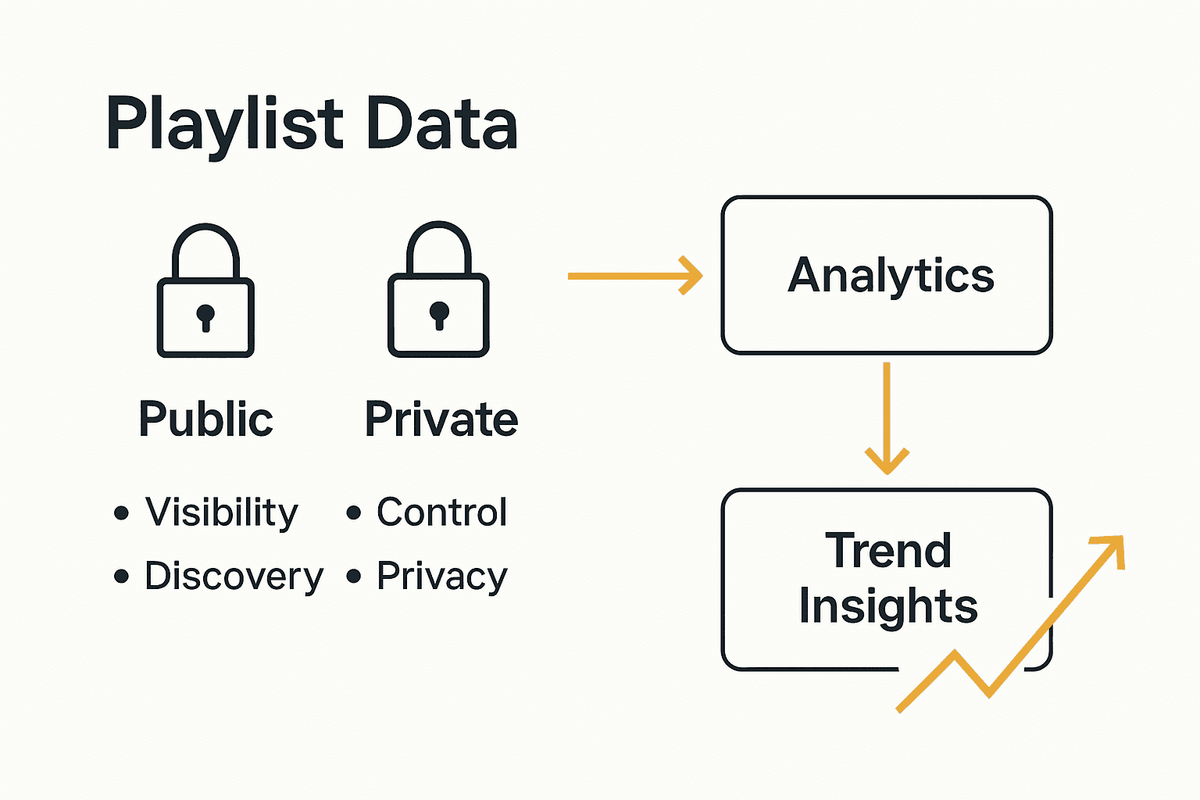
In the music analytics ecosystem, playlist data is fundamentally categorized into two distinct types: public and private playlists. Public playlists are those shared openly on streaming platforms, visible to everyone and typically representing curated collections that artists and listeners intentionally make discoverable. These playlists often appear in platform recommendations, genre charts, and are easily accessible to anyone searching for music compilations.
Private playlist data, by contrast, represents a significantly more nuanced and valuable resource for music industry professionals. These are personal collections created by individual users that are not publicly visible, offering a raw and unfiltered perspective on listener behavior. Understanding Private Playlist Data Explained highlights how these hidden collections can reveal genuine music discovery patterns that public metrics frequently miss. Private playlists provide insights into authentic listener preferences, without the potential bias introduced by social visibility or algorithmic recommendations.

Key differences between public and private playlist data include:
- Visibility: Public playlists are discoverable, private playlists remain hidden
- Authenticity: Private playlists reflect true listener choices without external influence
- Depth of Insight: Private data offers deeper psychological understanding of music consumption
- Trend Predictability: Private playlists often signal emerging trends before they become mainstream
The true power of playlist trend detection lies in aggregating and analyzing these private playlist collections. By examining millions of anonymized personal playlists, music professionals can uncover micro-trends, genre intersections, and listener behaviors that traditional public metrics cannot capture. This approach transforms raw data into actionable intelligence, enabling more strategic artist development, targeted marketing, and precise audience understanding.
How Playlist Trend Detection Works Technically
Playlist trend detection leverages advanced machine learning and data analytics techniques to transform millions of anonymized playlist collections into actionable musical insights. Algorithmic analysis sits at the core of this process, employing sophisticated neural network models that can identify complex patterns in music consumption across diverse listener groups. How to Analyze Playlist Data for Early Music Trends provides deeper context into these intricate analytical approaches.
Researchers have developed innovative methods for understanding playlist dynamics. According to arXiv, advanced reinforcement learning techniques can now treat playlist generation as a sophisticated language modeling problem, enabling more nuanced interpretation of music selection patterns. This approach allows analysts to decode the subtle psychological mechanisms behind playlist curation, moving beyond simple track-by-track analysis to understand the deeper narrative and emotional architecture of music collections.
Key technical components of playlist trend detection include:
- Machine learning algorithms that identify complex track relationship patterns
- Neural network models for predicting listener preferences
- Statistical analysis of playlist composition and track transitions
- Anonymized data aggregation and pattern recognition techniques
The technical process involves multiple sophisticated stages. First, raw playlist data is collected and anonymized to protect user privacy. Then, advanced machine learning models analyze track relationships, transition patterns, and contextual metadata. arXiv highlights how recurrent neural networks can model optimal track transitions, providing unprecedented insights into the subtle musical connections that drive listener engagement. By examining millions of playlists simultaneously, these algorithms can uncover micro-trends and emerging musical patterns that traditional analytics methods would completely miss.
Influence of Curators and Algorithmic Discovery
The landscape of music discovery is fundamentally shaped by two powerful forces: human curators and sophisticated algorithms. Playlist curation represents a nuanced art form where individual tastemakers and algorithmic systems intersect, creating complex pathways for musical exploration. Role of Music Curators: Complete Industry Guide illuminates the intricate dynamics of this evolving ecosystem.
Research from Elsevier reveals that playlist features like titles and visual aesthetics significantly influence user engagement, demonstrating how curation extends beyond mere track selection. According to SpringerLink, the most compelling playlists balance objective track similarities with the subjective, psychological intentions of their creators, challenging simplistic algorithmic approaches.
Key dynamics in curator and algorithmic discovery include:
- Human curators providing contextual and emotional intelligence
- Machine learning algorithms detecting subtle musical patterns
- Personalization through hybrid recommendation systems
- Balancing data-driven insights with creative musical storytelling
The most effective music discovery platforms now blend human intuition with computational precision. Algorithmic systems analyze millions of listening patterns, while human curators inject critical contextual understanding that pure data cannot capture. This symbiotic relationship allows for more nuanced, emotionally resonant music recommendations that go beyond traditional genre boundaries and predictable listening experiences.
Real-World Applications for Music Professionals
Playlist trend detection has transformed how music industry professionals discover, develop, and market talent. Strategic music analytics now provide unprecedented insights that enable more precise decision-making across artist management, record label operations, and marketing strategies. Understanding the Benefits of Music Analytics offers deeper context into these revolutionary approaches.
Research from Archives ISMIR demonstrates the sophisticated potential of playlist analytics by analyzing over 400,000 playlists to understand complex human curation strategies. According to EPJ Data Science, playlist characteristics profoundly impact user engagement, providing music professionals with actionable insights into listener preferences and emerging trends.
Key real-world applications include:
- A&R talent scouting and early artist identification
- Targeted marketing campaign development
- Predictive audience behavior modeling
- Strategic playlist placement and curation
- Emerging genre and subgenre trend mapping
Music professionals now leverage playlist trend detection as a critical competitive intelligence tool. By understanding granular listener behaviors, record labels can make data-driven decisions about artist development, marketing investments, and strategic collaborations. These insights allow for more nuanced, targeted approaches that go beyond traditional metrics, transforming how the music industry identifies, nurtures, and promotes emerging musical talent.
Risks, Challenges, and Common Misconceptions
Playlist trend detection, while powerful, is not a monolithic or infallible approach to music analytics. Data interpretation complexity presents significant challenges that music professionals must carefully navigate. Understanding Types of Music Data and Their Importance illuminates the nuanced landscape of these analytical challenges.
Research from SpringerLink underscores the inherent subjectivity in data collection, highlighting that playlist creation involves deeply personal and contextual decision-making processes that cannot be entirely captured by algorithmic approaches. This subjective nature means that playlist trend detection should be viewed as a complementary tool rather than an absolute predictive mechanism.
Key risks and challenges in playlist trend detection include:
- Potential bias in data collection and interpretation
- Over-reliance on algorithmic recommendations
- Privacy concerns with anonymized user data
- Difficulty capturing nuanced emotional and cultural contexts
- Rapidly changing listener behaviors and preferences
Common misconceptions about playlist trend detection can lead to strategic missteps. Many professionals mistakenly believe these tools provide definitive predictions, when in reality, they offer sophisticated insights that require human interpretation. Successful implementation demands a balanced approach that combines technological analytics with human creativity, cultural understanding, and strategic intuition. The most effective music professionals use these tools as sophisticated navigational aids, not as absolute roadmaps.
Unlock the Future of Music with Advanced Playlist Trend Detection
Music professionals face the challenge of spotting emerging artists and shifting listener preferences before the crowd catches on. This article highlights how traditional public metrics fall short and why understanding private playlist data is essential. If your goal is to uncover authentic music discovery paths, predict rising genres, and engage audiences with precision, then embracing sophisticated analytics is no longer optional. Recognize the power of anonymized private playlists and playlist curation dynamics to gain the competitive edge you need.
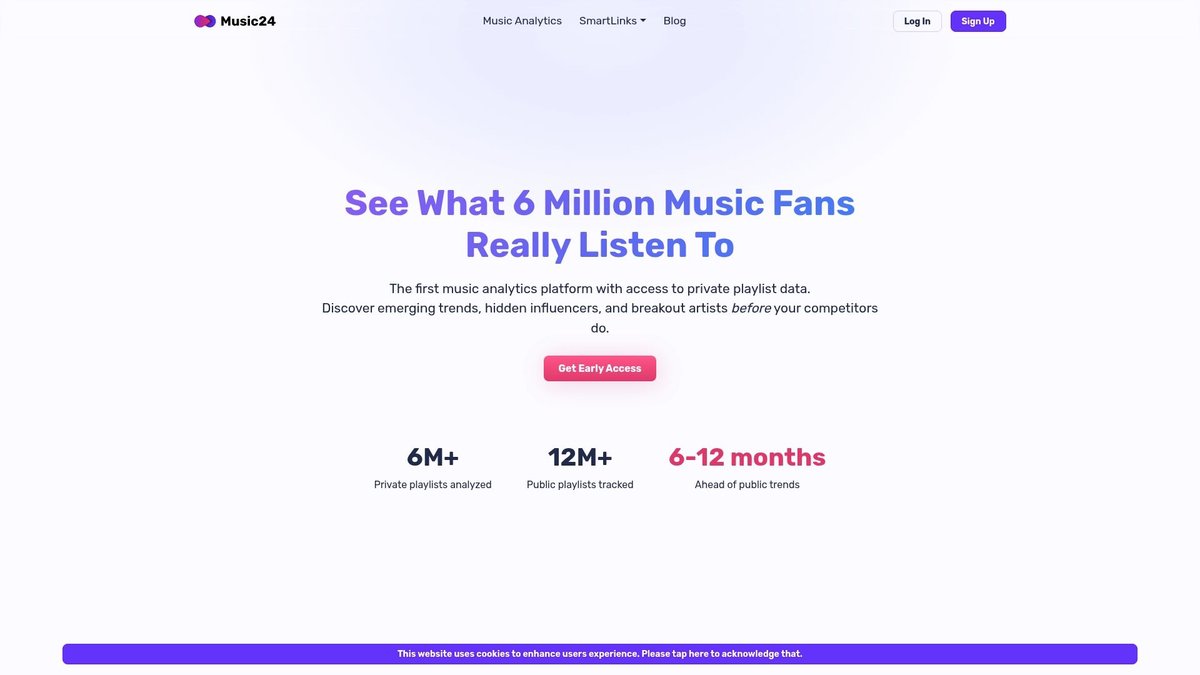
Take control of your music strategy today by partnering with Music24.com. Our platform specializes in analyzing millions of private playlists to reveal micro-trends, influential curators, and promising artists before they hit public charts. Start making informed A&R decisions, refine targeted marketing campaigns, and stay ahead of rapidly changing listener behaviors. Don't wait until mainstream data catches up—discover how playlist trend detection can revolutionize your approach and explore deeper insights on understanding private playlist data. Visit Music24.com now to transform your music analytics and prediction capabilities.
Frequently Asked Questions
What is playlist trend detection?
Playlist trend detection is an analytics approach that helps music professionals uncover emerging musical patterns by analyzing anonymized private playlists. It provides insights into music discovery trajectories that traditional metrics may overlook.
How does playlist trend detection benefit music industry professionals?
Playlist trend detection enables record labels, artist managers, and A&R teams to predict emerging artists, understand genre blending patterns, and develop targeted marketing strategies, giving them a competitive edge in the music landscape.
What are the differences between public and private playlist data?
Public playlists are openly shared and visible to everyone, while private playlists are personal collections created by users that remain hidden. Private playlists offer more authentic insights into listener preferences as they reflect true choices without external influences.
What technologies are used in playlist trend detection?
Playlist trend detection utilizes advanced machine learning and data analytics techniques, including neural networks and algorithmic analysis, to identify complex patterns in music consumption and predict listener preferences.
Recommended
- Playlist Analysis Explained: Uncovering Music Discovery Trends - Blog - Music24.com
- Understanding What is Playlist Data and Its Impact - Blog - Music24.com
- Understanding Playlist Data Analysis Guide for Music Pros - Blog - Music24.com
- How to Analyze Playlist Data for Early Music Trends - Blog - Music24.com

