
Private playlist data is often misunderstood as completely inaccessible to music industry professionals, but that's a misconception. In reality, specialized analytics platforms aggregate and anonymize millions of private playlists to reveal authentic listener behavior patterns. This data provides A&R executives, artist managers, and label representatives with early signals of emerging artists and trends that public metrics miss entirely. Unlike public playlist data that reflects curator choices and mainstream popularity, private playlist insights show what listeners genuinely save, replay, and cherish in their personal collections. Understanding how to leverage this resource gives professionals a competitive edge in discovering breakout talent before the market catches on.
Table of Contents
- Understanding Private Playlist Data And Access Methods
- Key Benefits Of Private Playlist Data For Emerging Artist Discovery
- Limitations And Ethical Considerations In Private Playlist Data Use
- Applying Private Playlist Data Insights: Benchmarks And Comparative Value
- Explore Music24 For Private Playlist Data Insights
- FAQ
Key takeaways
| Point | Details |
|---|---|
| Private data reveals authentic engagement | Aggregated anonymized metrics show real listener intent through saves, adds, and retention rates |
| Early artist discovery advantage | Professionals spot emerging talent before public charts reflect popularity |
| Niche trend identification | Private playlists highlight genre crossover and micro-trends missed by mainstream metrics |
| Ethical anonymization required | Platforms must aggregate data to protect privacy while delivering actionable insights |
| Multi-metric approach recommended | Combine private playlist signals with public data and curator analysis for balanced decisions |
Understanding private playlist data and access methods
Private playlist data refers to aggregated, anonymized metrics derived from user-created playlists that remain visible only to their creators. Unlike public playlists that anyone can discover and follow, private collections represent personal music choices free from social influence or curation pressure. This distinction matters because private playlists reveal authentic listener preferences rather than performative sharing behavior.
Music professionals access this data through specialized analytics platforms that collect and analyze millions of private playlists while maintaining strict anonymization protocols. These platforms aggregate behavioral patterns across vast user bases, transforming individual listening habits into trend signals and artist discovery opportunities. The process protects individual privacy by removing personally identifiable information while preserving the valuable insights that help industry professionals make informed decisions.
Key differences between public and private playlist data shape their respective values:
- Public playlists reflect curator taste, editorial choices, and social sharing dynamics
- Private playlists show unfiltered listener preferences and genuine engagement patterns
- Public data indicates mainstream acceptance while private data predicts emerging interest
- Private metrics reveal high-intent behaviors like library adds and repeated plays
Anonymization serves as the foundation for ethical data use in this context. Streaming services and analytics platforms design their data sharing policies to balance insight generation with user privacy rights. Aggregated data removes individual identifiers while maintaining statistical significance across large sample sizes. This approach allows professionals to identify trends without compromising listener trust or violating privacy regulations.
Common metrics derived from private playlist analysis include save rates, library addition frequency, track retention duration, playlist update patterns, and genre mixing behaviors. These indicators provide deeper context than simple play counts or skip rates. For instance, when thousands of users independently add the same emerging artist to their private collections within a short timeframe, that signal suggests authentic discovery momentum rather than algorithmic promotion or paid placement.
Pro Tip: Focus on private playlist insights that show sustained engagement over multiple weeks rather than single-day spikes, which often indicate promotional pushes rather than organic growth.
The technical infrastructure supporting private playlist analytics involves continuous data ingestion from streaming platforms, pattern recognition algorithms, and trend detection systems. These platforms process millions of playlist updates daily, identifying statistically significant changes in listener behavior across demographics, regions, and genres. The resulting insights help A&R teams prioritize which emerging artists deserve deeper investigation and resource allocation.
Key benefits of private playlist data for emerging artist discovery
Private playlist data delivers tangible advantages for music industry professionals seeking to identify breakout artists before mainstream recognition occurs. The most significant benefit lies in revealing high-intent listener behaviors that indicate genuine fan development rather than passive consumption. When users actively save tracks to their personal libraries and create dedicated playlists around specific artists, those actions demonstrate stronger engagement than background streaming or algorithmic exposure.
Predictive power represents another critical advantage. Private playlist metrics often show artist growth signals weeks or months before public playlists, radio play, or social media buzz reflect similar trends. This temporal advantage allows A&R executives to approach promising artists earlier in their development, potentially securing more favorable deal terms and building relationships before bidding wars emerge. Early identification also enables labels to provide strategic support during crucial growth phases.
The benefits for artist discovery and trend prediction include:
- Identification of sustainable audience building through consistent private playlist additions over time
- Detection of genre crossover potential when artists appear in diverse private collections
- Geographic trend mapping showing regional interest before national breakthrough
- Curator influence assessment by tracking which private playlist creators drive discovery
- Engagement depth measurement through playlist position, update frequency, and retention metrics
Genre blending insights emerge naturally from private playlist analysis. When listeners combine artists from different genres in their personal collections, those patterns reveal authentic crossover appeal that marketing teams can leverage. This information proves especially valuable for positioning artists in multiple market segments and identifying unexpected collaboration opportunities that resonate with actual listener preferences.
Private playlist data also helps distinguish between viral moments and lasting career potential. An artist might generate millions of streams through a single viral track, but private playlist metrics reveal whether listeners engage with the full catalog or only the hit song. This distinction matters enormously for investment decisions, as sustainable careers require deeper fan connections than one-off viral success provides.
Pro Tip: Track the ratio of private playlist saves to public streaming numbers for emerging artists to identify those building dedicated fanbases rather than passive audiences.
Listener engagement patterns visible through private playlist data include update frequency, playlist theme coherence, and track sequencing choices. When users regularly update playlists featuring specific artists, that behavior signals active fandom rather than algorithmic discovery. Similarly, playlist context matters because placement alongside established artists in well-maintained collections indicates perceived quality and stylistic alignment that A&R teams can use for positioning decisions.

The competitive advantage extends beyond artist discovery to marketing strategy development. Understanding which private playlist themes and contexts feature emerging artists helps labels craft targeted campaigns that resonate with existing fan behaviors. Rather than guessing at audience preferences, professionals can align promotional efforts with demonstrated listener patterns, improving campaign efficiency and conversion rates.
Limitations and ethical considerations in private playlist data use
While private playlist data offers significant advantages, professionals must understand its limitations and navigate ethical considerations carefully. The most fundamental constraint involves privacy protection requirements. Streaming platforms anonymize all shared data to prevent individual listener identification, which means professionals cannot access specific user information or directly contact playlist creators. This anonymization protects consumer privacy but limits the granularity of insights available for analysis.
Echo chamber risks emerge when organizations rely exclusively on private playlist signals without incorporating diverse data sources. If an analytics platform primarily captures data from specific demographic segments or geographic regions, the resulting insights may not represent broader market dynamics. This sampling bias can lead to misallocated resources and missed opportunities in underrepresented listener communities.
Key limitations affecting private playlist data interpretation include:
- Aggregated data masks individual listener journeys and discovery pathways
- Platform-specific behaviors may not translate across streaming services
- Anonymization prevents direct artist-to-fan relationship building
- Sample size variations affect statistical confidence in niche genres
- Temporal lag between behavior and data availability ranges from hours to days
Ethical handling mandates that analytics platforms maintain strict data governance protocols. Professionals using these insights must ensure their vendors comply with privacy regulations like GDPR and CCPA while respecting user expectations about data use. Transparency about how playlist data informs business decisions builds trust with both artists and listeners, while opacity risks backlash if data practices become public.
Streaming services design their data sharing policies to balance insight value with user privacy rights. These policies typically prohibit re-identification attempts, restrict data retention periods, and require secure handling practices. Music industry professionals must understand these constraints and structure their analytics workflows accordingly. Violating platform terms of service can result in data access termination and legal consequences.
While powerful, private data risks privacy invasion and bias; ethical anonymized aggregation is essential for sustainable use.
The risk of over-reliance on any single data source applies equally to private playlist metrics. Professionals should view these insights as one component of comprehensive artist evaluation rather than the sole decision factor. Combining private playlist signals with public streaming data, social media engagement, live performance metrics, and qualitative assessments produces more robust conclusions than isolated analysis.
Bias mitigation requires conscious effort in data interpretation. If private playlist data consistently highlights artists from specific genres, labels, or demographics, analysts must question whether those patterns reflect genuine market dynamics or sampling artifacts. Regular validation against independent data sources helps identify and correct for systematic biases that could skew investment decisions.
Consent and transparency issues deserve ongoing attention as data practices evolve. While users agree to terms of service when creating streaming accounts, many don't fully understand how their private playlist activity might inform industry decisions. Ethical practitioners consider whether current consent mechanisms adequately address these uses and advocate for clearer communication about data practices.
Applying private playlist data insights: benchmarks and comparative value
Empirical benchmarks help music professionals contextualize private playlist insights within broader industry dynamics. Research shows that longer playlists demonstrate greater genre coherence, but private playlist data remains superior for authentic discovery because it captures unfiltered listener preferences. Understanding these benchmarks allows A&R teams to set realistic expectations for emerging artist performance and identify outliers that warrant deeper investigation.
Comparing private versus public playlist data reveals complementary strengths that inform different decision types. Public playlist placement indicates curator endorsement and mainstream viability, while private playlist metrics predict grassroots fan development and organic growth potential. Smart professionals leverage both data types strategically rather than treating them as competing alternatives.
| Data Type | Primary Strength | Best Application | Limitation |
|---|---|---|---|
| Private Playlists | Authentic engagement signals | Early artist discovery | Cannot identify individual fans |
| Public Playlists | Mainstream validation | Marketing reach assessment | Reflects curator bias |
| Combined Analysis | Comprehensive view | Investment decisions | Requires sophisticated tools |
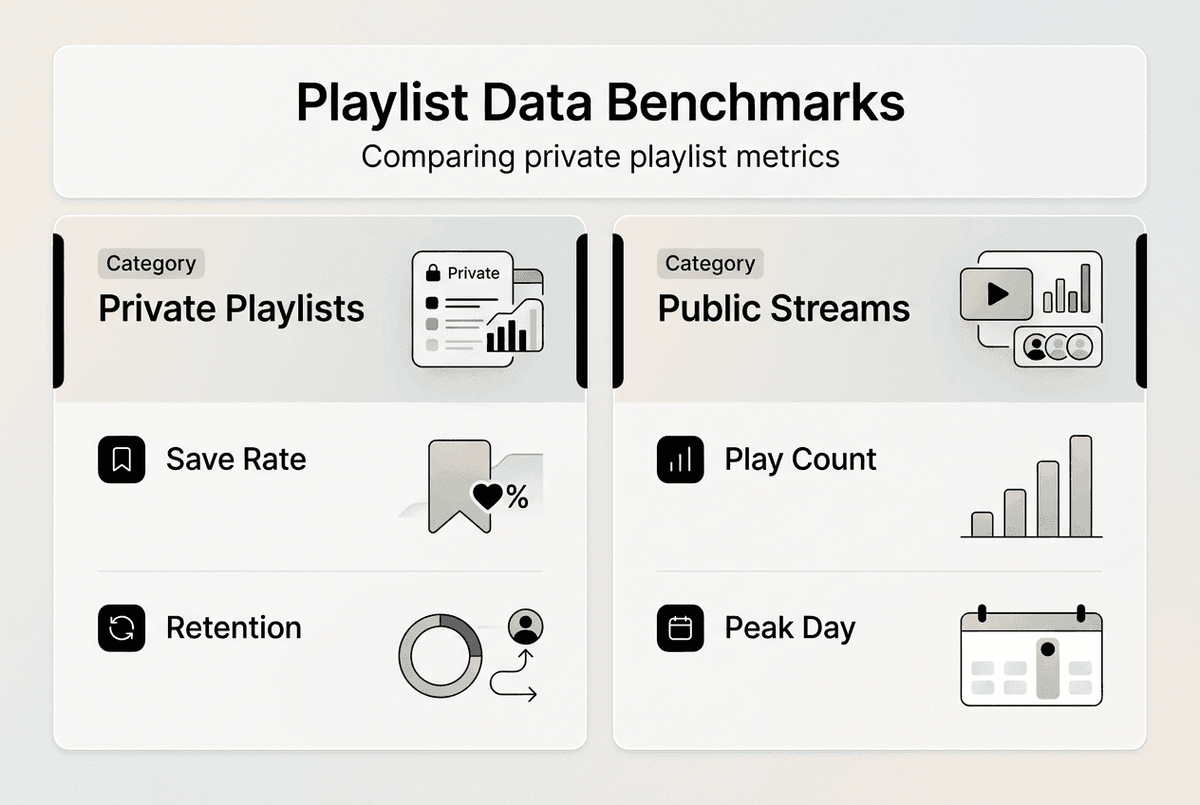
Private playlist benchmarks vary significantly across genres, with niche categories often showing higher save-to-stream ratios than mainstream pop. An emerging indie artist might achieve a 15% save rate among listeners who discover their music, while a major label pop release might see only 3% saves despite vastly higher streaming numbers. These contextual differences matter when evaluating artist potential and setting growth expectations.
Geographic variation in private playlist behavior provides actionable insights for tour routing and regional marketing strategies. If an artist shows strong private playlist penetration in specific cities or regions before achieving national recognition, that data suggests where to focus initial live performance efforts and local media outreach. This targeted approach maximizes return on promotional investment during crucial early career stages.
Temporal patterns in private playlist data reveal momentum shifts that inform release timing and campaign planning. When private playlist additions accelerate following specific events like festival performances, media features, or collaboration releases, professionals can identify which promotional tactics drive authentic fan growth versus superficial attention. This feedback loop helps optimize future marketing strategies.
Pro Tip: Establish baseline metrics for your target genres using private playlist analytics, then flag artists exceeding those benchmarks by 50% or more for priority evaluation.
Multi-metric frameworks combine private playlist signals with complementary data sources to reduce individual metric limitations. A comprehensive artist evaluation might weigh private playlist growth alongside social media follower increases, ticket sales velocity, press coverage sentiment, and streaming trajectory. This holistic approach prevents over-indexing on any single indicator while capturing diverse aspects of artist development.
The comparative value of private playlist data increases during early career phases when artists lack extensive public metrics. For completely unknown artists, a few hundred private playlist saves might represent more significant validation than thousands of passive streams. As artists gain recognition, the relative importance of private versus public metrics shifts, requiring analysts to adjust their evaluation frameworks accordingly.
Benchmarking against similar artists at comparable career stages provides useful context for growth expectations. If an emerging artist's private playlist metrics match or exceed those of established acts at similar points in their development, that comparison suggests strong potential. Conversely, lagging metrics might indicate the need for strategy adjustments or realistic expectation setting about commercial viability.
Explore Music24 for private playlist data insights
Music industry professionals seeking competitive advantages in artist discovery need tools that transform raw data into actionable insights efficiently. Music24 aggregates vast private playlist data from millions of anonymized user collections, providing A&R executives and artist managers with predictive analytics that identify emerging trends before mainstream recognition occurs. The platform's proprietary algorithms detect authentic engagement patterns across genres, regions, and listener demographics, enabling professionals to make confident investment decisions backed by comprehensive behavioral data.
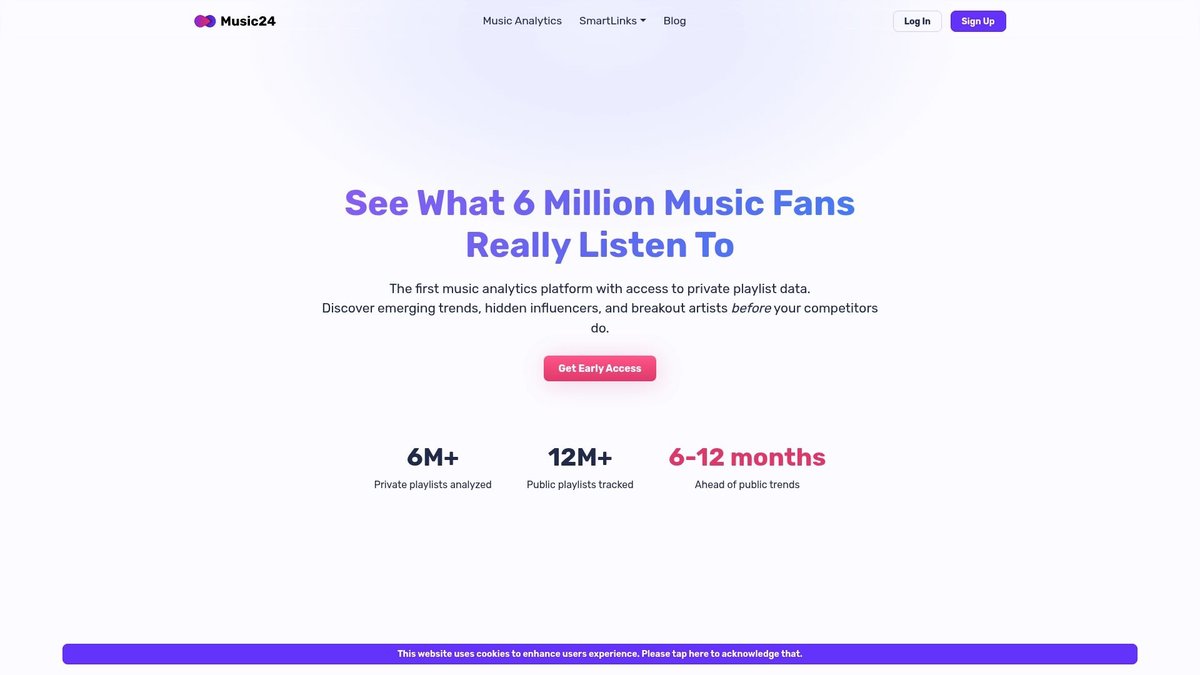
The platform delivers real-time updates as listener behaviors shift, ensuring professionals never miss critical momentum changes that signal breakout potential. By combining private playlist metrics with curator influence mapping and geographic trend analysis, Music24 offers a holistic view of artist development that single-source data cannot match. Users gain access to detailed dashboards showing save rates, library addition velocity, playlist context, and retention patterns that reveal which emerging artists deserve immediate attention.
Pro Tip: Start with Music24's platform demo to see how private playlist data integration enhances your existing discovery workflow and complements your current analytics tools.
FAQ
What is private playlist data and how is it accessed?
Private playlist data consists of aggregated, anonymized metrics derived from user-created playlists that remain visible only to their creators. Music industry professionals access this information through specialized analytics platforms that collect behavioral patterns across millions of playlists while maintaining strict privacy protections. These platforms transform individual listening habits into trend signals without revealing personal user information.
How does private playlist data benefit A&R and artist managers?
This data reveals high-intent listener engagement signals like saves, library adds, and repeated plays that predict artist growth before mainstream popularity emerges. It helps professionals identify niche trends, genre crossover potential, and authentic audience interest that public metrics often overlook. Early detection enables strategic artist outreach and resource allocation during crucial development phases.
Are there risks or ethical issues using private playlist data?
All legitimate private playlist data is anonymized and aggregated to protect individual privacy and comply with regulations. Ethical use requires transparency about data practices and avoiding over-reliance that might create echo chambers or sampling bias. Professionals must ensure their analytics vendors follow strict data governance protocols and respect platform terms of service.
How can I integrate private playlist data with other analytics for better insights?
Combine private playlist signals with public streaming metrics, social media engagement data, live performance statistics, and curator influence assessments. Use multi-factor analysis frameworks that weight different data types according to artist career stage and genre context. This comprehensive approach reduces bias while capturing diverse aspects of artist development and market potential.

