Artificial Streaming: An A&R Evidence Checklist Before You Advance a Signing
Artificial streaming shows up in diligence as an anomaly, not a verdict. This checklist records what you saw, what would explain it innocently, and what you still cannot answer before an advance leaves the building.
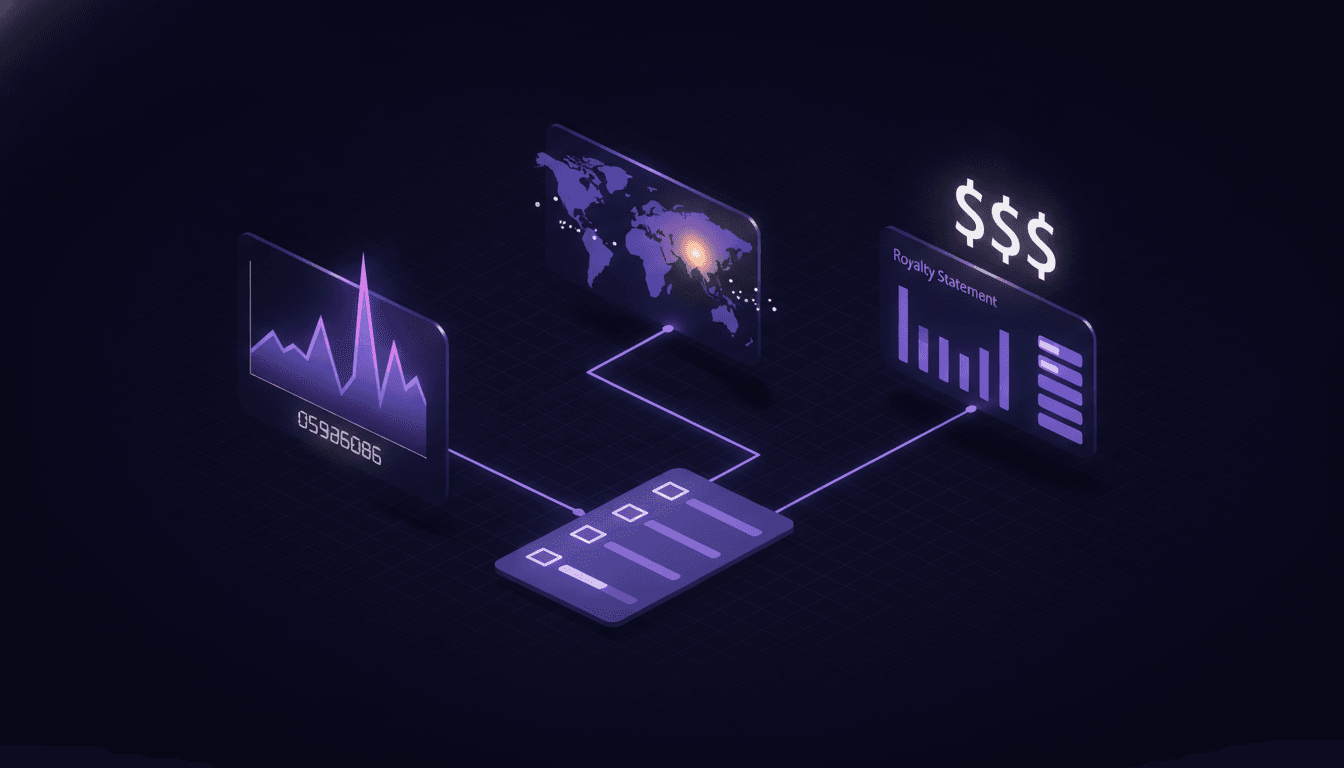
Artificial streaming reaches your desk as a shape on a chart, not as an accusation. A spike with no campaign behind it. A country that never appeared in the artist's top ten. A follower curve that climbs for four days and flattens. Spotify defines an artificial stream as one that "doesn't reflect genuine user listening intent, including any instance of attempting to manipulate streaming services like Spotify by using automated processes (like bots or scripts)". Intent is the operative word, and a dashboard never shows you intent. So the pre-signing task is narrower and more useful than detection. Write down the anomaly, write down what would explain it innocently, write down what you still cannot answer, and attach a decision to each line.
Treat artificial streaming indicators as questions to investigate
You do not need an invented trigger list. Spotify publishes one for artists reading their own data, and it works just as well as a diligence screen. The patterns it names as possible abnormal activity are:
- A sudden spike in streams for no apparent reason, followed by a drop off.
- An unexplained spike in streams from a location where the tracks have not previously been active.
- The majority of streams coming from unexplained or surprising sources, such as "Other" or a source that does not make sense for the release.
- A sudden and short-lived increase in follower growth.
Every one of those has innocent versions. A sync placement spikes a four-year-old album track and the curve falls back when the episode stops airing. A paid test in a new market produces streams from a country with no history. A large playlist rotates a song in and then out. The pattern earns a question, not a conclusion, and the answer should arrive as a document: a media invoice, a playlist link, a sync confirmation, a release-day press hit.
Keep artist responsibility separate from platform findings in your notes. Spotify acknowledges that some services drive artificial streams against an artist's will or without their knowledge, and it tells artists to report suspicious playlists their music lands on. An artist can carry a contaminated history without having bought anything. Your file should be able to say that. While you are dating the evidence, check music data latency before calling a breakout, because a reporting delay and a manipulated spike can look identical for a week.
Request artist-authorized evidence before evaluating the spike
Ask for the evidence through the artist or their manager, in writing, and log who authorized what. Do not ask for dashboard credentials. You want five things:
- Exports or screen shares of the Spotify for Artists release and audience pages covering the full anomaly window, not a single screenshot of the peak.
- The distributor royalty report for the same months.
- A written list of every promotional, PR and playlist service the artist or their team has paid, with invoices and dates.
- Any distributor warnings, penalty fees, account suspensions or takedown notices received.
- The name of the current distributor and the date the catalogue moved there, if it moved.
The royalty report matters most. Spotify states plainly that the royalty report from a label or distributor is the most accurate source of truth for understanding royalties generated from Spotify streams. A screenshot of a stream count tells you what a page displayed. A royalty line tells you what the platform paid for. If an artist team will not produce the royalty report, record that refusal as a finding and price it, because it is the one document that resolves most of the ambiguity. For the mechanics of the dashboard side, how to read Spotify for Artists stats covers what each page actually measures.
Compare geography, stream sources and campaign timing
Build one timeline and put everything on it: release dates, playlist adds and removals, paid campaign start and stop dates, sync airings, press, social clips, and the daily stream and follower curves. Most explainable spikes line up with something on that timeline within 48 hours. Most unexplainable ones sit alone.
Then run three comparisons. Does the geography match where the money and the attention went? A spike in a market with no spend, no press and no diaspora logic needs a named cause. Did the lift move across services or on one service only? Real demand usually leaves a trace on more than one platform, even an uneven one. Did saves, playlist adds and repeat listening move with the stream count, or did streams move alone?
That cross-service, cross-market baseline is the part you cannot get from the artist's own screenshots, and it is the part Music24 Signals exists to supply: competitive tracking across 12M+ artists indexed, 30+ services and 190 markets, normalised nightly into one schema. Geographic filters start on Premium. Filtering by music service, listening insights and trends, and 180 days of history sit on Pro, which is the tier that lets you look back across a whole anomaly window rather than the last fortnight. Check the Music24 pricing page against the window you actually need to audit.
When your own sources disagree with each other, resolve the disagreement before you resolve the signing. How to interpret music analytics when early discovery signals disagree sets out that order of operations.
Reconcile public counts with artist dashboards and distributor notices
Three sources exist, and they disagree by design. Treat all three as separate evidence, never as one number.
Spotify conducts daily cleaning so that confirmed artificial streams leave the public figures in the app. Public metrics, meaning an artist's monthly listener count and a track's all-time stream count, always drop confirmed artificial streaming. The private Spotify for Artists view behaves less predictably. Sometimes Spotify removes confirmed artificial streams before the dashboard refreshes. Sometimes the spike stays visible in Spotify for Artists even though the platform withheld the royalties and adjusted the public figures.
Two consequences follow, and both change what you ask for. A distributor can notify an artist about artificial streaming when nothing unusual ever appeared in Spotify for Artists. And a dashboard spike can coexist with zero royalties. Spotify also says it posts a notice on the release page or audience page when a significant discrepancy exists, so request those screens specifically rather than accepting a tidy summary.
Now price the exposure, because some of it travels with the catalogue. Spotify's policy is that confirmed artificial streams earn no royalties, count toward no public numbers or charts, and feed no recommendation algorithms. Beyond that, severity drives escalation: removal of the song from Spotify playlists, distributor action after Spotify reports the activity (warnings, a penalty fee, account suspension or removal of the music), and removal of the track from Spotify altogether where the track appears to be primarily a vehicle for artificial streaming. Since 1 April 2024 Spotify charges labels and distributors per track when it detects flagrant artificial streaming on their content, applied only at very high rates per track. Whoever holds the content relationship after your deal closes inherits that liability.
One more line belongs in the valuation model. Under the same 2024 policy set, a track must reach at least 1,000 streams in the previous 12 months to generate recorded royalties, and Spotify reports that 99.5% of all streams come from tracks above that threshold. A catalogue padded with hundreds of sub-threshold uploads is not a long tail of small payments. It is a long tail of nothing, and it is also the pattern that policy was written to discourage.
Build an evidence table for advance, investigate or pause decisions
One table, one row per anomaly, filled in before the deal meeting. The columns force the distinctions that conversation tends to blur.
| Anomaly observed | Window and source | Plausible innocent explanations | Corroboration obtained | Permission and provenance | Unresolved question | Next decision |
|---|---|---|---|---|---|---|
| Spike then drop-off over nine days | Days 12 to 21 after release, Spotify for Artists export | Playlist add that rotated off; paid social burst | Playlist add confirmed; no media invoice for the window | Manager-authorized export, dated | Who paid for the social burst, and which vendor ran it | Investigate before advance |
| 41% of streams from one market with no prior activity | Same window, cross-service comparison | Diaspora audience; untracked local radio; geo-targeted spend | No lift on other services in that market | Our own cross-market data, independent of artist | Why one service only | Pause pending royalty report |
| Follower growth of four days, then flat | Audience page, same window | Press hit; algorithmic placement | No press in the window | Manager-authorized screenshot | Whether a follower service was engaged | Written representation required |
Add a second short block for the distributor, because the industry now gives you a published baseline to ask against. On 14 September 2026 IFPI launched the Streaming Integrity Initiative, a commitment supported at launch by distributors including The Orchard, AWAL, CD Baby, FUGA, Symphonic, Ditto Music, RouteNote, Too Lost and Merlin, alongside Sony Music Group, Universal Music Group and Warner Music Group. Participating distributors commit to five practices: verify rights ownership and customer identity through rights verification and Know Your Customer checks, vet content for infringement and AI-related risk, act on suspected fraud including repeat offenders, share high-confidence fraud indicators where legally permissible, and measure and strengthen their anti-fraud systems. IFPI frames distributors as a key entry point to the digital music ecosystem, well positioned to prevent fraudulent uploads. So asking whether a prospective signing's distributor supports the initiative, and what its KYC and vetting steps are, is now a standard question rather than an awkward one.
Close the table with one of three written findings. Advance, with the anomaly and its explanation on record, so nobody relitigates it in six months. Repaper, where the numbers hold up but the exposure does not: a warranty on past promotional spend, staged payments, a reserve against per-track charges, a representation that no guaranteed-stream service was used. Or pass, which is the right call when the artist team cannot or will not produce the royalty report. None of those three outcomes requires you to allege misconduct, and that is the point. For the upstream half of the same workflow, why streaming metrics matter for music A&R covers which numbers earn a place in the pack at all.
If you want the cross-service, cross-market baseline this checklist leans on, compare the plan ladder on the Music24 pricing page. History runs 14 days on Basic, 30 days on Premium and 180 days on Pro, and per-service filters plus insights and trends sit on Pro only. The 7-day trial runs on whichever plan you pick and requires a payment method at Stripe Checkout. There is no free plan. You pay EUR 0 during the trial week, the monthly or yearly subscription bills automatically when it ends unless you cancel first, only customers who have never subscribed qualify, and a 30-day money-back guarantee runs from the first real charge.
FAQ
Who pays the per-track charge if we take the catalogue over?
Spotify charges labels and distributors per track when it detects flagrant artificial streaming on their content. Which entity that is after your deal depends on who holds the distribution relationship, so settle it in the contract rather than assuming the prior distributor absorbs it.
Should we ask a prospective signing for their dashboard login?
No. Request dated exports or a screen share with written authorization from the artist or manager, and get the royalty report alongside it. Credentials create a data-protection problem for you and still produce weaker evidence than the royalty line.
Do fan-organised looping campaigns count against an artist?
Spotify tells artists to actively discourage coordinated inauthentic listening, including extra accounts on a Premium Family or Duo plan used only to stream a track, and says those tactics are broadly captured by its detection systems and can result in penalties. Treat an organised looping campaign as a real finding, not fan enthusiasm.
Does a clean dashboard today prove the history was clean?
No. Daily cleaning means public figures already exclude confirmed artificial streaming, and Spotify can remove confirmed streams before a dashboard refreshes. A tidy current view is consistent with a messy past, which is why the distributor's monthly notices across the whole window belong in the file.
Get your music heard. Skip the content grind.
Add a song. Music24 makes the posts and the videos, plans your release and publishes it on every channel. Free for 7 days on the Pro plan, no card.