Understanding Music Genres: A Visual Guide to 50+ Genres
Music genres shape how listeners discover new artists, how labels market releases, and how streaming platforms organize millions of tracks. Whether you manage A&R scouting or curate playlists for a living, understanding the full landscape of music genres gives you a strategic edge. This guide maps out over 50 genres and subgenres, explains their roots and defining characteristics, and shows you how Music24 organizes this data to power smarter decisions.
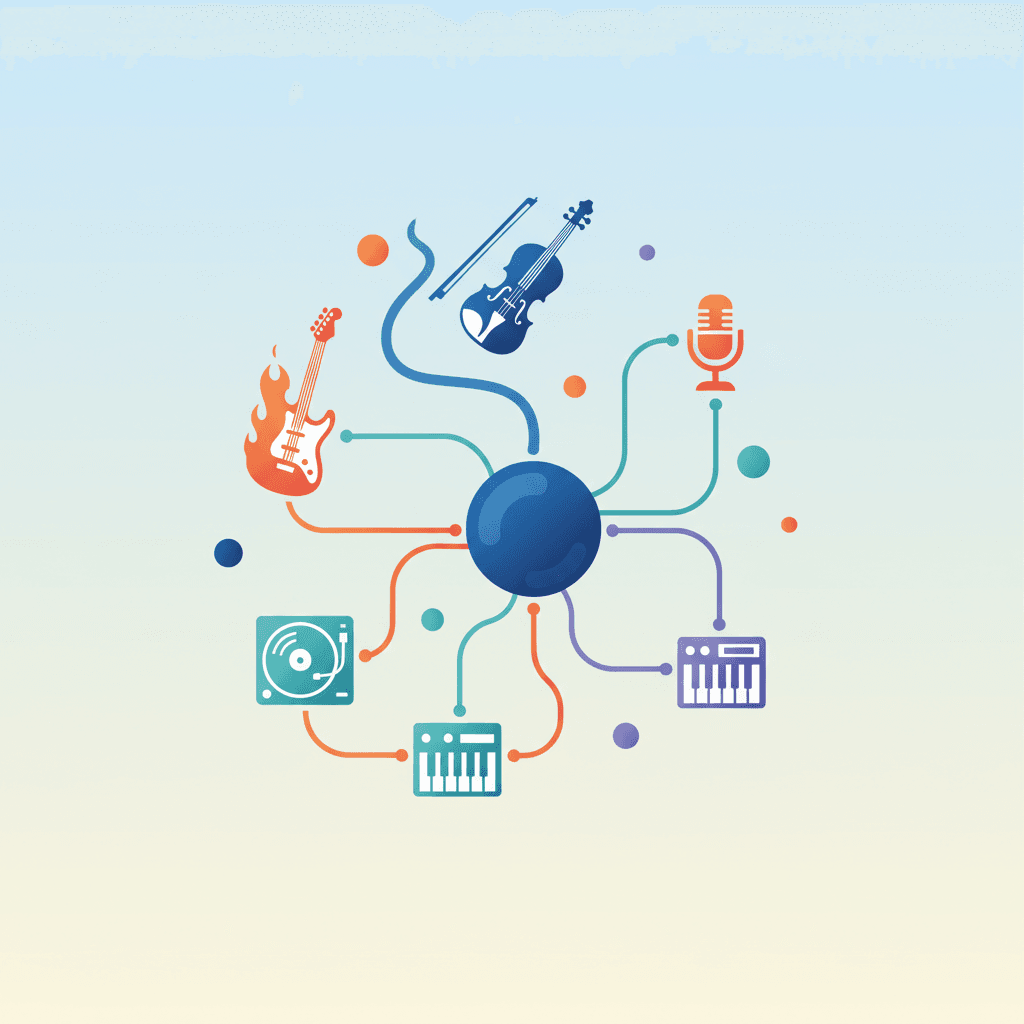
Why Music Genres Still Matter in the Streaming Era
Streaming platforms host over 100 million tracks. Without genre classification, discovery breaks down completely. Labels use genre data to position new releases. Playlist curators rely on genre tags to build cohesive listening experiences. A&R professionals track genre trends to identify emerging talent before competitors do.
Music24 aggregates genre intelligence across platforms, giving you a single source of truth for how genres perform, evolve, and overlap. Understanding the types of music genres at a granular level separates informed professionals from those guessing in the dark.
The Big Four: Core Genre Families
Every genre traces its lineage back to a handful of foundational categories. These four families anchor the entire genre map.
Rock
Born in the 1950s from blues, country, and rhythm & blues, rock centers on electric guitar, bass, and drums. It prizes raw energy and songwriter authenticity. From Chuck Berry's riffs to the stadium anthems of the 1980s, rock established the template for modern band-driven music.
Key subgenres: Classic Rock, Punk Rock, Alternative Rock, Indie Rock, Progressive Rock, Grunge, Post-Rock, Garage Rock, Psychedelic Rock, Hard Rock
Electronic
Electronic music replaces traditional instruments with synthesizers, drum machines, and digital production tools. Kraftwerk and Giorgio Moroder pioneered the sound in the 1970s. Today, electronic music dominates festival circuits and streaming playlists worldwide.
Key subgenres: House, Techno, Trance, Drum and Bass, Dubstep, Ambient, IDM, Electro, Synthwave, Downtempo
Hip-Hop & R&B
Hip-hop emerged from the Bronx in the late 1970s, built on breakbeats, turntablism, and lyrical storytelling. R&B evolved from gospel and soul, emphasizing vocal performance and groove. These genres now generate more streaming volume than any other category globally.
Key subgenres: Trap, Boom Bap, Lo-fi Hip-Hop, Drill, Neo-Soul, Contemporary R&B, Afrobeats-influenced R&B, Cloud Rap, Conscious Hip-Hop, Phonk
Pop
Pop absorbs elements from every genre and optimizes them for mass appeal. Strong melodies, polished production, and hook-driven songwriting define the category. Pop acts as a commercial bridge between niche genres and mainstream audiences.
Key subgenres: Synth-Pop, Electropop, Dance-Pop, Indie Pop, K-Pop, Bubblegum Pop, Art Pop, Chamber Pop, Hyperpop, Dream Pop
Genre Families That Drive Discovery
Beyond the big four, several genre families carry enormous influence in streaming and live music markets.
Jazz
Jazz pioneered improvisation as a core musical value. From the swing era through bebop, cool jazz, and fusion, jazz musicians have consistently pushed harmonic boundaries. Modern jazz intersects with electronic production and hip-hop, making it a vital reference point for contemporary producers.
Key subgenres: Bebop, Cool Jazz, Fusion, Smooth Jazz, Free Jazz, Acid Jazz, Nu-Jazz, Swing, Latin Jazz
Country & Folk
Country music tells stories rooted in everyday life, driven by acoustic guitar, fiddle, and steel guitar. Folk traditions carry the same storytelling impulse but draw from regional and cultural heritage. Both genres maintain dedicated, highly engaged listener bases.
Key subgenres: Americana, Bluegrass, Outlaw Country, Bro-Country, Nashville Sound, Contemporary Folk, Indie Folk, Alt-Country, Neotraditional Country
Metal
Metal amplifies rock's aggression with distorted guitars, complex rhythms, and powerful vocals. It commands one of the most loyal fan bases in music and thrives in live performance settings. Metal subgenres demonstrate some of the widest sonic variation within any single genre family.
Key subgenres: Heavy Metal, Thrash Metal, Death Metal, Black Metal, Doom Metal, Power Metal, Symphonic Metal, Metalcore, Progressive Metal, Nu-Metal
Latin
Latin music encompasses a vast range of styles rooted in Central America, South America, and the Caribbean. Reggaeton and Latin trap have propelled the genre into global streaming dominance, while traditional forms like salsa and bossa nova maintain strong cultural relevance.
Key subgenres: Reggaeton, Latin Trap, Salsa, Bachata, Cumbia, Bossa Nova, Merengue, Norteño, Regional Mexican, Latin Pop
African & Caribbean
African and Caribbean music genres fuel global trends. Afrobeats, dancehall, and soca carry rhythmic patterns that producers across every genre now sample and reference. These genres represent some of the fastest-growing streaming categories on every major platform.
Key subgenres: Afrobeats, Amapiano, Dancehall, Reggae, Soca, Highlife, Afro-Fusion, Gqom, Zouk, Kompa
Classical & Orchestral
Classical music spans centuries of Western art music tradition, from Baroque compositions to modern film scores. Orchestral arrangements now appear in pop, electronic, and hip-hop production. Understanding classical structures helps producers and curators recognize compositional depth across genres.
Key subgenres: Baroque, Classical Period, Romantic, Modern Classical, Minimalism, Film Score, Neo-Classical, Opera, Chamber Music
How Genres Overlap and Evolve
Static genre labels fail to capture how music actually works. Genres constantly borrow from each other, and the most exciting developments happen at the intersections.
Cross-Genre Fusion Points
- Indie Sleaze / Dance-Punk: Rock energy meets electronic production and disco grooves
- Lo-fi Hip-Hop: Hip-hop beats fused with jazz harmonies and ambient textures
- Country Rap: Southern hip-hop rhythms layered with country instrumentation and themes
- Afro-House: West African rhythms integrated into deep house production frameworks
- Post-Punk Revival: Angular guitars and synthesizers blending new wave with modern indie sensibilities
- Folktronica: Acoustic folk instruments processed through electronic effects and beat programming
These fusion points create new listener segments that savvy professionals target before they reach mainstream saturation.
Genre Evolution Signals to Watch
Music24 tracks several indicators that signal genre shifts:
- Playlist migration: When tracks consistently appear in playlists outside their primary genre tag
- Producer crossover: When producers known for one genre start releasing in another
- Tempo drift: When a genre's average BPM shifts over a 12-month period
- Collaboration patterns: When artists from different genres co-release tracks at increasing rates
Monitoring these signals through Music24's analytics dashboard gives you a data-backed view of where genres head next.
Mapping 50+ Genres: The Music24 Genre Framework
Music24 organizes genres into a hierarchical framework that supports both broad categorization and granular subgenre targeting. Here is how the framework breaks down:
| Genre Family | Primary Genres | Notable Subgenres | Avg. Monthly Listeners (Global) |
|---|---|---|---|
| Rock | Rock, Alternative, Punk | Indie Rock, Grunge, Post-Rock | 890M+ |
| Electronic | House, Techno, EDM | Synthwave, Drum and Bass, Ambient | 1.1B+ |
| Hip-Hop & R&B | Hip-Hop, R&B, Rap | Trap, Drill, Neo-Soul | 1.4B+ |
| Pop | Pop, Indie Pop, K-Pop | Hyperpop, Dream Pop, Synth-Pop | 2.1B+ |
| Jazz | Jazz, Fusion, Swing | Nu-Jazz, Acid Jazz, Smooth Jazz | 210M+ |
| Country & Folk | Country, Folk, Americana | Bluegrass, Alt-Country, Indie Folk | 480M+ |
| Metal | Metal, Metalcore, Thrash | Black Metal, Doom Metal, Prog Metal | 340M+ |
| Latin | Reggaeton, Latin Pop, Salsa | Latin Trap, Cumbia, Bachata | 1.3B+ |
| African & Caribbean | Afrobeats, Dancehall, Reggae | Amapiano, Gqom, Highlife | 620M+ |
| Classical | Classical, Opera, Film Score | Minimalism, Neo-Classical, Baroque | 290M+ |
This framework powers Music24's search, filtering, and recommendation tools. Professionals use it to benchmark artist positioning, identify underserved subgenres, and spot crossover opportunities.
How Professionals Use Genre Data
A&R Scouts
A&R teams filter emerging artists by subgenre to find talent in categories with growing listener demand but limited label representation. Music24's genre trend reports highlight which subgenres gain momentum each quarter, allowing scouts to focus their efforts where the opportunity sits.
Playlist Curators
Curators build cohesive playlists by combining genres that share tempo, mood, and sonic characteristics. Music24's genre relationship mapping shows which genres pair well, reducing listener skip rates and increasing playlist completion metrics.
Marketing Teams
Marketing professionals align campaign messaging with genre-specific audience behaviors. A metal audience responds to different visual language and release strategies than a K-Pop audience. Genre intelligence from Music24 informs these creative decisions with real listener data.
Building Your Genre Strategy
Understanding music genres explained at this level of detail transforms how you approach your work. Here are three actionable steps:
-
Audit your current genre focus. List the genres and subgenres you actively track. Identify gaps where growing genres receive no attention from your team.
-
Set up genre alerts on Music24. Configure notifications for tempo drift, playlist migration, and collaboration patterns in your priority genres. These alerts surface opportunities before they become obvious to competitors.
-
Map your artist roster to subgenres. Position each artist within Music24's genre framework. This reveals where your roster concentrates and where strategic signings could expand your reach into adjacent subgenres.
The Genre Landscape Keeps Moving
Music genres never stay fixed. Every year brings new fusions, revivals, and entirely original sounds that reshape the landscape. Professionals who track these shifts through data rather than intuition consistently make better decisions about signings, playlist strategy, and campaign targeting.
Music24 gives you the genre intelligence platform to stay ahead. From the broadest family categories down to the most niche subgenres, our data maps the full picture so you can act on what matters.
Start exploring Music24's genre analytics today and turn genre knowledge into your competitive advantage.
Get your music heard. Grow the fans who stay.
Add a song. Music24 makes the posts and the videos, plans your release and publishes it on every channel. Free for 7 days on the Pro plan, no card.