
Spotting the next breakout artist is getting harder, especially when traditional charts already feel a step behind your audience. Relying on public streaming data or viral trends can leave your indie label missing the moments when genuine discovery is actually happening. To get ahead, you need smarter ways to recognize real signals before they’re everywhere.
Private playlists are where true listener habits, early genre-blending, and fresh trends start. By harnessing insights from these hidden collections—backed by advanced analytics and the rise of AI models in music—you can pinpoint influential curators, track genre innovation, and catch organic buzz at its source. These actionable methods will give your label an authentic edge and help you build strategies fueled by what fans really want.
Get ready to uncover practical approaches that will sharpen your artist discovery, reveal thriving subcultures, and help you act on new opportunities before your competition even notices.
Table of Contents
- Leverage Private Playlist Analytics For Artist Discovery
- Identify Genre-Blending Trends Before They Go Mainstream
- Pinpoint Influential Private Playlist Curators
- Activate Micro-Trend Data For Targeted Campaigns
- Analyze Listener Behavior Beyond Public Metrics
- Integrate Predictive Insights Into Release Strategies
- Measure Success Using Early Adoption Metrics
Quick Summary
| Takeaway | Explanation |
|---|---|
| 1. Utilize Private Playlist Analytics | Analyze private playlists to discover emerging artists and listener patterns before they hit mainstream charts. |
| 2. Monitor Genre-Blending Trends | Identify hybrid sounds in private playlists to forecast upcoming music trends and opportunities. |
| 3. Identify Influential Curators | Focus on influential playlist curators whose picks drive genuine listener engagement and community trust. |
| 4. Activate Micro-Trend Data | Leverage specific listener behaviors in private playlists for targeted marketing campaigns and promotions. |
| 5. Measure Success with Early Metrics | Track early engagement signals like playlist adds to determine a song's potential shortly after release. |
1. Leverage Private Playlist Analytics for Artist Discovery
Private playlists hold secrets that public charts never reveal. While Spotify's top 50 and TikTok trending pages show you what everyone already knows, private playlists show you what people actually listen to when nobody's watching. This is where your next breakout artist lives. Private playlist analytics give you access to engagement patterns and listening behaviors that traditional public metrics simply cannot capture, allowing you to spot emerging talent months before mainstream recognition hits.
As an indie label A&R professional, you're constantly hunting for signals. Private playlists reveal genuine listener preferences across specific demographic segments and geographic regions. Someone curating a private playlist with 200 hyper-engaged followers isn't trying to go viral on TikTok. They're building something authentic. When you analyze these collections systematically, you uncover niche audience segments that traditional algorithms miss entirely. You see micro-trends before they become macro-trends. You identify artists gaining real traction in tight communities rather than artists buying bots. The data shows which tracks are being saved repeatedly, skipped rarely, and added to multiple playlists by the same curator. That's your signal. That's your evidence of genuine listener connection. By monitoring how algorithmic playlist curation and listener behaviors function within private collections, indie labels can identify emerging artists and niche trends early, giving you a competitive advantage that labels relying solely on public metrics will never have.
Here's how to activate this insight: Instead of waiting for an artist to rack up millions of streams on public playlists, start tracking which artists are accumulating saves in private collections. Look for patterns where the same artist appears across multiple private playlists within specific listener demographics or geographic regions. These patterns indicate authentic discovery momentum. When you spot an artist gaining consistent adds to private playlists by different curators independently, that's your moment to invest. Organic growth in private playlists typically precedes public streaming surges by 60 to 90 days, giving you a genuine first-mover advantage for signings, features, or collaboration opportunities.
Pro tip: Create alerts for when specific artists hit thresholds in private playlist saves and downloads within your target demographics, then move quickly to reach out before competitors notice the same patterns.
2. Identify Genre-Blending Trends Before They Go Mainstream
Genre boundaries are collapsing, and that collapse is where opportunity lives. Ten years ago, an artist was either hip-hop or indie rock. Today, the most exciting sounds exist in the spaces between genres. Trap beats meet folk vocals. Afrobeats blend with electronic production. Country artists sample drill. These hybrid sounds aren't anomalies anymore—they're the future. The artists experimenting with multiple genres simultaneously are the ones who capture audiences first. Your job as an indie label strategist is to spot these blends before they hit the mainstream algorithm.
Genre-blending trends emerge in private playlists months before they dominate public charts. This is crucial because algorithmic and human curation processes reveal emerging genre combinations well before mainstream adoption takes hold. When you monitor private playlists, you see which listeners are combining traditionally separate genres in single collections. You notice when a bedroom producer starts pulling influence from three different genres simultaneously. You catch the moment when curators begin mixing sonic styles that conventional wisdom says shouldn't work together. Genre continues to shape musical identities within streaming platforms, and by analyzing which genre combinations gain early traction in private collections, you can forecast cultural shifts six to nine months ahead of mainstream recognition.
Start tracking genre combinations in private playlists within your target demographics. Look for artists whose streaming patterns cross traditional category lines. If an artist's songs appear consistently alongside both trap and rock tracks in the same private collections, that's a signal. If listeners are saving a country track next to experimental electronic music, that hybrid listener exists and wants that sound. Document which genre blends appear most frequently across private collections. These patterns become your investment thesis. When you identify a genre blend gaining momentum in private playlists before it hits public charts, you've found your next signing opportunity. You can position your artists at the intersection of these emerging trends while competitors still think in traditional genre categories.
Pro tip: Create a monitoring system that flags artists gaining saves in genre combinations that traditional charts separate, then reach out to these artists with collaboration proposals that leverage their cross-genre appeal to audiences that already exist but remain invisible to mainstream metrics.
3. Pinpoint Influential Private Playlist Curators
Not all playlist curators are created equal. Some have 50 followers and zero influence. Others have 500 followers who hang on every song selection and convert those recommendations into streams within hours. The difference between these two curators is massive for your label's growth strategy. Influential private playlist curators are tastemakers operating outside the spotlight. They build genuine communities around their collections. Their followers trust their judgment. When an influential curator adds your artist to their private playlist, those listeners pay attention. This is where word-of-mouth discovery happens in the streaming age.
Identifying authentic influential curators requires you to look beyond surface metrics. You need to evaluate follower engagement trends and curator transparency to distinguish genuine curators from those artificially inflating numbers with bots. Real influential curators have consistent listener behavior patterns. Their followers save songs from their playlists repeatedly. Comments and interactions reflect genuine music discussion, not automated responses. These curators build thematic playlists with real coherence. They don't accept every submission. They reject songs that don't fit their vision. This selectivity is what makes them influential. Their followers know that if a track made it into their playlist, it's worth listening to. Start by researching curators within your artist's niche. Look for curators whose playlists have been around for years with steady follower growth. Check if they've written about music elsewhere or if other industry professionals mention them. Authentic influential curators have a presence beyond just playlists.
Once you identify potential influential curators, study their playlist composition carefully. Notice which artists they feature most often. Understand their sonic preferences and thematic focuses. When you pitch your artist to them, make sure there's genuine alignment. Curators who receive hundreds of pitches weekly recognize inauthentic outreach immediately. Show them you understand their taste. Explain specifically why your artist belongs in their collection. Reference other artists in their playlist and articulate the connection. This targeted approach works because you're treating them as the tastemakers they actually are, not as promotional channels. When an influential curator adds your artist because they genuinely believe in the music, their engaged followers convert at rates significantly higher than generic playlist placements.
Pro tip: Build relationships with influential curators by engaging authentically with their playlists first—add their collections to your own library, comment thoughtfully on their selections, and demonstrate genuine interest before pitching your artists to them.
4. Activate Micro-Trend Data for Targeted Campaigns
Micro-trends are the hidden currents that move listener behavior before major trends surface. While everyone watches the same top 10 charts, micro-trends emerge in specific geographic regions, demographic segments, and listener communities weeks or months earlier. A micro-trend might be a particular production style gaining traction among listeners aged 18-24 in Southeast Asia. Another might be a vocal technique becoming popular with a niche listener base interested in indie folk. These small signals matter enormously because they show authentic listener preference before algorithmic amplification distorts the picture. By accessing granular data analysis of streaming patterns, indie labels can target these micro-trends precisely, tailoring campaigns to niche groups and early adopters who drive real momentum.
The power of micro-trend activation lies in specificity and timing. Instead of launching a broad campaign hoping your artist resonates with everyone, you identify the exact listener segments already showing interest in similar music and direct your resources there. Micro-trend data reveals which platforms matter most for your artist at this moment. Maybe your artist's sound aligns with a micro-trend exploding on TikTok with short-form video but hasn't yet hit Spotify's algorithmic playlists. You prioritize short-form content distribution. Or perhaps short-form video popularity and AI-enhanced personalization show your artist's sound resonating with a specific listener demographic on one platform before others. You build your campaign there first, establishing proof of concept before expanding resources. This targeted approach maximizes your marketing budget because you're not spreading thin across all platforms and audiences simultaneously.
Implement micro-trend activation by mapping emerging patterns in your private playlist data. Document which listener demographics are saving similar artists. Note geographic regions where your artist's genre combination is gaining momentum. Track when these micro-trends started appearing and how rapidly they're growing. Then build campaigns specifically for these segments. Create content that speaks directly to their demonstrated preferences. Time your playlist pitches and promotional pushes to align with when these micro-trends peak. Use micro-trend signals to coordinate release timing, feature collaborations, and content themes. When you activate campaigns based on real micro-trend data rather than broad assumptions, conversion rates improve because you're reaching listeners already primed to discover your artist.
Pro tip: Set up monthly micro-trend reports analyzing demographic engagement patterns in private playlists to identify emerging opportunities before competitors notice, then build your quarterly campaign calendar around these validated signals rather than guessing what might work.
5. Analyze Listener Behavior Beyond Public Metrics
Streaming numbers lie. A song with 500,000 Spotify streams might represent genuine fan obsession or bot manipulation. A track climbing the charts might be driven by playlist placement algorithms rather than real listener discovery. Public metrics show you what happened yesterday, not what's happening right now in actual listener behavior. The real story lives in the spaces between the numbers. Listeners engage with music through multiple methods beyond public streaming including short videos, gaming soundtracks, and social sharing. Your job is to parse these multifaceted behaviors and understand true fan engagement rather than relying on the incomplete picture that public metrics provide.
Private playlists reveal listener behavior that no public chart ever captures. When someone saves your artist's song to a private playlist and returns to listen repeatedly, that's genuine engagement. When they share that private playlist with friends who then add songs from it to their own collections, that's organic growth. When your artist's track appears across multiple private playlists independently curated by different listeners, that's authentic discovery momentum. None of this shows up in your Spotify for Artists dashboard. Public metrics show aggregate numbers. Private playlist behavior shows individual decision-making patterns. By analyzing individual user preferences and engagement contexts in private collections, you understand not just that listeners are engaging but why they're engaging and what that engagement means for your artist's long-term growth trajectory.
Start tracking listener behavior signals that matter more than raw streams. Monitor repeat listening within private playlists. Track how many different playlists your artist appears in across specific demographic segments. Document how quickly private playlist adoption accelerates among early listeners. Notice which listener communities are discovering your artist before others. Identify geographic regions showing disproportionate private playlist engagement. These behavioral patterns reveal true fan potential because they show listeners willing to organize their music intentionally around your artist. They're not passively stumbling onto songs through algorithmic recommendations. They're actively choosing to include your music in their personal collections. This voluntary organization indicates the kind of listener loyalty that eventually converts to concert attendance, merchandise sales, and genuine fandom. When you measure success by listener behavior signals rather than public streaming vanity metrics, you make smarter decisions about artist development, collaboration opportunities, and resource allocation.
Pro tip: Create a listener behavior scorecard that tracks repeat saves, cross-demographic playlist adoption, and playlist velocity for each of your artists, then use these signals to identify which artists show genuine momentum before public charts confirm what private playlists already revealed.
6. Integrate Predictive Insights into Release Strategies
Releasing music on faith and instinct is gambling. Releasing music with predictive data is strategy. The difference between these two approaches determines whether your artist gets discovered or disappears into the noise. Predictive analytics transform release planning from guesswork into informed decision-making. Instead of hoping your artist's song resonates with listeners, you use data to forecast engagement levels and market conditions before release. This allows you to time releases strategically, coordinate promotional efforts effectively, and allocate resources where they matter most. By incorporating predictive models that analyze streaming features and listener behavior patterns, indie labels can forecast track popularity and align releases with predicted listener trends, dramatically increasing your chances of market traction.
Predictive insights work because they reveal what private playlist data indicates about listener readiness. When private playlist analytics show strong early adoption signals for a particular sound or artist type, that's your signal that broader listener demand exists. Release timing becomes critical. If predictive data shows listener interest in a specific genre blend or production style peaking in three weeks, you time your release for maximum algorithmic push. If data indicates that a particular curator community is warming to your artist's sound, you coordinate playlist pitches for the same launch window. If analytics forecast that a specific geographic region will drive early momentum, you localize promotion and partnership efforts there first. Predictive analytics help forecast music consumption patterns and guide strategic decision-making regarding release timing and marketing tactics. This coordinated approach multiplies campaign effectiveness because every element works together rather than in isolation.
Implement predictive insights by analyzing what worked for comparable artists in your label's catalog. Study which releases generated the strongest private playlist adoption momentum. Identify common patterns in their listener demographics, geographic distribution, and genre alignment. Use these patterns as a baseline for forecasting performance of upcoming releases. Monitor how private playlist adoption curves for your current artists compare to historical data. When new releases show early adoption curves matching your highest-performing releases, that's validation that predictive models are working. When curves underperform expectations, adjust your promotional strategy mid-campaign rather than waiting for failure. Build release calendars around predictive windows when listener demand analysis suggests optimal market conditions. Coordinate singles, features, and album releases with forecasted peaks in listener engagement across your target segments.
Pro tip: Create a release scorecard using predictive signals from private playlist data, then compare pre-release forecasts against actual performance to continuously refine your prediction models and improve accuracy for future campaigns.
7. Measure Success Using Early Adoption Metrics
Waiting for a song to accumulate 100,000 streams before assessing its potential is waiting too long. By that point, you've either already built momentum or already lost it. Early adoption metrics tell you within days whether your release is connecting with listeners. These signals appear in the first week when private playlist adds accelerate, when specific listener communities engage repeatedly, and when geographic regions show disproportionate adoption. Early metrics don't predict perfection. They predict probability. A track showing strong early adoption across private playlists in your target demographic is statistically more likely to build sustained momentum than a track struggling for traction in the same window. This is your signal to invest more promotion, coordinate additional features, or adjust your approach entirely.
Focus on the metrics that actually matter in the critical first 48 to 72 hours after release. Track initial streaming surge and playlist adds across your target segments rather than obsessing over total streams. Monitor which private playlists are adding your track fastest. Identify which listener demographics show early engagement. Notice which geographic regions are discovering your artist first. These early signals reveal authentic listener interest before algorithmic amplification distorts the data. A track added to 50 private playlists by independent curators in the first 48 hours is a stronger signal than 10,000 streams from playlist placements you paid for. Early adoption metrics show you genuine discovery momentum. When you see private playlist adoption accelerating across your target segments, that's validation that your release resonates. When adoption stalls, you know immediately that something needs adjustment rather than waiting weeks hoping the algorithm eventually picks it up.
Implement an early adoption tracking system that measures success using real indicators of listener enthusiasm. Set baseline benchmarks based on your label's historical performance. Track each new release against these benchmarks within the first 72 hours. Document which releases exceeded early adoption projections and analyze what worked. Study releases that underperformed and understand why. Use these patterns to refine your approach for subsequent launches. Early adoption metrics enable you to make responsive decisions. If a release shows exceptional early traction, increase promotional investment immediately while momentum builds. If early metrics disappoint, adjust your strategy rather than continuing to throw resources at a failing campaign. By measuring success through early adoption indicators like fan demographic engagement, you transform release management from a guessing game into a responsive process where you follow data signals rather than hoping for breakthrough moments.
Pro tip: Create a 72-hour launch dashboard tracking private playlist adds, repeat listener behavior, and geographic adoption patterns, then use early signals to decide whether to accelerate promotion or pivot strategy before your release week ends.
Below is a comprehensive table summarizing the strategies and insights discussed in the article on leveraging music analytics for artist discovery and promotion.
| Topic | Key Insights | Takeaway |
|---|---|---|
| Leveraging Private Playlist Analytics | Private playlists reveal listener behavior patterns not available in public metrics. | Identifying early trends in private playlists can ensure timely discovery of emerging artists. |
| Monitoring Genre-Blending Trends | Emerging genre combinations in playlists highlight future musical trends. | Predict early success by targeting artists experimenting with multiple genres. |
| Pinpointing Influential Curators | Authentic playlist curators have high engagement and loyal followers. | Active engagement with these curators fosters organic artist promotion and discovery. |
| Activating Micro-Trend Data | Detailed analysis of streaming patterns highlights emerging listeners’ preferences. | Tailoring campaigns to specific demographics improves conversion rates. |
| Analyzing Listener Behavior Beyond Metrics | Individual listener behaviors offer insights into genuine artist engagement. | Tracking saves and playlist placements provides actionable growth indicators. |
| Utilizing Predictive Insights for Releases | Data forecasting optimizes release timing and promotional strategies. | Plan releases strategically to match predicted listener trends and maximize reach. |
| Measuring Early Adoption Metrics | Early indicators reveal immediate listener interest and success probability. | Data-driven adjustments ensure efficient use of resources and campaign effectiveness. |
Discover Breakout Artists Early with Data-Driven Music Marketing
The challenge for indie labels in 2025 is clear: traditional public streaming metrics often arrive too late to capitalize on rising stars and emerging genre blends. This article highlights the crucial need to unlock private playlist analytics to spot authentic listener behavior, pinpoint influential curators, and identify micro-trends well before mainstream platforms catch on. If you want to stop guessing and start making informed decisions backed by deep listener insights, mastering private playlist data is your competitive edge.
Music24.com empowers you to do exactly that by analyzing millions of anonymized private music collections to reveal genuine discovery momentum beyond public charts. From tracking early adoption metrics to forecasting micro-trends and blending genres strategically, Music24 offers predictive analytics and early artist identification tools tailored for indie labels, artist managers, and A&R teams. Experience how actionable data transforms your music marketing approach and helps you invest in the right artists at the right time.
Take control of your music marketing future now. Explore how Music24’s specialized analytics platform brings private playlist insights to your fingertips.
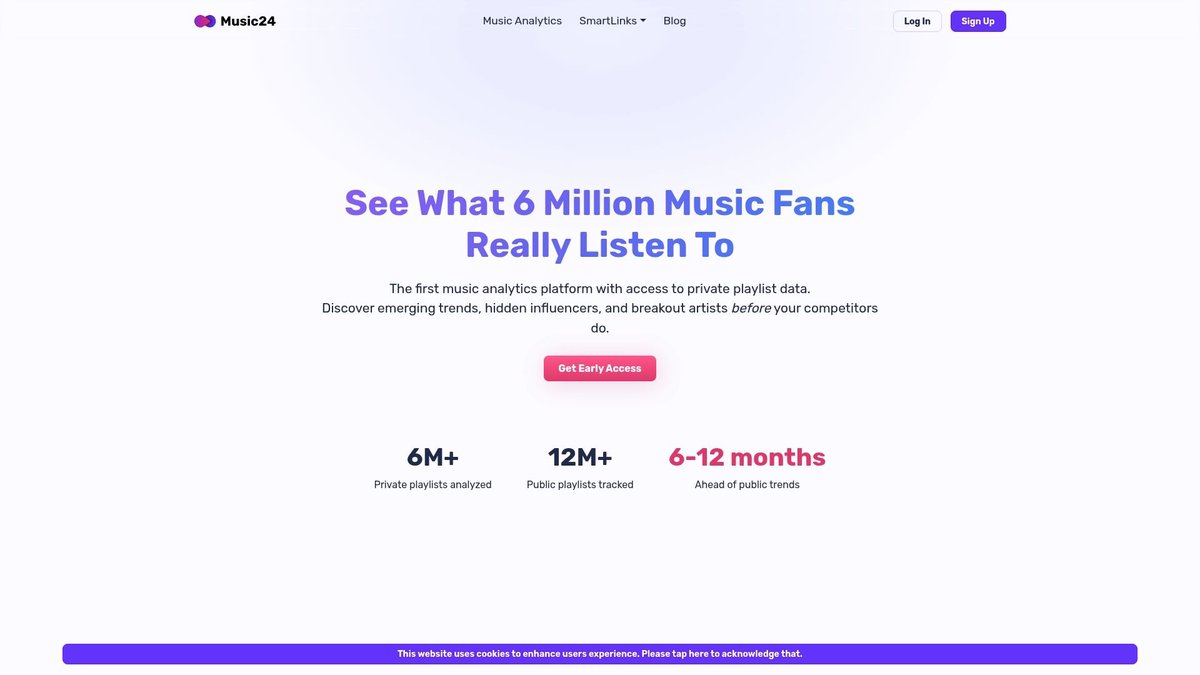
Start uncovering the next breakout artist before anyone else. Visit Music24.com today and gain the insider advantage you need to stay ahead in 2025.
Frequently Asked Questions
How can private playlist analytics help my indie label discover new artists?
Private playlist analytics provide insights into engagement patterns and listening behaviors that public charts do not reveal. Track artists accumulating saves in private playlists to spot genuine connections before they surface in mainstream recognition.
What steps can I take to identify genre-blending trends in my marketing?
To identify genre-blending trends, monitor private playlists for artists mixing different genres. Document the frequency of genre combinations within specific demographic segments to forecast cultural shifts months before they become mainstream.
How do I find influential private playlist curators for my artists?
Identify influential curators by assessing their follower engagement trends and the consistency of their playlist selections. Research curators within your artist's niche and approach them with personalized pitches that align with their musical taste.
What are micro-trends and how can they impact my music marketing strategies?
Micro-trends are emerging patterns in listener behavior that occur before major trends surface. Analyze private playlist data to pinpoint these trends, then create targeted campaigns that resonate with niche audience segments for better engagement.
How can I measure success using early adoption metrics after a release?
Early adoption metrics indicate whether your release is connecting with listeners soon after it drops. Track private playlist adds and listener engagement within the first 72 hours to determine if promotional efforts need to be increased or adjusted.
How can predictive insights improve my music release strategies?
Predictive insights enable you to forecast listener interest and optimize release timing. Analyze historical data patterns to inform your promotional strategy and plan releases around periods of high anticipated demand.
Recommended
- 7 Music Micro-Trend Examples Every Industry Exec Should Know - Blog - Music24.com
- 7 Essential Tips for Your Music Analytics Checklist - Blog - Music24.com
- 7 Data-Driven Music Marketing Tips for Industry Leaders - Blog - Music24.com
- 7 Key Music Listening Trends in 2025 for Industry Leaders - Blog - Music24.com

