
Spotting the next big artist is no longer just a matter of instinct or lucky guesses. The rise of competitive music analytics means professionals across the United States, Canada, Germany, and beyond now harness advanced data processing techniques to identify promising talent ahead of the curve. For A&R representatives and artist managers, understanding how to use massive datasets and sophisticated algorithms offers a strategic edge in both talent scouting and global marketing decisions.
Table of Contents
- Defining Competitive Music Analytics
- Types of Data and Analytics Methods
- How Private Playlist Analysis Works
- Spotting Trends and Influencer Impact
- Legal, Ethical, and Privacy Considerations
- Common Mistakes and Best Practices
Key Takeaways
| Point | Details |
|---|---|
| Data-Driven Insights | Competitive music analytics utilizes advanced algorithms to transform data into actionable intelligence, surpassing traditional scouting methods. |
| Comprehensive Data Utilization | Integrating diverse data types, including streaming metrics and social media interactions, enhances understanding of market trends and artist performance. |
| Influencer Impact Recognition | Evaluating the influence of curators and social media personalities helps predict emerging musical trends with greater accuracy. |
| Ethical Data Practices | Adhering to legal standards and ethical considerations is crucial for maintaining trust in data handling and analytics within the music industry. |
Defining Competitive Music Analytics
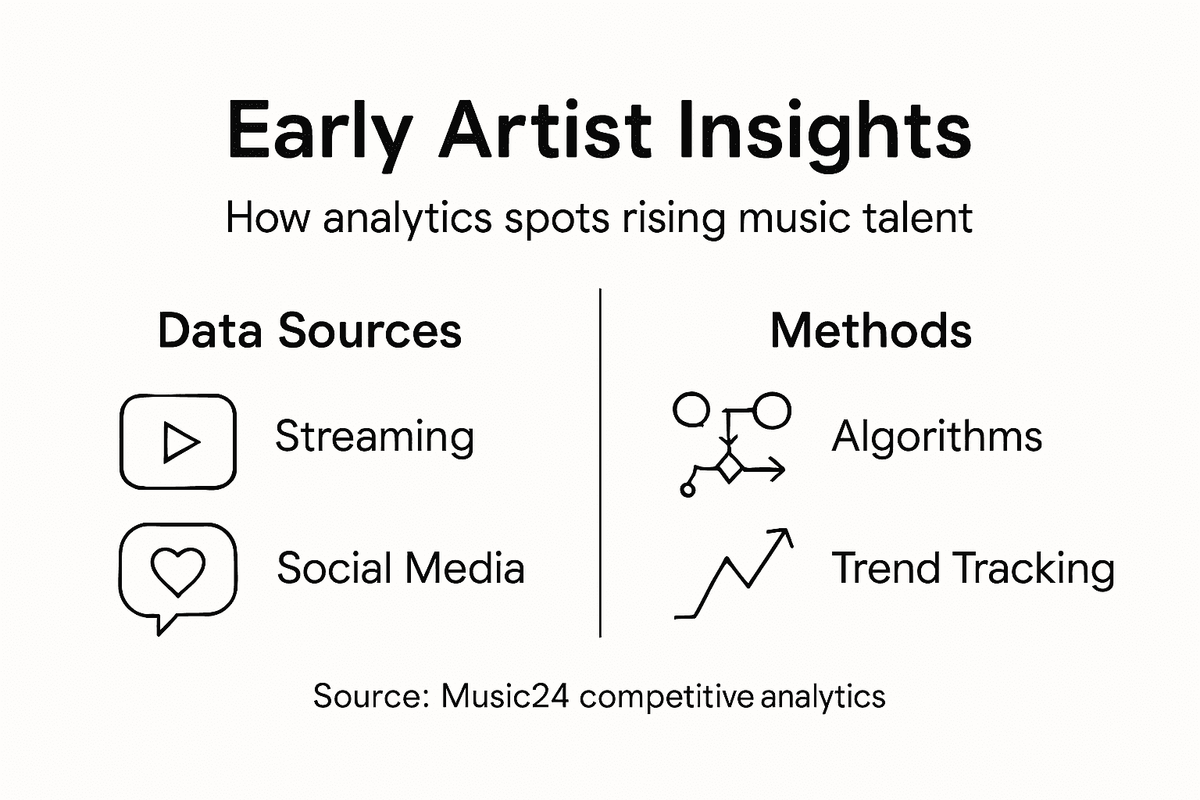
Competitive music analytics represents a sophisticated approach to understanding the music industry through advanced data science techniques. By leveraging complex algorithms and massive datasets, this discipline transforms how record labels and artist managers identify emerging talent and predict market trends. Advanced data processing techniques now enable professionals to gain strategic insights far beyond traditional methods.
At its core, competitive music analytics integrates multiple data dimensions to provide comprehensive artist and market intelligence. These dimensions typically include:
- Streaming Performance: Real-time listener engagement metrics
- Geographic Listener Distribution: Regional popularity patterns
- Cross-Platform Interaction: Social media and playlist engagement
- Genre Blending Trends: Emerging musical style intersections
- Curator Influence: Tracking playlist creators' impact on artist discovery
The fundamental goal of competitive music analytics is transforming raw data into actionable strategic intelligence. Unlike traditional music scouting methods that rely heavily on intuition, this approach uses sophisticated algorithms to process vast, complex datasets. Predictive modeling now allows music industry professionals to identify promising artists before they become mainstream, giving early adopters a significant competitive advantage.
Here's a comparison of traditional music scouting and competitive music analytics approaches:
| Aspect | Traditional Scouting | Competitive Analytics |
|---|---|---|
| Decision Basis | Human intuition | Data-driven insights |
| Talent Identification | Personal networks | Algorithm-powered prediction |
| Market Trend Detection | Visual observation | Statistical, machine learning |
| Speed of Response | Slower, manual | Faster, real-time monitoring |
| Scalability | Limited by manpower | Scalable with big data |
Pro tip: Focus on multi-dimensional data integration rather than single-metric analysis to gain the most comprehensive artist insights.
Types of Data and Analytics Methods
Competitive music analytics encompasses a diverse range of data science techniques designed to transform raw musical information into strategic insights. These techniques leverage multiple data sources and sophisticated analytical approaches to provide comprehensive understanding of music industry dynamics.
The primary categories of data utilized in music analytics include:
- Audio Content Data: Raw sound files, musical structures, and acoustic characteristics
- Performance Metrics: Streaming numbers, listener engagement, play duration
- Social Media Interactions: Follower counts, engagement rates, sentiment analysis
- Geographical Listener Data: Regional popularity, demographic distribution
- Playlist and Curation Data: Inclusion frequencies, genre crossovers, playlist creator influences
Analytical methods in this field are typically categorized into three primary approaches:
- Descriptive Analytics: Understanding current performance and historical trends
- Predictive Analytics: Forecasting potential artist growth and market opportunities
- Prescriptive Analytics: Recommending specific strategic actions based on complex data patterns
These analytical techniques integrate advanced machine learning algorithms with statistical modeling to provide nuanced insights that go beyond traditional music industry research. By processing massive datasets from streaming platforms, social media, and listener interactions, professionals can now make data-driven decisions with unprecedented precision.

This table summarizes key data types and where they offer the strongest industry impact:
| Data Type | Best Supporting Use Case | Strategic Business Impact |
|---|---|---|
| Audio Content Data | Genre classification | Targeted production decisions |
| Social Media Interactions | Audience growth mapping | Optimizing marketing campaigns |
| Streaming Metrics | Listener engagement analysis | Early artist performance insight |
| Playlist Curation Data | Trend detection | Influencer partnership strategies |
Big data analytics transforms music industry strategy from intuition-based to technology-driven decision making.
Pro tip: Combine multiple data sources and analytical methods to develop the most comprehensive artist and market understanding.
How Private Playlist Analysis Works
Private playlist analysis represents a groundbreaking approach to understanding musical preferences through context-based playlist research. By examining anonymized playlist data from millions of individual collections, music analytics professionals can uncover nuanced insights that traditional public metrics cannot reveal.
The core components of private playlist analysis involve several sophisticated techniques:
- Listener Segmentation: Categorizing users based on musical taste profiles
- Pattern Recognition: Identifying recurring musical correlations and trends
- Contextual Mapping: Understanding how playlist compositions change across different environments
- Curator Influence Tracking: Analyzing how specific playlist creators shape musical discovery
- Cross-Genre Interaction Analysis: Examining how musical styles blend and intersect
The analytical process typically follows a structured workflow that transforms raw playlist data into actionable intelligence:
- Data Collection: Aggregating anonymized private playlist information
- Feature Extraction: Identifying unique musical characteristics and listener preferences
- Correlation Analysis: Mapping relationships between musical attributes
- Predictive Modeling: Generating insights about potential artist and genre trends
- Strategic Recommendation: Developing targeted insights for A&R and marketing professionals
Private playlist analysis transcends traditional metrics by revealing hidden musical discovery patterns that exist beyond public streaming platforms.
Pro tip: Prioritize multi-dimensional data integration to develop the most comprehensive understanding of emerging musical trends.
Spotting Trends and Influencer Impact
Modern music analytics has transformed trend detection through sophisticated influencer impact analysis. By quantifying the precise reach and effectiveness of playlist curators and social media personalities, record labels can now predict musical trends with unprecedented accuracy.
Key strategies for identifying influential trend drivers include:
- Engagement Rate Measurement: Tracking likes, shares, and listener interactions
- Network Mapping: Analyzing interconnected curator and artist relationships
- Cross-Platform Influence Tracking: Monitoring impact across streaming and social platforms
- Micro-Genre Trend Detection: Identifying emerging musical style combinations
- Demographic Resonance Analysis: Understanding listener segments and preferences
Influencer impact evaluation follows a systematic approach to understanding musical trend propagation:
- Data Collection: Gathering comprehensive interaction metrics
- Influence Scoring: Quantifying curator and platform-specific impact
- Trend Velocity Assessment: Measuring speed of musical trend transmission
- Predictive Modeling: Forecasting potential genre and artist breakthrough potential
- Strategic Recommendation: Developing targeted marketing and artist development strategies
Successful trend spotting requires understanding complex network dynamics beyond surface-level metrics.
Pro tip: Focus on multi-platform influencer data to develop the most comprehensive trend understanding.
Legal, Ethical, and Privacy Considerations
Competitive music analytics demands rigorous attention to legal and ethical data research practices. The complex landscape of music data collection requires professionals to navigate intricate legal frameworks that protect individual privacy while enabling innovative industry insights.
Key legal and ethical considerations for music analytics professionals include:
- Data Anonymization: Protecting individual user identities
- Consent Verification: Ensuring transparent data collection practices
- Intellectual Property Rights: Respecting copyright and creator ownership
- Terms of Service Compliance: Adhering to platform-specific usage guidelines
- Cross-Border Data Regulations: Understanding international privacy laws
The primary legal dimensions of music data analytics involve several critical compliance strategies:
- Informed Consent: Obtaining clear user permissions for data usage
- Data Minimization: Collecting only necessary information
- Purpose Limitation: Using data exclusively for specified research objectives
- Security Protocols: Implementing robust data protection mechanisms
- Regular Compliance Audits: Continuously verifying ethical data handling
Responsible data analytics balances technological innovation with individual privacy protection.
Pro tip: Develop comprehensive internal guidelines that exceed minimum legal requirements to maintain industry trust and ethical standards.
Common Mistakes and Best Practices
Music analytics requires precision and critical thinking to avoid common research pitfalls. Professionals must develop a sophisticated approach that goes beyond surface-level data interpretation and challenges underlying assumptions about musical trends and listener behavior.
Common mistakes that can derail competitive music analytics include:
- Confirmation Bias: Seeking data that only validates preexisting beliefs
- Overgeneralization: Drawing broad conclusions from limited datasets
- Statistical Misinterpretation: Misunderstanding significance and correlation
- Incomplete Context: Ignoring nuanced cultural and demographic factors
- Algorithmic Blindness: Trusting machine learning outputs without critical evaluation
Best practices for maintaining analytical rigor involve several key strategies:
- Robust Validation: Cross-referencing findings across multiple data sources
- Continuous Learning: Updating analytical models with emerging research
- Interdisciplinary Collaboration: Integrating insights from music theory, sociology, and data science
- Transparent Methodology: Documenting analytical processes and potential limitations
- Ethical Data Handling: Ensuring responsible collection and interpretation
Exceptional music analytics transforms raw data into meaningful, actionable insights through rigorous, thoughtful analysis.
Pro tip: Develop a systematic approach to questioning your own analytical assumptions and actively seek perspectives that challenge your initial interpretations.
Unlock Early Artist Insights with Music24’s Competitive Analytics
The challenge of identifying emerging artists before they reach mainstream success is more complex than ever. Traditional scouting methods and public metrics can leave you chasing trends too late. This article highlights the power of integrating private playlist data and predictive modeling to gain a decisive edge. At Music24, we harness these advanced techniques to deliver deep insights into listener behavior, genre blending, and curator influence that are hidden from standard public platforms. Avoid confirmation bias and incomplete context by tapping into authentic, anonymized playlist patterns gathered from millions of listeners.
Our platform’s proprietary access to private playlist data means you see beyond surface-level streaming numbers. With real-time trend spotting and influencer impact tracking, Music24 helps record labels, A&R teams, and artist managers accelerate talent discovery and craft targeted marketing strategies with confidence.
Elevate your competitive music analytics approach today and stay ahead of emerging trends with Music24’s innovative platform.
Discover the future of music discovery now.
Ready to transform your artist insights and predictive analytics capabilities? Visit Music24.com to start uncovering the authentic patterns of music discovery hidden in private playlists. Take action now to gain the competitive advantage you need in today’s fast-paced music industry. Learn more about how private playlist analysis works and explore expert strategies to spot influential trends early.
Frequently Asked Questions
What is competitive music analytics?
Competitive music analytics is a data-driven approach that utilizes advanced algorithms and large datasets to analyze the music industry, helping record labels and artist managers identify emerging talent and market trends.
How does competitive music analytics differ from traditional music scouting?
Unlike traditional scouting, which relies heavily on human intuition, competitive music analytics uses data-driven insights and predictive modeling to identify promising artists and trends more quickly and accurately.
What types of data are used in competitive music analytics?
Competitive music analytics utilizes various types of data, including streaming performance metrics, social media interactions, audio content data, geographical listener information, and playlist curation data to generate insights.
What are the key benefits of implementing competitive music analytics?
The key benefits include improved speed of decision-making, enhanced scalability, data-driven insights for artist discovery, and the ability to predict market trends with greater accuracy.

