How Music Streaming Changed the Way We Discover Music
From radio DJs to algorithmic playlists, the music discovery evolution has transformed how we find and connect with new artists. Explore the fascinating journey of music streaming and what comes next.
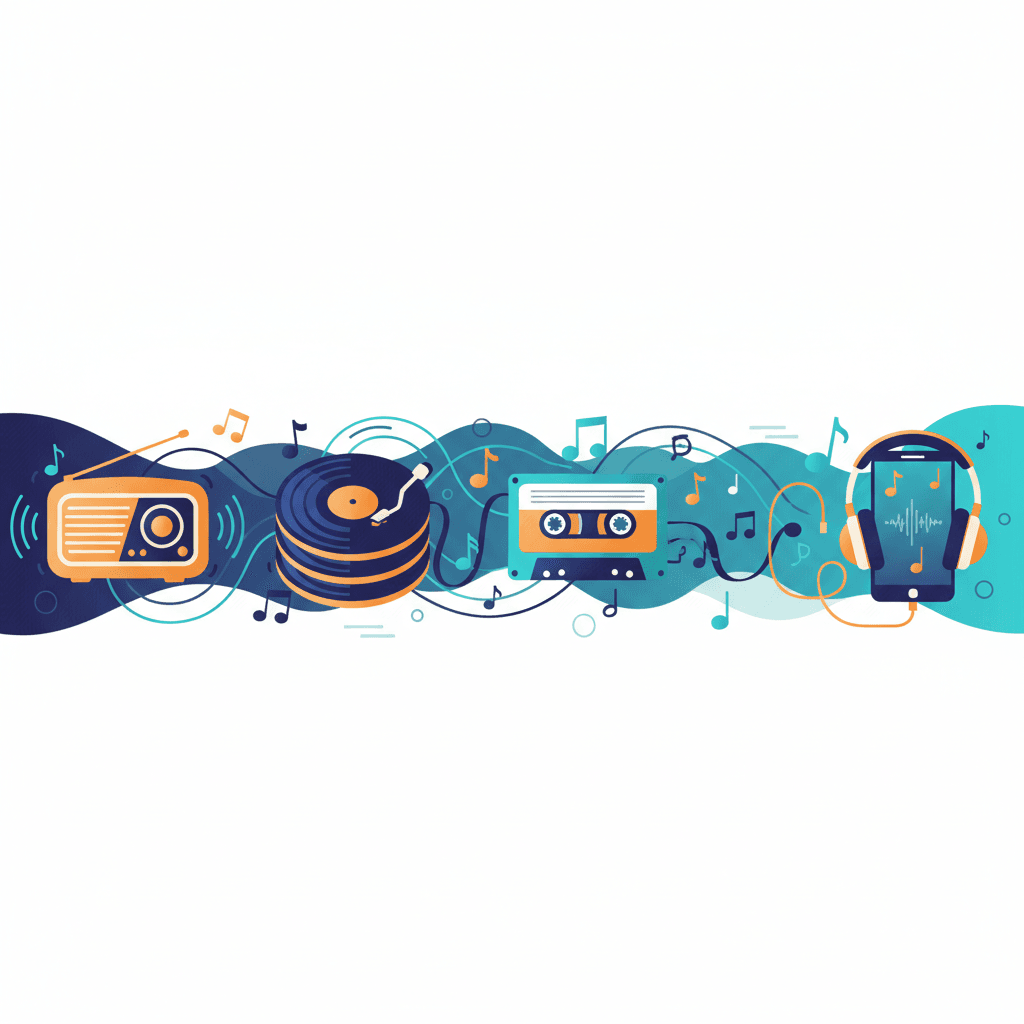
There was a time when discovering new music meant sitting by the radio, waiting for that one song you had never heard before to stop you mid-conversation. Maybe it was a friend handing you a mixtape, or a record store clerk sliding a vinyl across the counter with the words, "You need to hear this." Music discovery was personal, unpredictable, and deeply human.
Then music streaming arrived — and everything changed.
The music discovery evolution from analog serendipity to algorithmic precision is one of the most fascinating cultural shifts of the past two decades. It has reshaped not only how we find new artists and songs, but how we relate to music itself. Let us trace that journey, from the crackle of AM radio to the curated playlists of today, and consider what comes next.
The Radio Era: Gatekeepers and Happy Accidents
For most of the 20th century, radio was the dominant force in music discovery. DJs and program directors decided what millions of listeners heard each day. If a song made it onto a popular station's rotation, it could launch a career overnight. If it didn't, it might never reach an audience beyond the artist's hometown.
This system had clear limitations. Radio playlists were shaped by record label relationships, advertising revenue, and regional tastes. Entire genres were sidelined. Independent artists rarely got airtime. Yet there was magic in the format — the surprise of hearing something completely unexpected between two familiar hits. You couldn't skip, you couldn't rewind, and that constraint forced a kind of openness.
Radio also created shared cultural moments. When a new single debuted, millions of people heard it at roughly the same time. That collective experience — calling a friend to say, "Did you hear that new track?" — was a form of social glue that shaped entire generations.
The Physical Media Years: Curation Through Community
Alongside radio, physical media — vinyl records, cassettes, and CDs — offered a more intentional path to music discovery. Record stores became community hubs where knowledgeable staff guided customers toward hidden gems. The act of browsing, of flipping through crates and reading liner notes, was itself a form of exploration.
Mixtapes elevated discovery into an art form. Compiling a tape for someone meant hours of deliberation: the right opener, the emotional arc, the deep cut that said something words couldn't. Receiving a mixtape was receiving a piece of someone's inner world.
Music magazines, MTV, and word of mouth rounded out the ecosystem. Discovery was slow, effortful, and often tied to physical spaces and real relationships. But it was also limited by geography and access. If you lived in a small town without a good record store or college radio station, your musical world was inevitably smaller.
The Digital Disruption: Napster, iTunes, and the Paradox of Choice
The late 1990s and early 2000s brought the first wave of digital disruption. Napster and peer-to-peer file sharing blew open the gates. Suddenly, any song ever recorded was theoretically available to anyone with an internet connection. Music discovery became democratized — and chaotic.
iTunes and the iPod introduced the concept of the digital music library, letting listeners organize vast collections. But the sheer volume of available music created a new problem: the paradox of choice. With millions of songs at your fingertips, how do you know where to start?
Music blogs, forums, and early social platforms like MySpace stepped in to fill the gap. These communities became the new tastemakers, championing underground artists and creating viral moments long before the term went mainstream. Bands like Arctic Monkeys and Clap Your Hands Say Yeah built fanbases almost entirely through online word of mouth.
The Streaming Revolution: Algorithms Take the Wheel
When music streaming platforms launched in the late 2000s and early 2010s, they didn't just change how we accessed music — they fundamentally transformed the music discovery evolution. For the first time, listeners had legal, instant access to virtually every song ever released, all for a monthly subscription fee.
But the real revolution wasn't access. It was personalization.
Music streaming services introduced algorithmic recommendation engines that analyzed listening habits, compared them against millions of other users, and generated personalized playlists tailored to individual taste. Features like Discover Weekly and Release Radar didn't just suggest songs you might like — they learned what you liked and predicted what you would love.
The impact was staggering. A bedroom producer in Lagos could find listeners in Stockholm without ever playing a live show. Niche genres that would never have survived the economics of physical distribution — lo-fi hip hop, Mongolian throat singing, Brazilian phonk — found dedicated global audiences. Music streaming didn't just open doors; it dissolved walls.
The Algorithm's Double Edge
Yet algorithmic discovery comes with trade-offs. When recommendations are driven by patterns in your past behavior, there's a risk of creating what critics call a "filter bubble" — an echo chamber where you only hear variations of what you already know. The surprise element that made radio discovery so magical can be lost in a feedback loop of similarity.
There's also the question of who benefits. Algorithmic playlists wield enormous power over which artists get heard. A placement on a major curated playlist can generate millions of streams, while artists outside the algorithm's favor may struggle for visibility despite creating exceptional work. The gatekeepers haven't disappeared — they have simply changed form, from radio DJs to data models.
And something more subtle has shifted too. When discovery becomes effortless, it can also become passive. The lean-back listening experience — letting an algorithm choose your soundtrack — is convenient, but it can replace the active curiosity that once drove people to dig through crates or trade recommendations with friends.
There is also the matter of data and attention. Music streaming platforms track every play, skip, and save. This data shapes not only what listeners hear next, but how artists create. When success is measured in streams and playlist placements, there is pressure to front-load hooks, shorten intros, and optimize for algorithmic favor. Some critics argue this has led to a homogenization of popular music — a narrowing of sonic diversity even as the catalog grows infinitely wider.
Social Discovery: The Human Element Returns
Recognizing these limitations, a new wave of music discovery is emerging — one that blends the precision of technology with the warmth of human connection. Social features within music streaming platforms let users share what they are listening to, collaborate on playlists, and see what friends are playing in real time.
Platforms like TikTok have become unexpected engines of music discovery, with short-form videos turning obscure tracks into global hits seemingly overnight. Unlike algorithmic recommendations, TikTok-driven discovery is messy, democratic, and driven by genuine enthusiasm — not unlike the mixtape culture of decades past, scaled to billions.
Music communities on Discord, Reddit, and niche forums continue to thrive, proving that people still crave the human element in discovery. The best recommendations often come not from an algorithm, but from someone who says, "I know you love this artist — you have to hear this other one."
Podcasts and YouTube channels dedicated to music analysis and recommendations have also flourished, creating spaces where hosts spend hours dissecting a single album or genre. These deep dives offer context that no algorithm can provide — the story behind the music, the cultural moment that shaped it, the connections between artists across decades and continents.
What Comes Next: The Future of Music Discovery
The music discovery evolution is far from over. As artificial intelligence grows more sophisticated, we can expect recommendation engines that understand not just what you listen to, but why — recognizing the difference between music for a workout, music for heartbreak, and music for a Sunday morning.
Spatial audio, interactive concerts, and AI-generated music are opening entirely new frontiers. Imagine discovering an artist through a virtual live performance, or having a playlist that adapts in real time to your mood and environment. Cross-platform integrations could allow your music streaming service to sync with your fitness tracker, your calendar, or even the weather, creating soundtracks that are not just personalized but contextual.
But perhaps the most exciting development is the growing recognition that the best music discovery combines algorithmic power with human curation. The future isn't algorithms versus people — it's algorithms and people, working together to surface music that matters.
This is exactly the space where platforms like Music24 are making a difference. By combining smart technology with a genuine love for music, Music24 helps listeners break out of filter bubbles and discover artists they would never find on their own. Whether you are a casual listener looking for your next favorite song or a dedicated music enthusiast exploring new genres, the goal is the same: to make discovery feel exciting again.
The Beat Goes On
Looking back at the music discovery evolution — from radio to record stores, from Napster to music streaming algorithms — one thing remains constant: the thrill of hearing something new that moves you. The tools change, the formats evolve, but that fundamental human experience endures.
Music streaming has given us unprecedented access and convenience. It has connected artists and listeners across every border. But it has also reminded us that discovery is more than an algorithm — it is a deeply personal journey shaped by curiosity, community, and the willingness to press play on something unfamiliar.
The next chapter of that journey is being written right now. And it sounds incredible.
Get your music heard. Skip the content grind.
Add a song. Music24 makes the posts and the videos, plans your release and publishes it on every channel. Free for 7 days on the Pro plan, no card.